The quick version
- Limestone laid down millions of years ago became the Algarve coast; coastal erosion has sculpted it into cliffs, arches and caves.[1]
- Benagil Cave's interior is roughly circular, about 50 metres across, with walls rising 15 metres to a domed ceiling.[2]
- From the ceiling, an oval opening around 10 metres across lets light fall into the chamber.[2]
- The Seven Hanging Valleys Trail passes by Benagil Cave and Benagil Beach on the stretch between Marinha and Carvalho beaches.[3]
- Since August 13, 2024, no one may get out onto the beach inside the cave or swim into it.[4]
- Top choice Private Yacht Cruise from US$545 Duration2.5 - 6 hours[5]Rating4.74 from 1,768 reviews[5]GuideGuide: English, French, Portuguese, Spanish[5]CancellationFree cancellation up to 24 hours in advance[5] Check availability
- Speedboat Adventure from US$14 Duration1.5 hours[6]Rating4.81 from 7,820 reviews[6]GuideGuide: English, Spanish, French, Portuguese[6]CancellationFree cancellation up to 24 hours in advance[6] See this tour
- Sunset Cruise from US$13 Duration75 minutes[7]Rating4.81 from 2,545 reviews[7]GuideDriver: Spanish, English, French, Portuguese[7]CancellationFree cancellation up to 24 hours in advance[7] See this tour
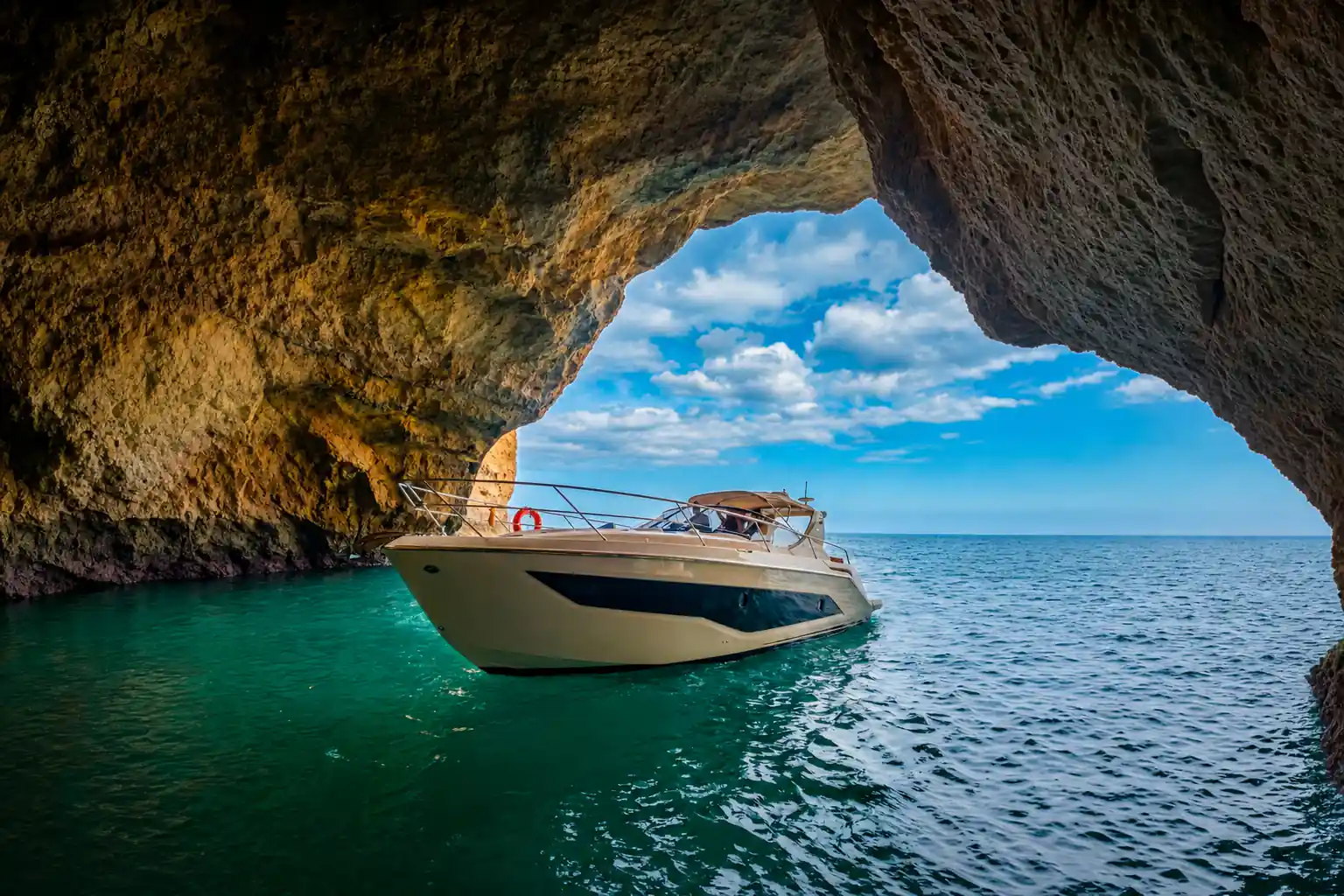
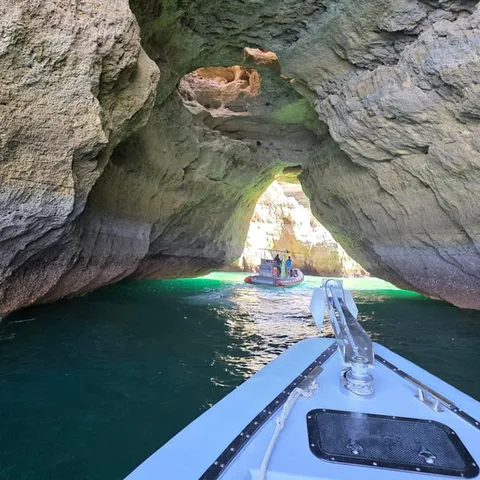
The formation of the Benagil Sea Cave is a result of millions of years of geological processes and the relentless power of coastal erosion. The Algarve region, where the cave is located, is characterized by a limestone-dominated coastline, which played a crucial role in the cave's formation.
Choose the pace that suits you
Plan ahead
- Book well ahead for summer departures
- A private yacht with skip-the-line access keeps the day simple
- Sun protection and a light layer are useful on the water
- A swim stop is best when the sea is at its warmest
On the water
- Portimão is an easy base for a coastal cruise
- Private group means the boat is yours alone
- Confirm the meeting point and start time before booking
- Free cancellation is worth having if the forecast shifts
The rock itself
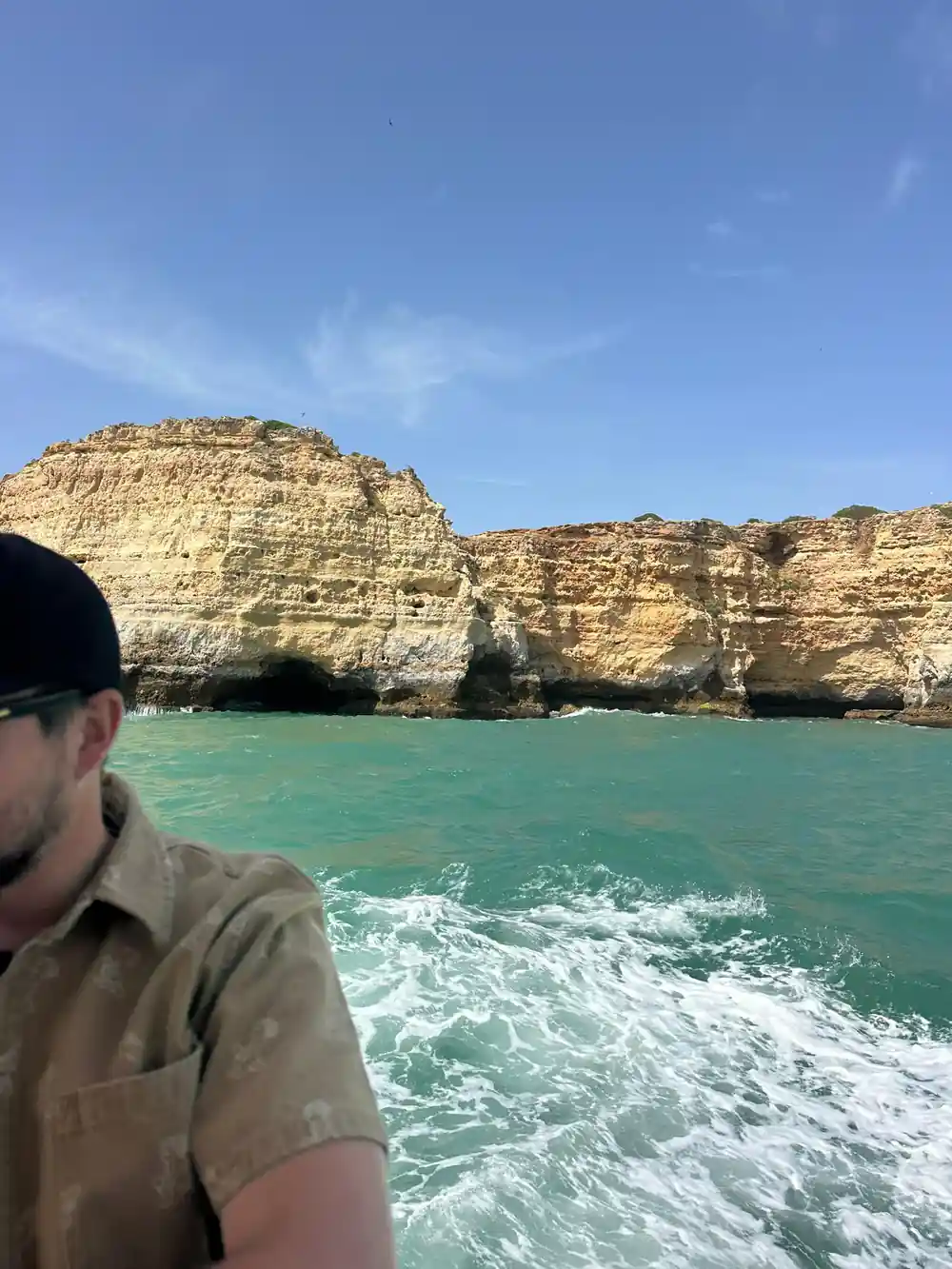
Benagil is a small fishing village in the Lagoa municipality, part of the Faro District in Portugal's Algarve region.[8] The cliffs you glide past are mostly limestone, laid down long ago when this part of Portugal sat beneath a warm sea. Compressed shells, coral and the remains of marine life became the soft, pale rock that now shapes the coast, and on a low sun you can often pick out faint bands and fossils in the cliff face.
Limestone is the key to the whole cave system. The Algarve region is characterized by a limestone-dominated coastline, and that is the material the sea has been working on for millions of years.[1] Rainwater, wind and salt spray all play a part, but the main sculptor is the Atlantic itself. Limestone dissolves slowly in slightly acidic water, so the sea does not only batter this coast, it also quietly eats into it along cracks, joints and bedding planes, widening them season by season.
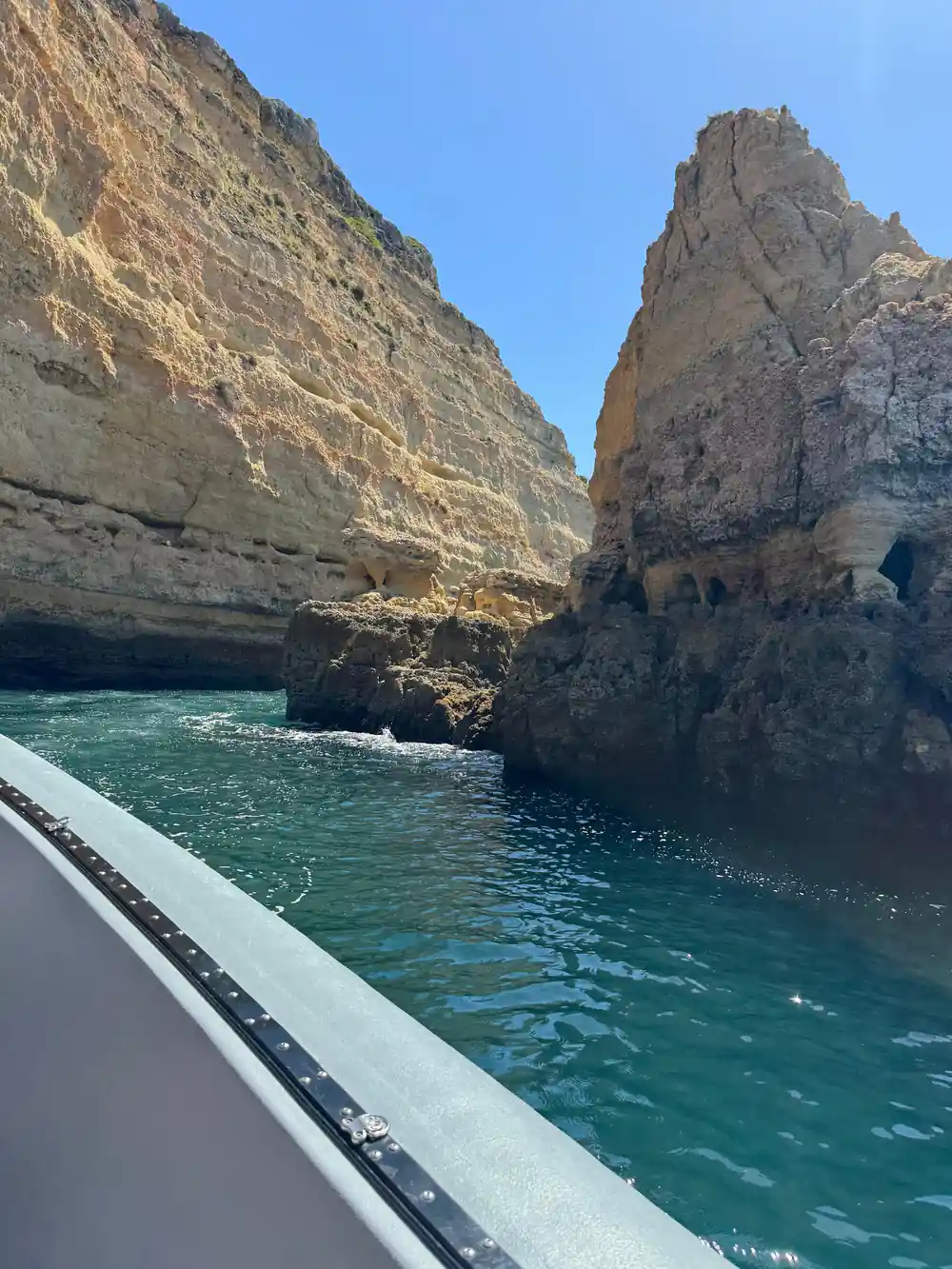
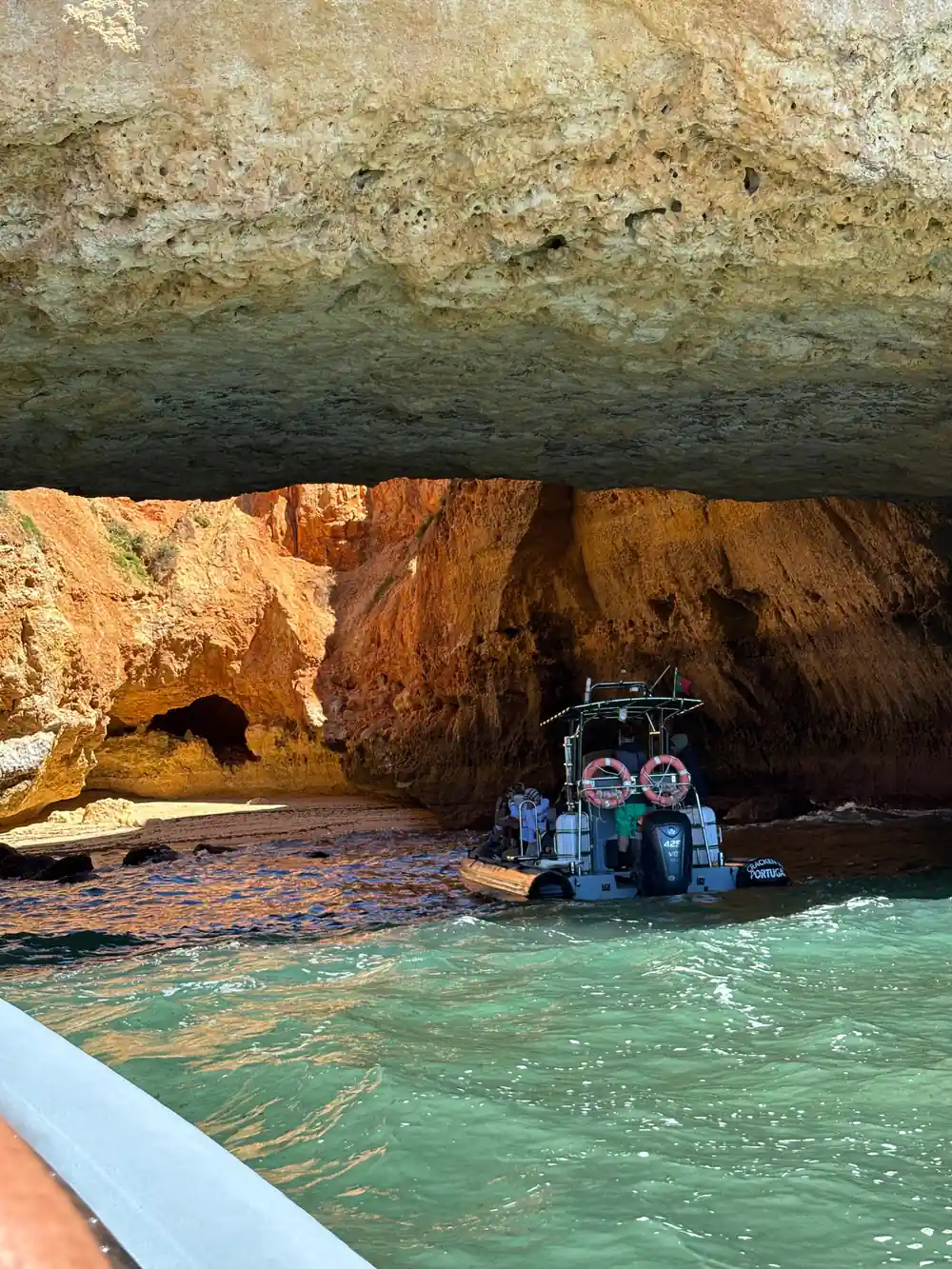
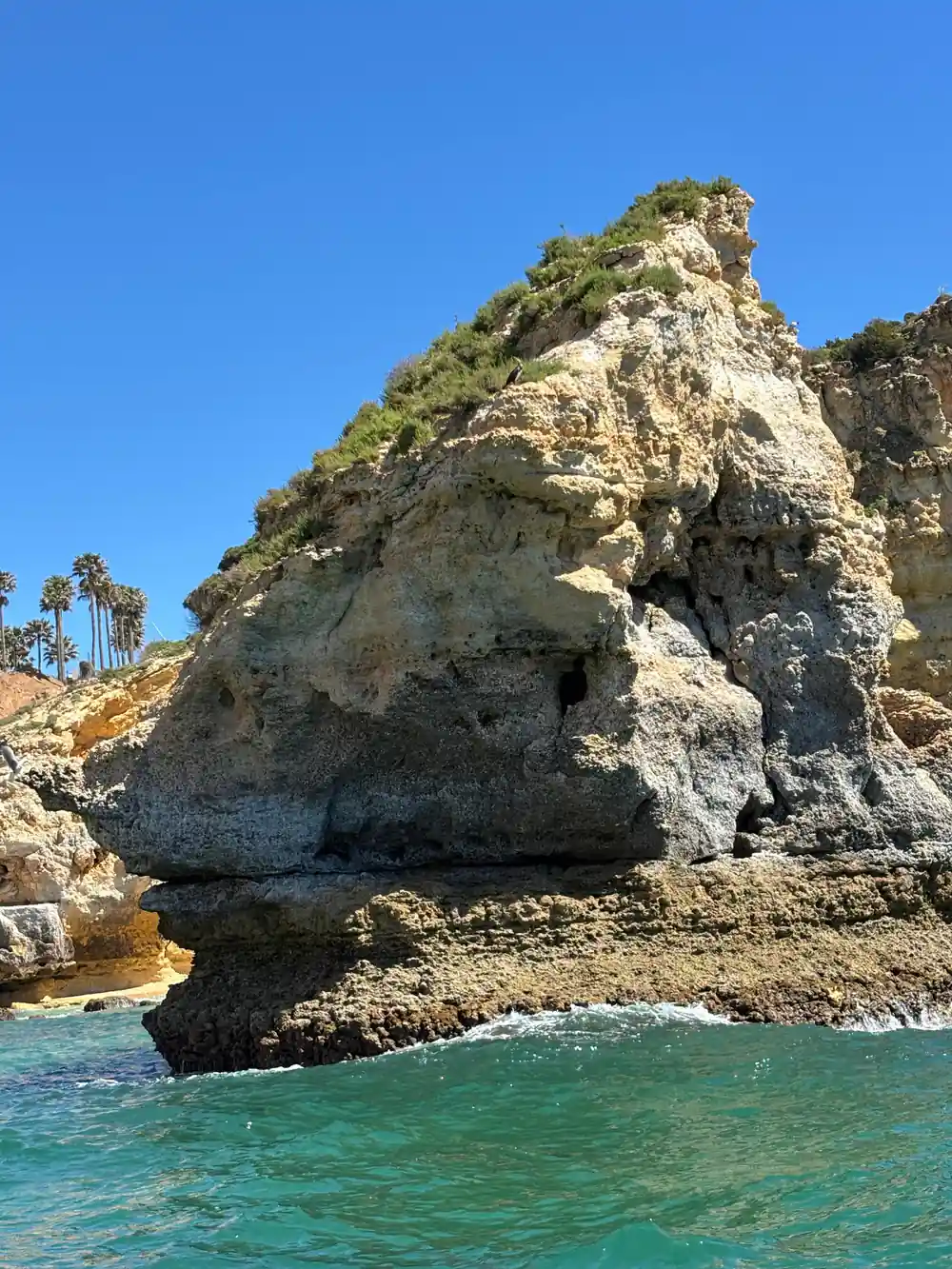
The result is a coast of tall ochre cliffs, hidden coves and scalloped rock faces. Caves, arches and pillars appear here in every stage of their life, which makes a boat trip feel like a slow lesson in how coastlines change. It is easy to see why these sea caves have become the most recognised sights of this stretch of southern Portugal, and why so many travellers build a whole day, and sometimes a whole holiday, around seeing them.
How a sea cave starts
Sea caves usually begin where the ocean finds a weakness in the rock: a crack, a fault, a softer band of stone. Waves force water into the opening, compressing air and scraping rock against rock, and the loose debris is carried away by the retreating water. Over time the crack widens into a notch, then a tunnel, then a chamber, and every winter storm repeats the work.
The Benagil Sea Cave formed through this kind of coastal erosion along the limestone coast.[1] The cave sits at sea level, so the work never really pauses. Every tide pushes water in and out, and the Algarve coast has two highs and two lows on most days, roughly twelve hours and twenty-five minutes apart.[9] The chamber is scoured, drained and soaked again several times a day, which is why the walls stay smooth and pale.
That steady rhythm also shapes when boats can safely enter. On a calm morning the water inside the chamber can be glassy and clear, and you can see every stone on the bottom. On a windy afternoon it can surge and slap against the walls, throwing spray across the entrance. Boats, rather than walkers, are the natural way to explore this part of the coast.
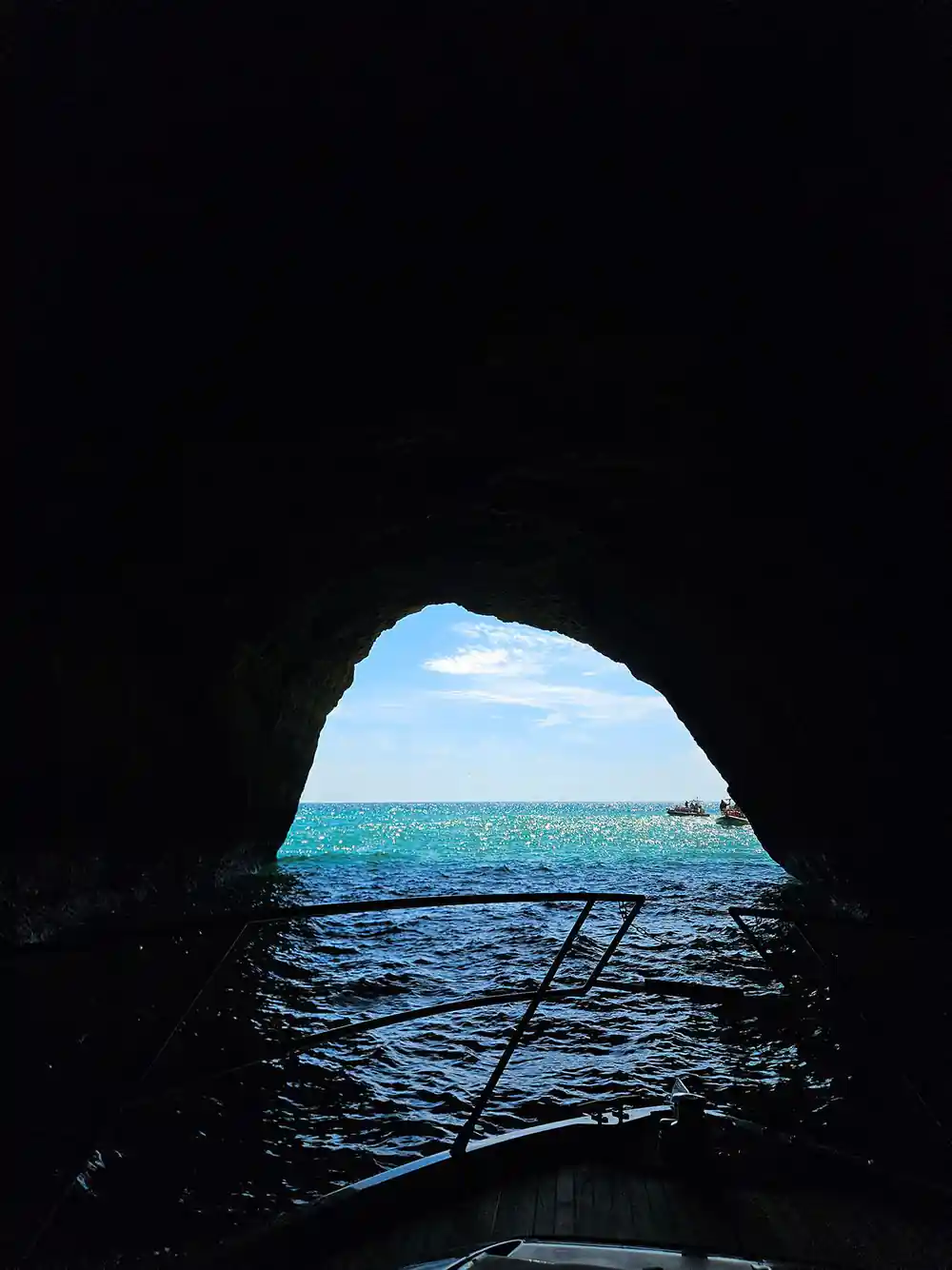
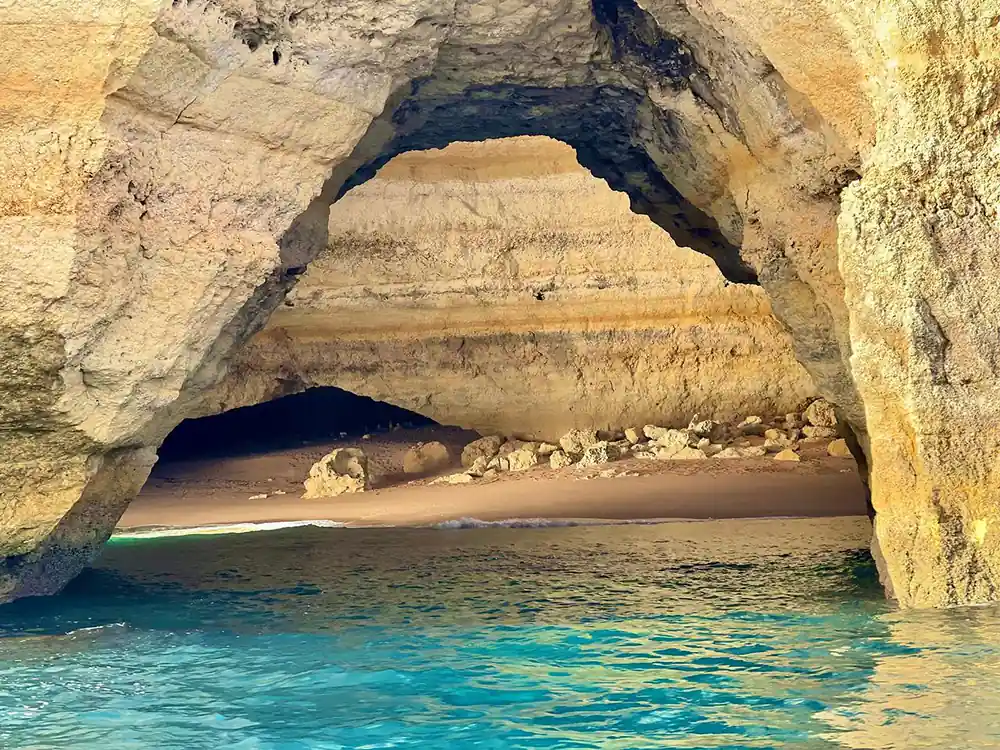
Light falls through the circular roof opening into the main chamber of Benagil Cave.
Inside the great chamber
The main chamber is far bigger than most people expect, and photographs rarely prepare you for the scale. Its interior is roughly circular, about 50 metres across, with walls rising 15 metres on all sides to a domed ceiling.[2] From a small boat the curve of the walls seems to wrap right around you, and voices echo back from every side.
At the apex of that ceiling, the rock has given way entirely. An oval opening perhaps 10 metres across frames a disc of sky and floods the interior with downwelling light.[2] On a bright day that shaft of light reaches the sand and the water below, and the whole chamber glows a warm gold.
From inside the cave, that opening creates the famous sandy glow. Light bounces off the water and the pale rock, turning the chamber into something like a natural cathedral, with the roof as its window. It is also a useful marker from the sea: when you see the gap in the roof, you are at the heart of Benagil. The surrounding cliffs take on a honey colour in the afternoon, and photographers often time their visit for the middle of the day when the sun stands almost directly above the opening.
From cave to arch to stack
Caves rarely stay the same shape for long. As the sea keeps working on the rock, it can cut all the way through a headland to form an arch, and arches often frame the coast here. When the arch collapses, what remains may be a stack, a pillar of rock standing apart from the cliff, slowly isolated by the waves and then worn down to a stump.
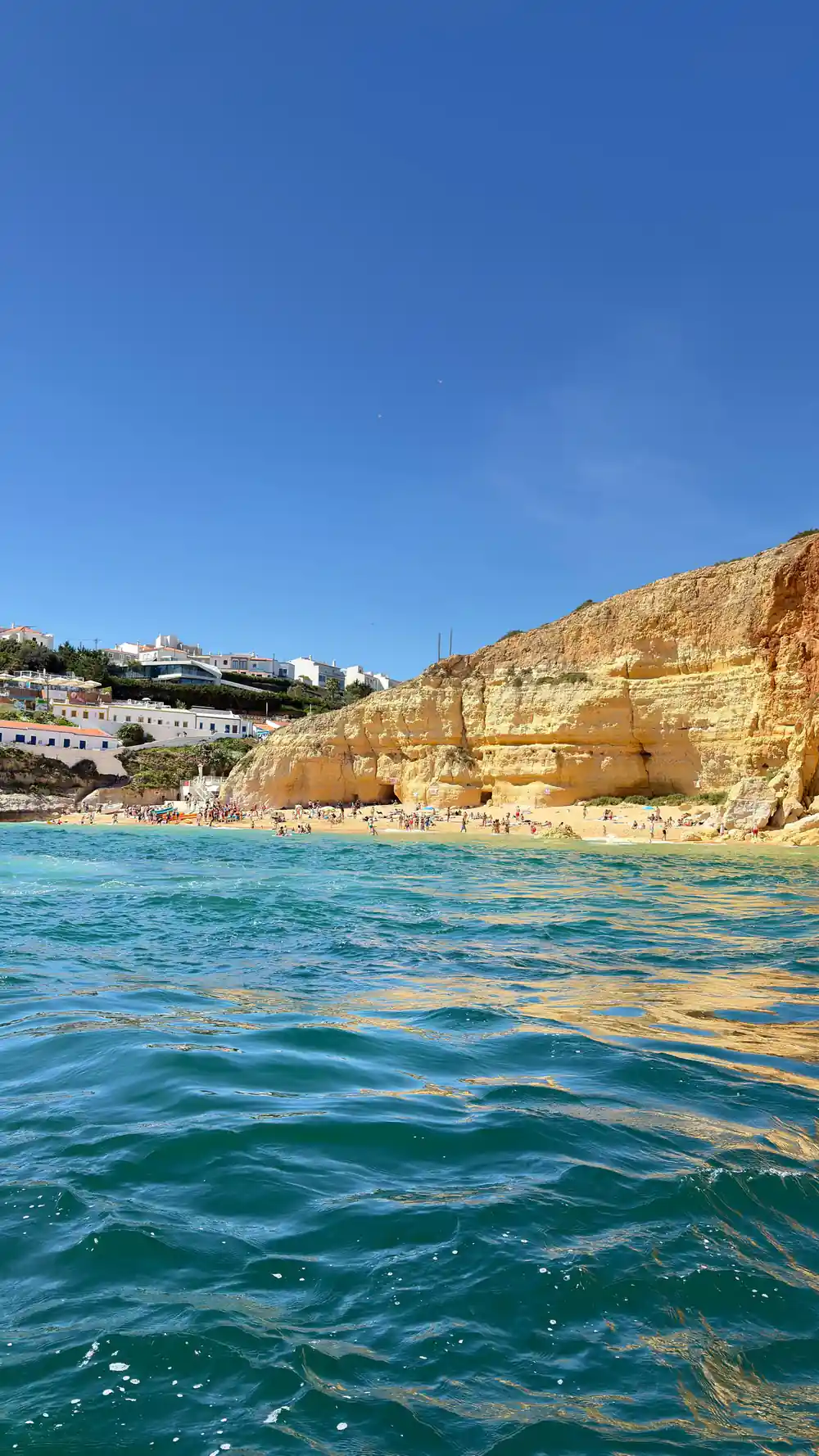
Praia da Marinha is a good place to see arches and small coves in one view. The beach is loved for its myriad of natural arches and small coves, along with its radiant golden sand beach.[10] Above it, the cliff top is bare and windy, with viewpoints looking back along the bays you have just passed by boat, and a path that leads on toward the cave.
The same processes are visible all along the route between Portimão and Benagil. The coastline distance from Portimão to Benagil Cave is 15 km, and almost every bend of it shows some stage of erosion, from narrow blowholes and dripping grottoes to half-finished arches and pillars left standing offshore.[11]
from US$545
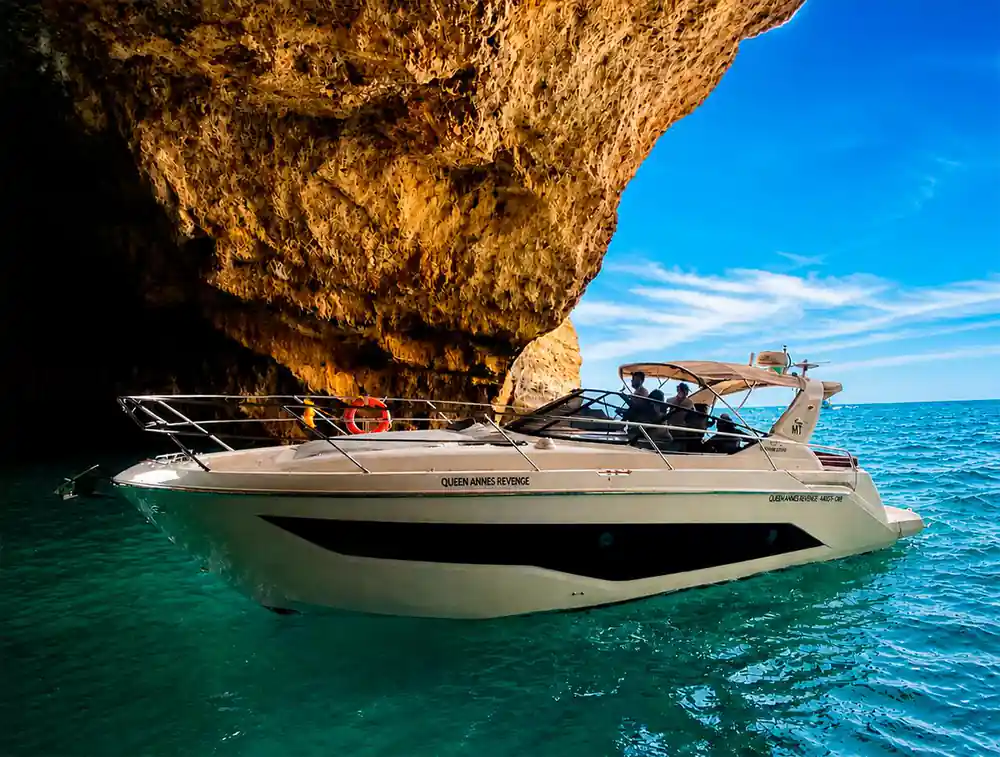
The private yacht cruise, from US$545[5], is a private group, skips the ticket line, and offers free cancellation.
How a roof opens
The roof opening of Benagil Cave has its own story. As the sea carved the chamber from below, the rock above lost its support. Sections of the ceiling collapsed or dissolved, until only an oval opening remained at the top.[2] Falls like these are rare and sudden, and the opening we see today is the quiet aftermath, stable enough for boats to pass beneath.
This opening is what gives the cave its postcard look. It lets daylight pour onto the sand and water, and photographers tend to gather at midday when the sun is high above the gap. Through the year the angle shifts, so the light comes in at a slant in spring and autumn and almost straight down in high summer.
The open roof links the cave to the sky above. Seabirds pass overhead, and the beams of light change with the weather and the time of day, so no two visits look quite the same. Even on a grey day the chamber holds a soft, greenish light that is worth the trip on its own, and the sound of water moving in a closed space is unlike anything on the open coast.
Is it still going on
Erosion never stops. The limestone coast is still being reshaped, and today's arches will eventually become tomorrow's stacks. That slow change is part of what makes the area so dynamic, and it is a reminder that the coastline we photograph now is only a single frame in a very long film. The sea keeps to its own timetable, and we merely get to watch.
Meanwhile, the cave itself has become a managed place. From August 13, 2024, visitors are no longer allowed to disembark onto the beach inside Benagil Cave or swim into it.[4] Boats, kayaks and paddleboards still approach and pause at the entrance, so the view from the water is as good as ever, and the sand inside stays untouched.
The walking route above shows the same coast from land. The Seven Hanging Valleys Trail passes by Benagil Cave and Benagil Beach on the section that runs from Marinha Beach to Carvalho Beach.[3] Walking it takes you past clifftop viewpoints, boardwalks and spring wildflowers, and it pairs well with a morning or afternoon on the water.
Plan your visit to the cave coast
The Algarve's climate makes this an easy coast to visit. The region receives over 3,000 hours of sunshine per year, and summer highs from June to September are around 25 to 29 C.[12][13] Spring and autumn are milder and quieter, with warm light, green hillsides and far fewer boats on the water.
Sea temperatures follow a gentler curve: winter waters are typically around 15-16 C, spring about 16-19 C, summer around 19-23 C, and autumn about 18-20 C.[14] If you want to swim from a yacht or pause at Marinha Beach, the warmer months are the most comfortable, and a sunny, windless day matters more than the exact date on the calendar.
A private yacht cruise gives you room to slow down. The Private Yacht Cruise to the Benagil Caves & Marinha Beach lasts 2.5 - 6 hours, is a private group, and includes skip-the-line access with free cancellation up to 24 hours in advance.[5] That flexibility suits travellers who prefer their own pace, a cool drink on deck, and no rush to pack into a crowded boat. Bring sun cream, a hat and a light jacket for the breeze, book ahead for the summer months, and let the skipper read the sea and the light for you.
Benagil Cave measured in metres
Each measurement describes the interior of Benagil Cave and its roof opening.[2]
Benagil boat tour from-prices
All amounts are from-prices in USD from these GetYourGuide listings:[5],[6],[7].
When to sail
Planning a Benagil cruise
Choose your boat
A private yacht gives you space and a flexible timetable; a speedboat is quicker and lighter on the budget.
Pick a launch point
Portimão is a natural base. The coastline distance from Portimão to Benagil Cave is 15 km.[11]
Check the tides
The Algarve usually has two highs and two lows each day, roughly twelve hours and twenty-five minutes apart.[9]
Know the cave rule
Since August 13, 2024, no one may step onto the beach inside Benagil Cave or swim into it.[4]
Book with flexibility
Choose a tour with free cancellation up to 24 hours in advance.[5]
Take the calm route to Benagil Cave and Marinha Beach on a private yacht.
from US$546Reserve now & pay later