The quick version
- Benagil Cave's interior is roughly circular, about 50 metres across, with walls rising 15 metres to a domed ceiling and an oval roof opening about 10 metres wide.[1]
- Algarve sea temperatures run about 15 to 16°C in winter, 16 to 19°C in spring, 19 to 23°C in summer and 18 to 20°C in autumn.[2]
- Since August 13, 2024, visitors are no longer allowed to disembark onto the beach inside Benagil Cave or swim into it.[3]
- The Algarve recorded 5.34 million guests, a 1.8% increase compared to 2024.[4]
- Off the Algarve coast, common dolphins are the most-seen species in summer, bottlenose are the only year-round resident pod, and all three peak from May through October.[5]
- Top choice Private yacht from US$545 Duration2.5 - 6 hours[6]Rating4.74 from 1,768 reviews[6]Guide languagesEnglish, French, Portuguese, Spanish[6]CancellationCancel up to 24 hours in advance[6] Check availability
- Speedboat from US$14 Duration1.5 hours[7]Rating4.81 from 7,820 reviews[7]Guide languagesEnglish, Spanish, French, Portuguese[7]CancellationCancel up to 24 hours in advance[7] See this tour
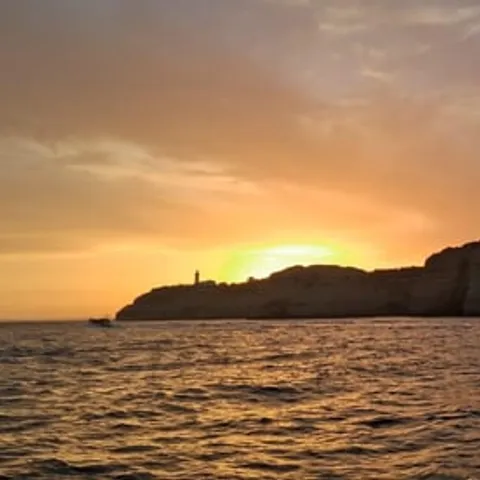
- Sunset cruise from US$13 Duration75 minutes[8]Rating4.81 from 2,545 reviews[8]Guide languagesSpanish, English, French, Portuguese[8]CancellationCancel up to 24 hours in advance[8] See this tour
With less than 45 rainy days, the Algarve is the driest and warmest part of the country on the mainland. With over 3000 hours of sunshine per year, the region attracts numerous tourists every year.
Our Verdict on When to Go
Before reserving
The Light, Which Is the Unusual Part
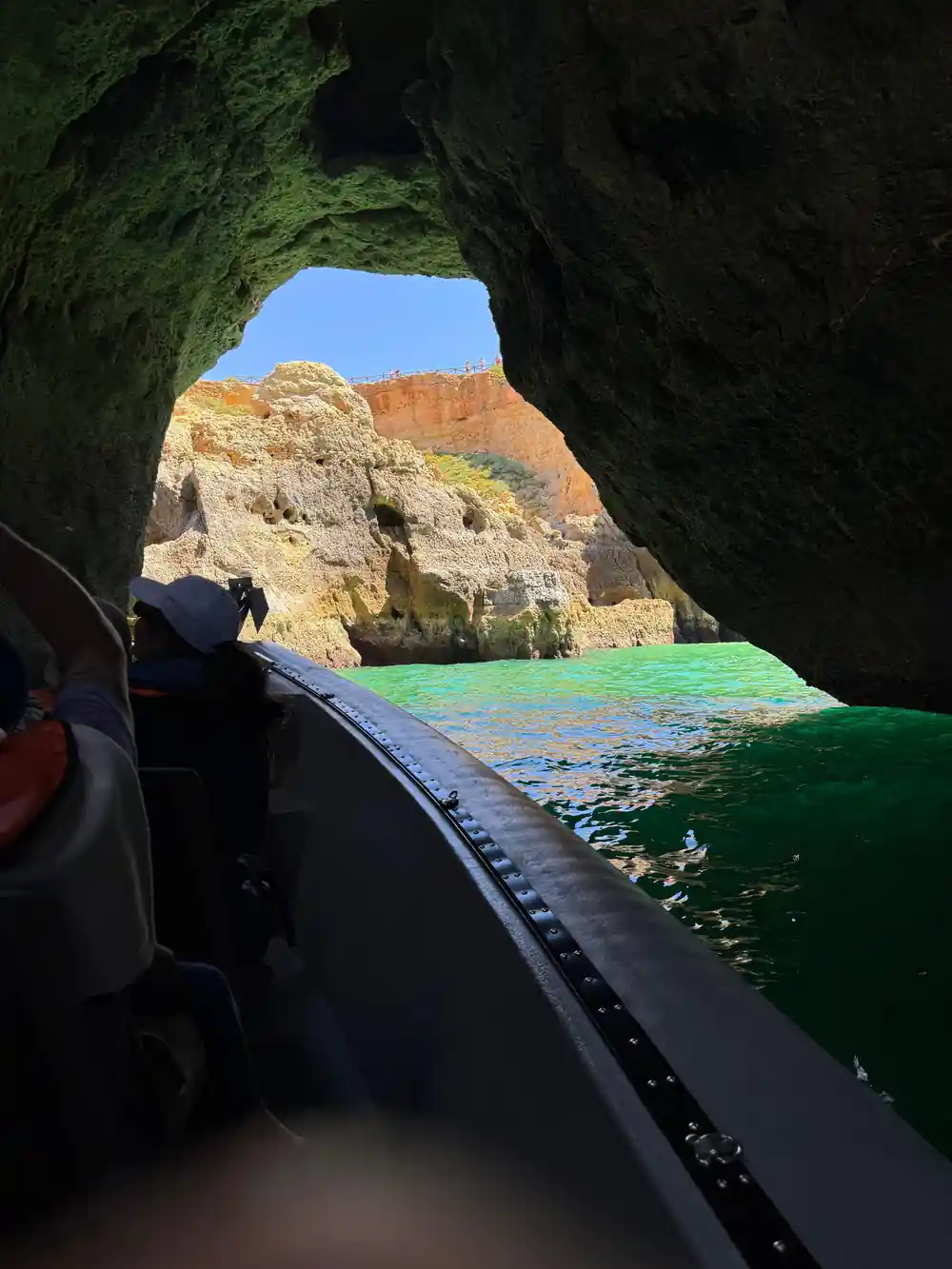
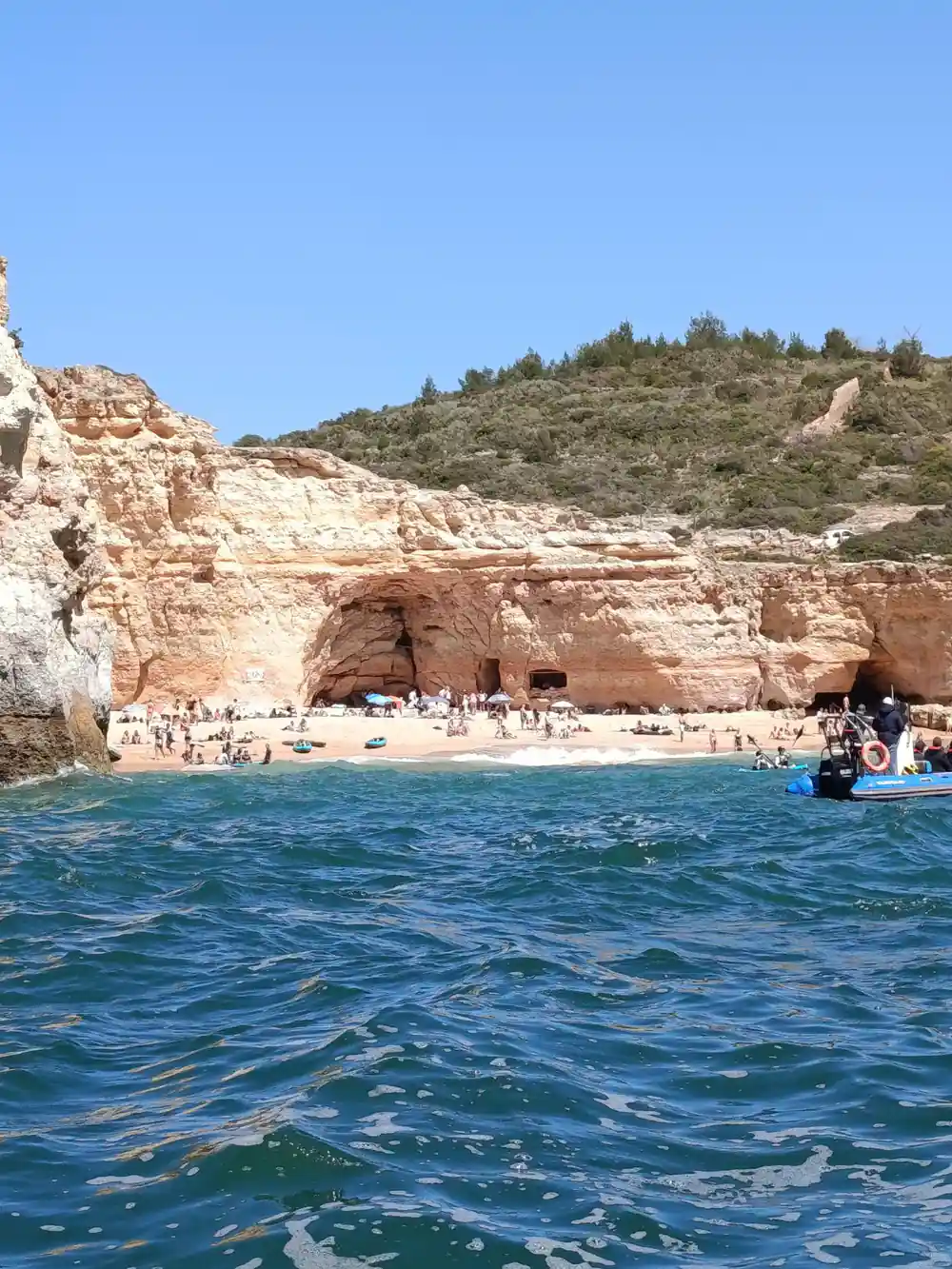
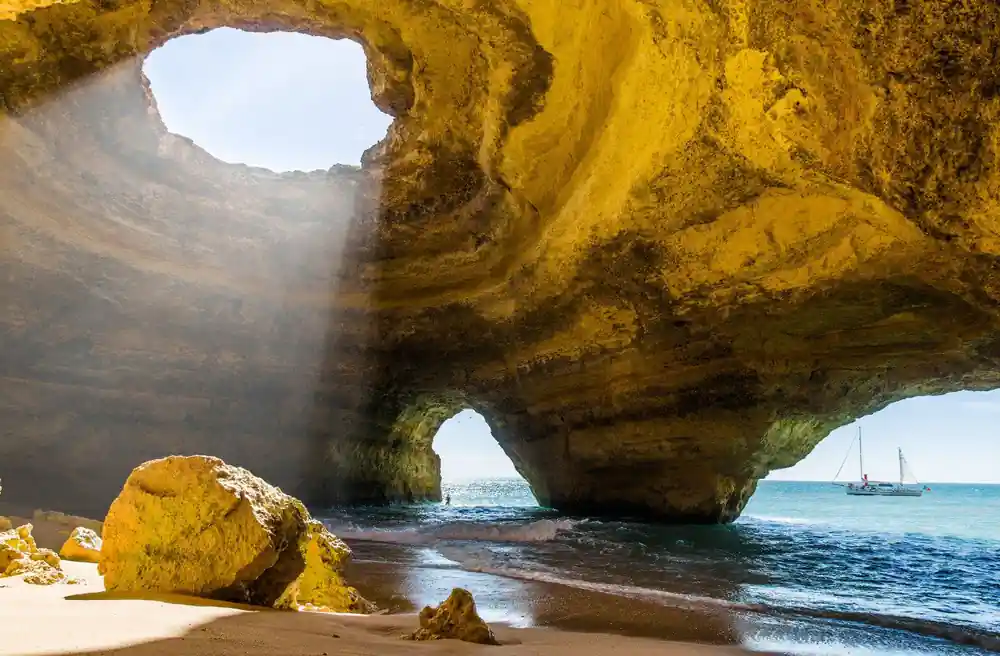
Benagil is a sea cave cut into a limestone coast, shaped over millions of years by coastal erosion.[10] The village behind it is a small fishing village in the Lagoa municipality, part of the Faro District in Portugal's Algarve.[11] What makes the cave worth planning a day around is the roof. The interior is roughly circular, about 50 metres across, with walls rising 15 metres to a domed ceiling, and at the top an oval opening about 10 metres across lets daylight drop straight onto the water.[1]
That opening is why the same cave looks different from one day to the next. A high, clear sun fills the water and the sand with colour, while early mornings and late afternoons send a lower, warmer beam in through the mouth. Cloud, haze and a choppy sea flatten the effect, and wind matters as much as sun: a light offshore breeze leaves the water glassy, while a fresh onshore blow puts texture on the sea and spray in the air. If photographs matter to you more than anything else, put light near the top of your list when you choose a date, and keep the camera clear of the spray on the run out to the cave.
The Sea, Which Decides Whether You Get In
Water temperature is the bluntest measure of whether a swim feels inviting. In the Algarve the sea typically sits around 15 to 16°C in winter, rises to about 16 to 19°C through spring, reaches 19 to 23°C in summer and eases back to about 18 to 20°C in autumn.[2] Summer is the obvious window for anyone who wants to get wet. The sea also holds its warmth into autumn, cooling slowly while the air turns milder, so early autumn can feel kinder in the water than the sand does. The shoulder months are a compromise: bracing on entry, lovely once you are in and moving.
One rule now shapes every plan. Since August 13, 2024, visitors are no longer allowed to disembark onto the beach inside Benagil Cave or swim into it.[3] You still go in by boat or kayak and look up at the roof, and you still get the sound, the shade and the scale of the place, but the famous picture of standing on the sand inside is one to admire in someone else's photograph. Plan a swim stop somewhere else along the coast instead, and treat the cave itself as somewhere to look, not to land.
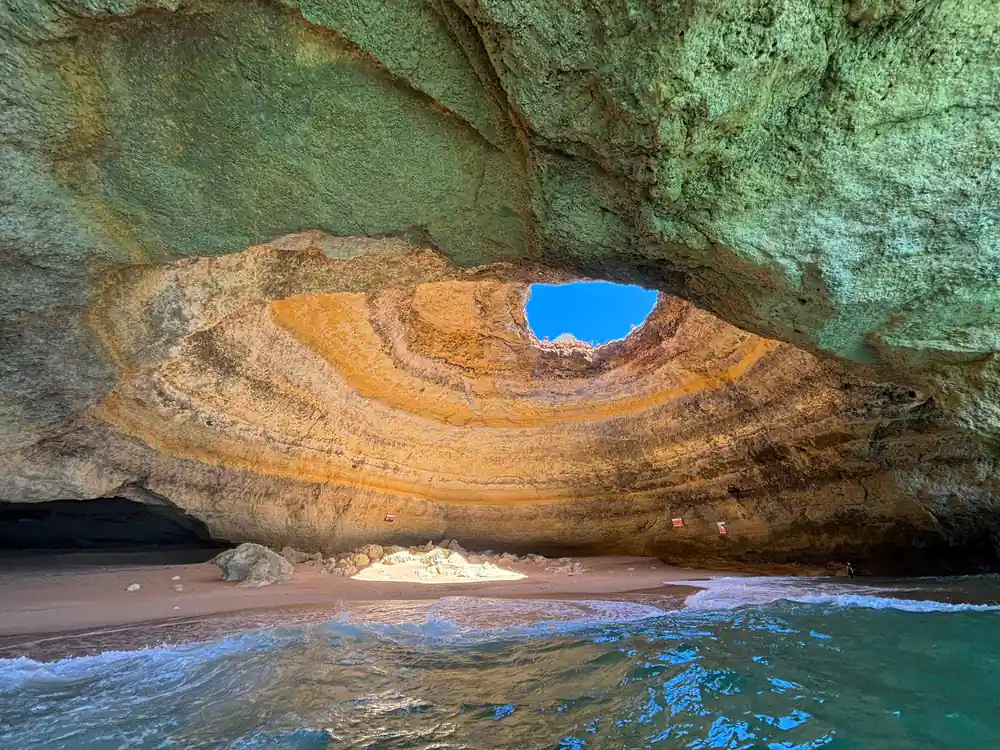
The roof opening, seen from the water on a clear morning
The Season, Month by Month
Algarve summers, from June to September, bring daytime highs around 25 to 29 C, while winter highs sit near 16 to 17 C.[12] The region receives over 3,000 hours of sunshine per year, so a washed-out day is the exception rather than the pattern.[9] For a boat trip, that means the season mostly decides how hot the run out feels and how warm the spray is, not whether the trip happens at all.
If you want the middle ground, aim for the edges of summer. Those weeks usually deliver warm air, a sea that has had months to heat up, and shorter queues at the marina. High summer is when the Algarve fills up and departure slots look busy, so book earlier and take the first or last trip of the day if you would rather have the water to yourself. Winter visitors get mild, quiet days, dramatic light and fewer boats on the coast, and the cliffs are at their greenest.
Crowds on the Water
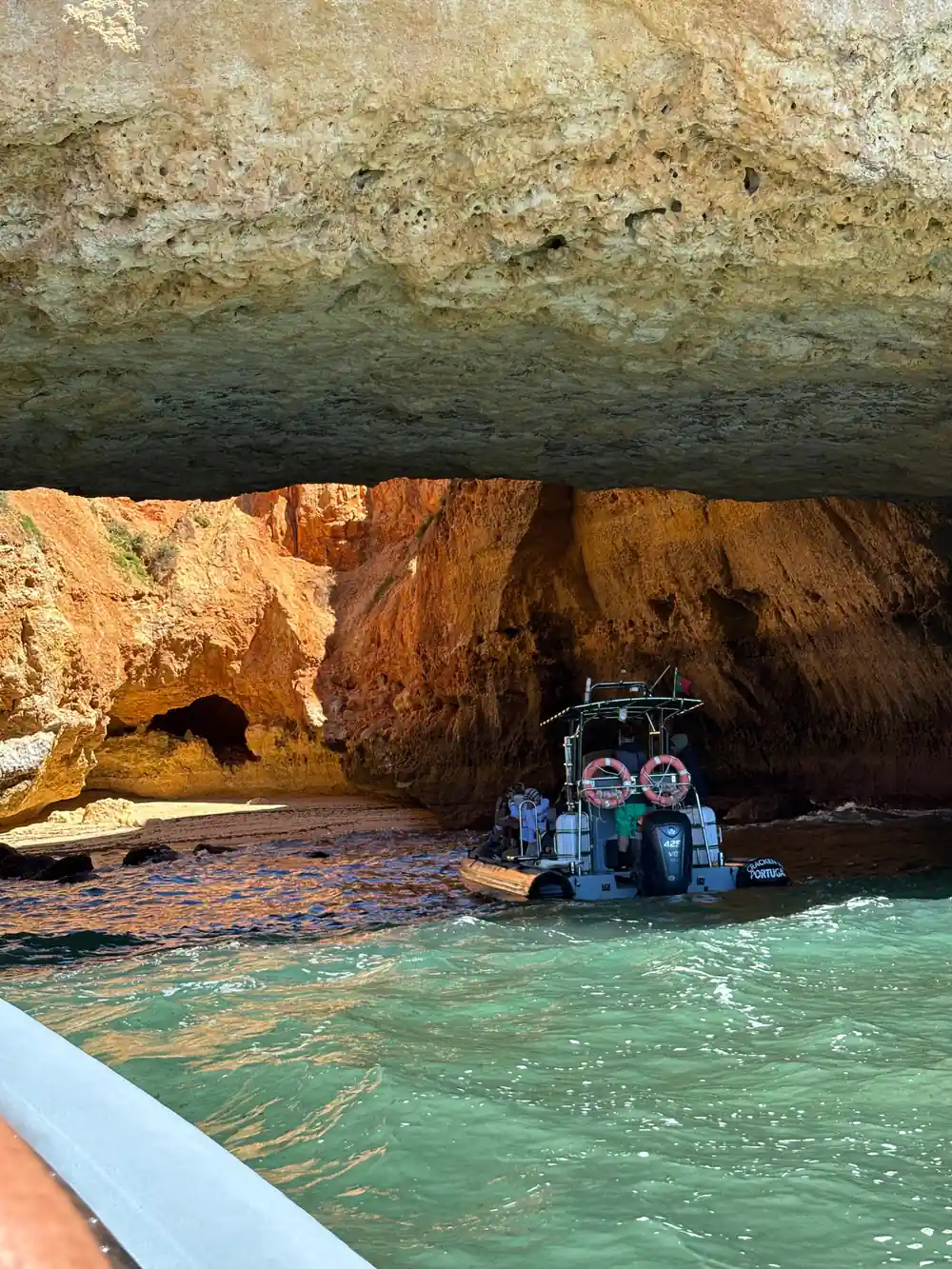
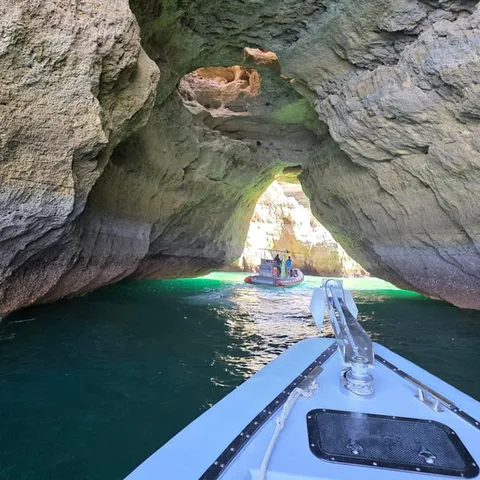
The Algarve recorded 5.34 million guests, a 1.8% increase compared to 2024.[4] In high summer the water between Portimão and Carvoeiro is busy, and everything slows at the mouth of Benagil Cave, where boats wait their turn to nose in. The cave is a single room with one entrance, so a queue outside it is the one thing that feels like a crowd even on a private boat. Book the earliest slot you can live with and you will usually reach the cave before the fleet builds.
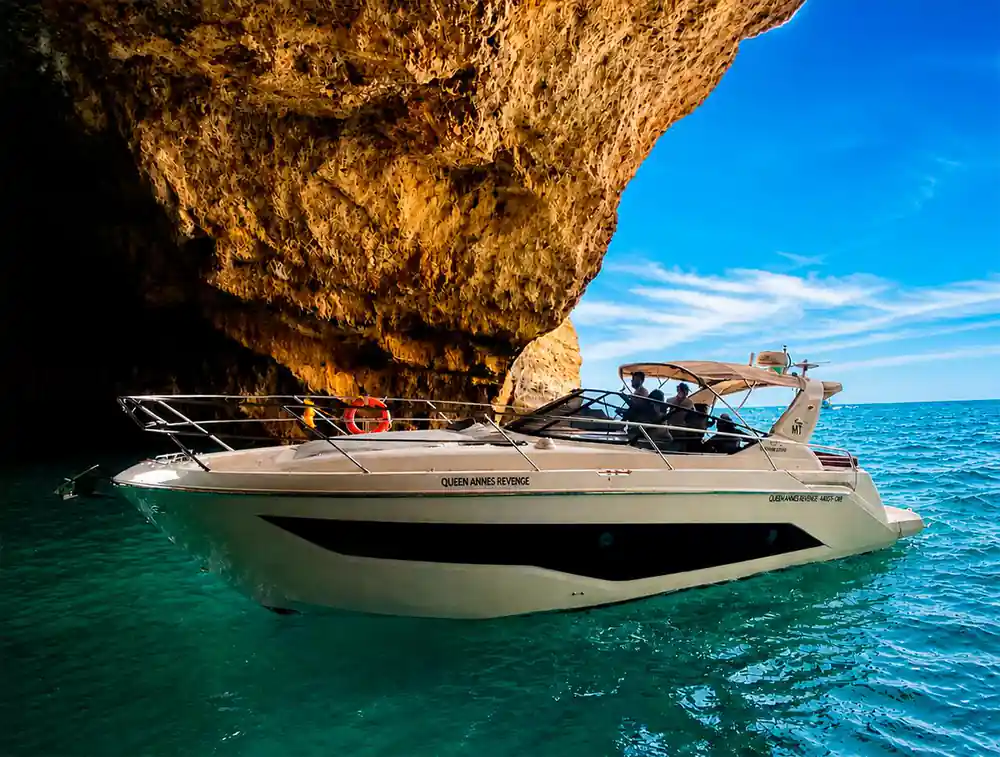
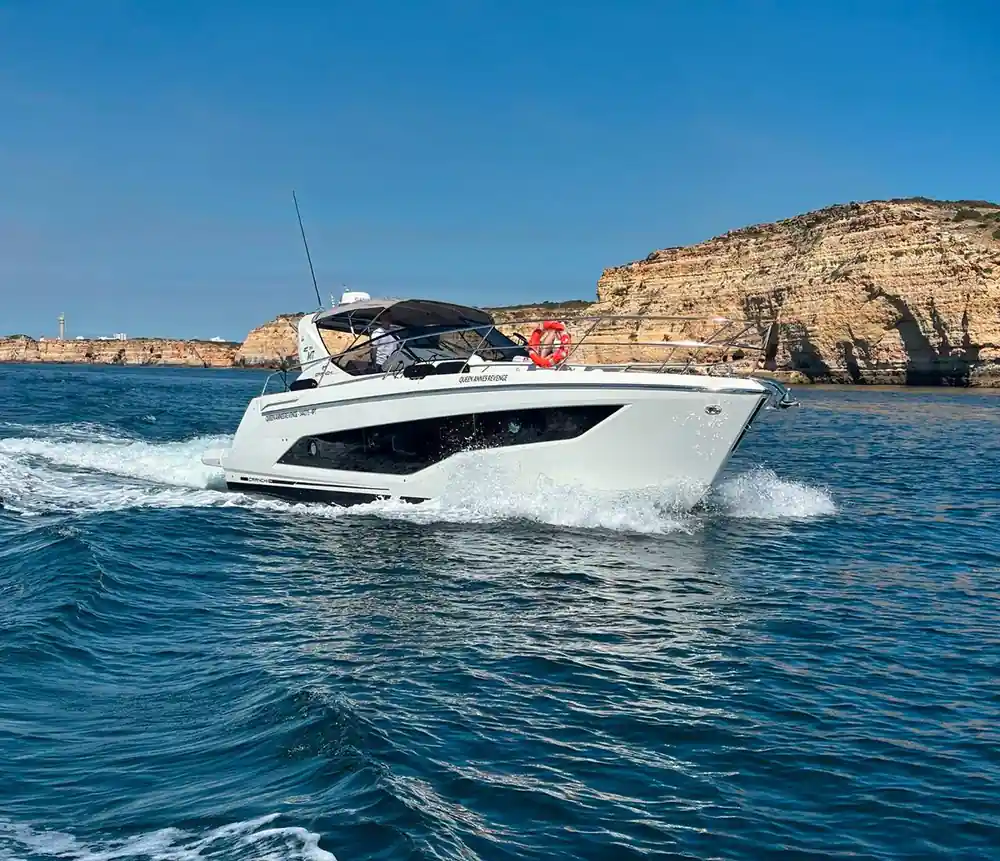
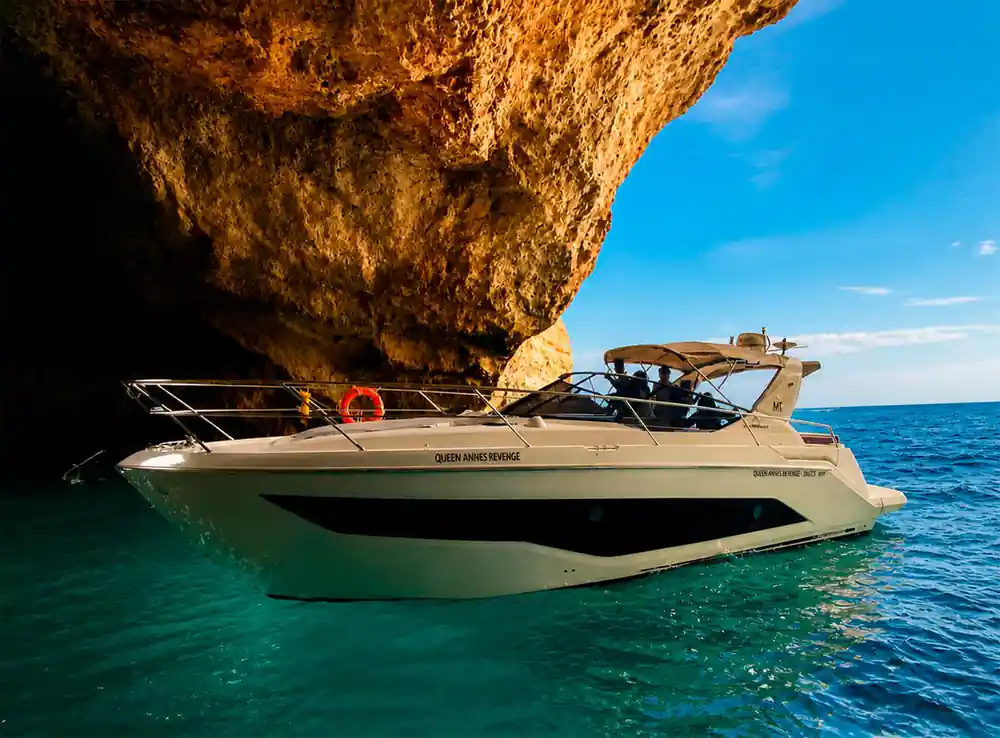
Two things help. Go private if you can: the yacht cruise this site books is a private group, so the timetable is yours and there is nobody else's schedule to fit around.[6] Otherwise go early or late. The first departures and the sunset trips meet far less traffic than the middle of a summer day, and the low light on the cliffs is worth the earlier alarm. Late afternoon has the same advantage, with the bonus of a warm sun on the rock.
from US$545
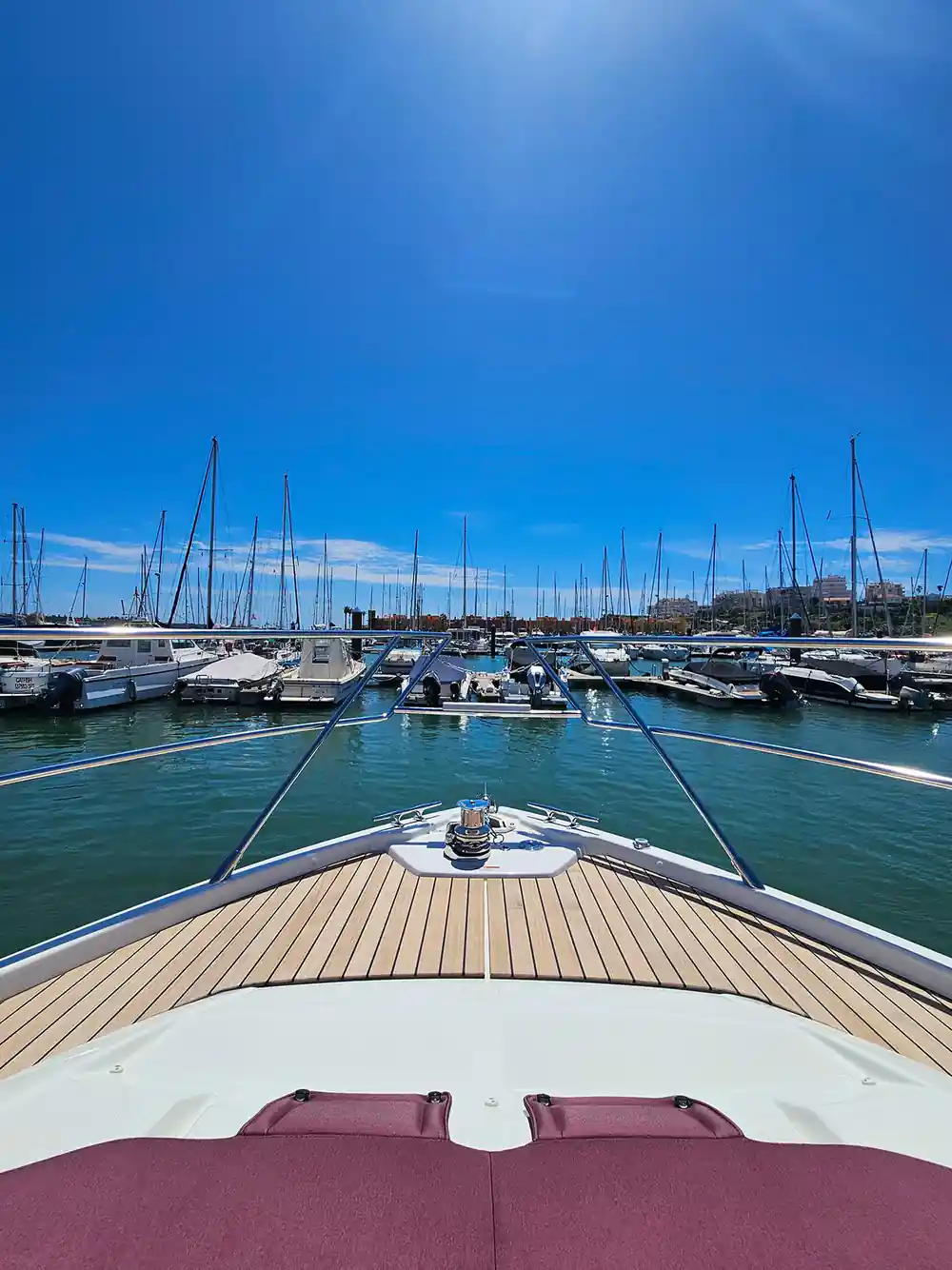
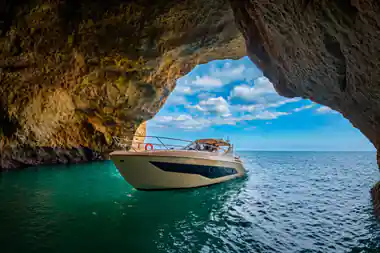
A private-group yacht cruise from Portimão, running 2.5 - 6 hours along the coast past the Benagil sea caves and Marinha Beach.[6]
Tides, Dolphins and Other Things to Watch
The Algarve coast has two highs and two lows on most days, roughly twelve hours and twenty-five minutes apart.[13] Skippers work with that rhythm rather than against it, but it does change how much sand is showing when you pass Praia da Marinha, the beach loved for its natural arches, small coves and golden sand.[14] Low water opens up stretches of beach you would otherwise sail straight past, and it usually means gentler conditions close to the cliffs.
Wildlife is the other variable. Off the Algarve coast, common dolphins are the most-seen species in summer, bottlenose are the only year-round resident pod, and striped dolphins favour deeper offshore water, with sightings of all three peaking from May through October.[5] Look out too for white storks, the birds that nest at sea, a behaviour that has spread onto the southern coast of the Algarve.[15] Nothing is guaranteed on any single morning, which is part of the pleasure.
What to Wear and What to Bring
Days on this coast are usually warm and bright, but wind over open water is cooler than the beach and spray does the rest. A light windproof layer, a hat that will not lift off, sunglasses and high-factor sun cream cover most of it. Footwear with grip is worth packing if you plan to walk any of the clifftop paths, and the Seven Hanging Valleys Trail passes by Benagil Cave and Benagil Beach on the section that runs from Marinha Beach to Carvalho Beach.[16]
Bring a dry bag or a plastic sleeve for the phone, a towel if you mean to swim, and a refillable bottle. Summer sea temperatures sit around 19 to 23°C, comfortable for most people once they are in, and spring water at about 16 to 19°C is bracing but manageable on a hot day.[2] In winter the sea falls to about 15 to 16°C, and the better plan is to enjoy the ride, the cliffs and the light from the deck rather than from the water.[2]
Putting It Together
If you can choose freely, late spring and early autumn give you the best combination: warm air, a sea that has warmed through, long days and room on either side of the summer rush. The private yacht cruise this site books runs from 2.5 - 6 hours and leaves from Portimão, with two starting location options and two drop-off locations, from US$545 as a private group.[6] The distance from Portimão to Benagil Cave is 15 km by coastline, and the route runs past Ferragudo, Carvoeiro, Algar Seco and the Alfanzina lighthouse.[6][17]
Book as early as you can for a specific date, especially in high season, and watch the forecast in the days before you sail. The listing lets you reserve now and pay later, and free cancellation applies up to 24 hours in advance for a full refund.[6] If the sea is up, take the crew's advice: the coast is beautiful in a swell, but a cave mouth is a cave mouth, and there is usually another calm morning coming.
Algarve sea temperature by season
Typical Algarve sea temperature ranges by season, from seatemperature.net.[2]
From-prices for Benagil boat trips
All amounts are US dollar from-prices of GetYourGuide listings.[6][7][8]
Choosing your window
Plan your Benagil Cave day
Choose your month
Summer gives warm air and a warm sea; the shoulder months give calmer water, easier parking and shorter queues at the marina.
Pick your boat
A private yacht that sets its own pace, a fast speedboat, or a sunset cruise: the boat shapes your day as much as the date does.
Book early
In high season, reserve your date early and check the forecast in the days before you sail.
Plan the day
The yacht cruise runs from 2.5 - 6 hours from Portimão, with two starting location options.[6]
Dress for wind
Layers, a hat that stays on and shoes with grip cover most days on this coast, even in high summer.
Book the private yacht for the month you choose
from US$546Reserve now & pay later