The quick version
- Private yacht cruise from Portimão to the Benagil Caves and Marinha Beach, with a duration of 2.5 - 6 hours.[1]
- From US$545 for a private group, with free cancellation up to 24 hours in advance.[1]
- A limestone sea cave about 50 metres across with walls rising 15 metres to a domed ceiling.[2][3]
- Since August 13, 2024, you cannot disembark on the beach inside the cave or swim into it.[4]
- A skip-the-line, private day on the water for couples, friends or families who want space and flexibility.[1]
- Top choice Private Yacht Cruise from US$545 Duration2.5 - 6 hours[1]Rating4.74 from 1,768 reviews[1]GroupPrivate group[1] Check availability
- Speedboat Sea Cave Tour from US$14 Duration1.5 hours[5]Rating4.81 from 7,820 reviews[5]GroupLive tour guide[5] See this tour
- Sunset Benagil Cruise from US$13 Duration75 minutes[6]Rating4.81 from 2,545 reviews[6]GroupSmall group available[6] See this tour
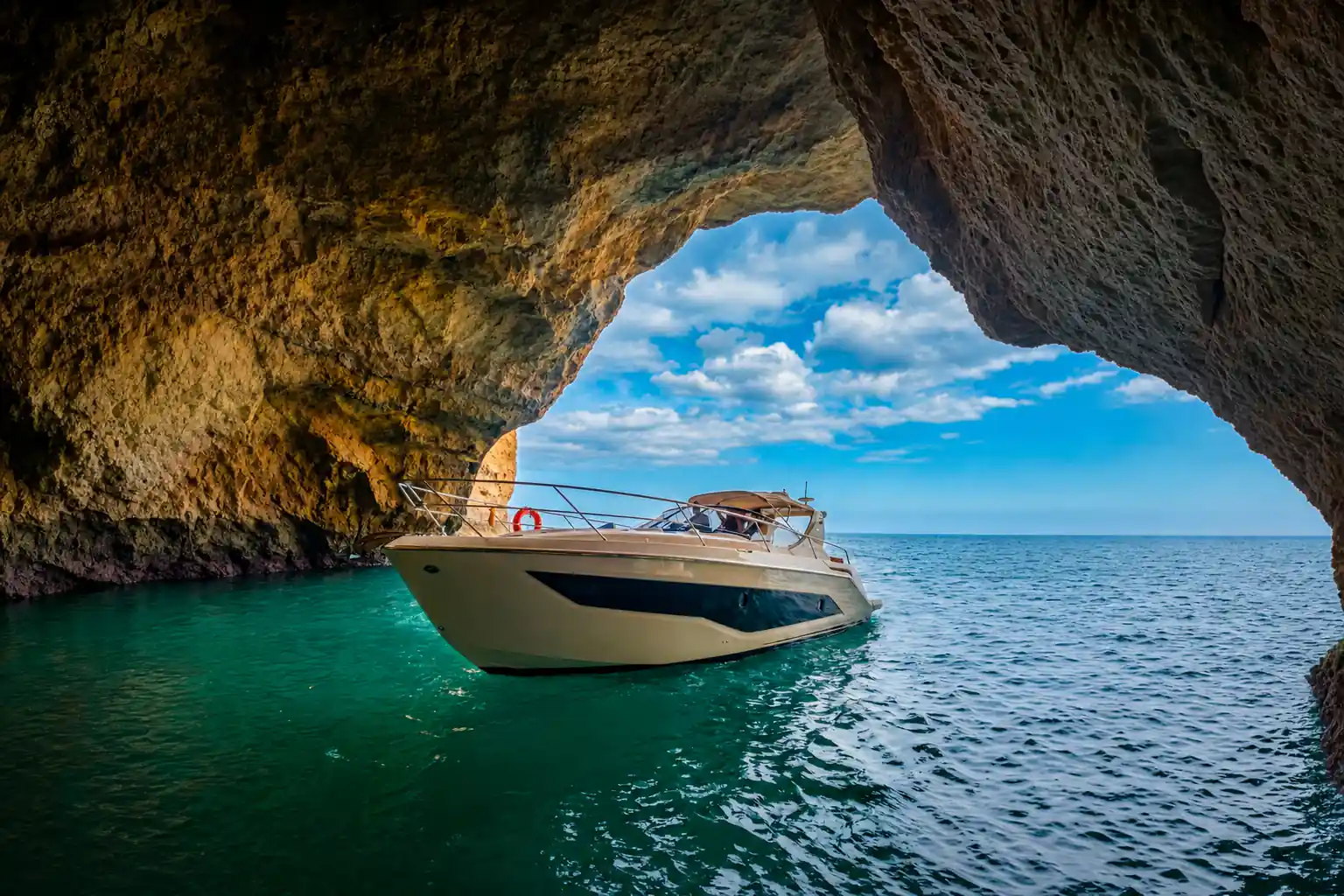
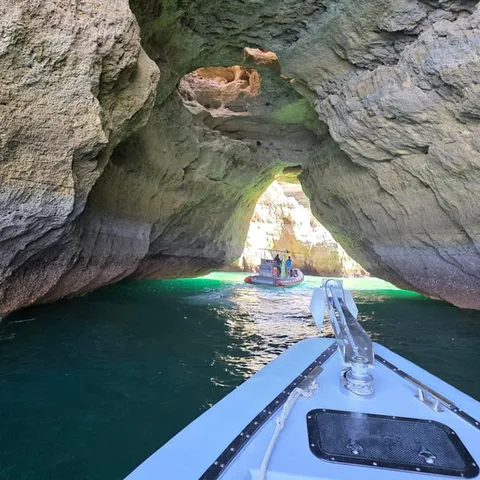
As of August 13, 2024, visitors will no longer be allowed to disembark onto the beach inside the Benagil Cave or swim into it.
Is a private yacht the right way in?
What to pack
- Sunscreen, hat and sunglasses
- Light windproof layer
- Waterproof phone pouch
- Cash or card for extras
Before you board
- Check your booking confirmation
- Arrive early at the departure point
- Tell the operator about mobility needs
- Know the cave entry rules
A private yacht day from Portimão
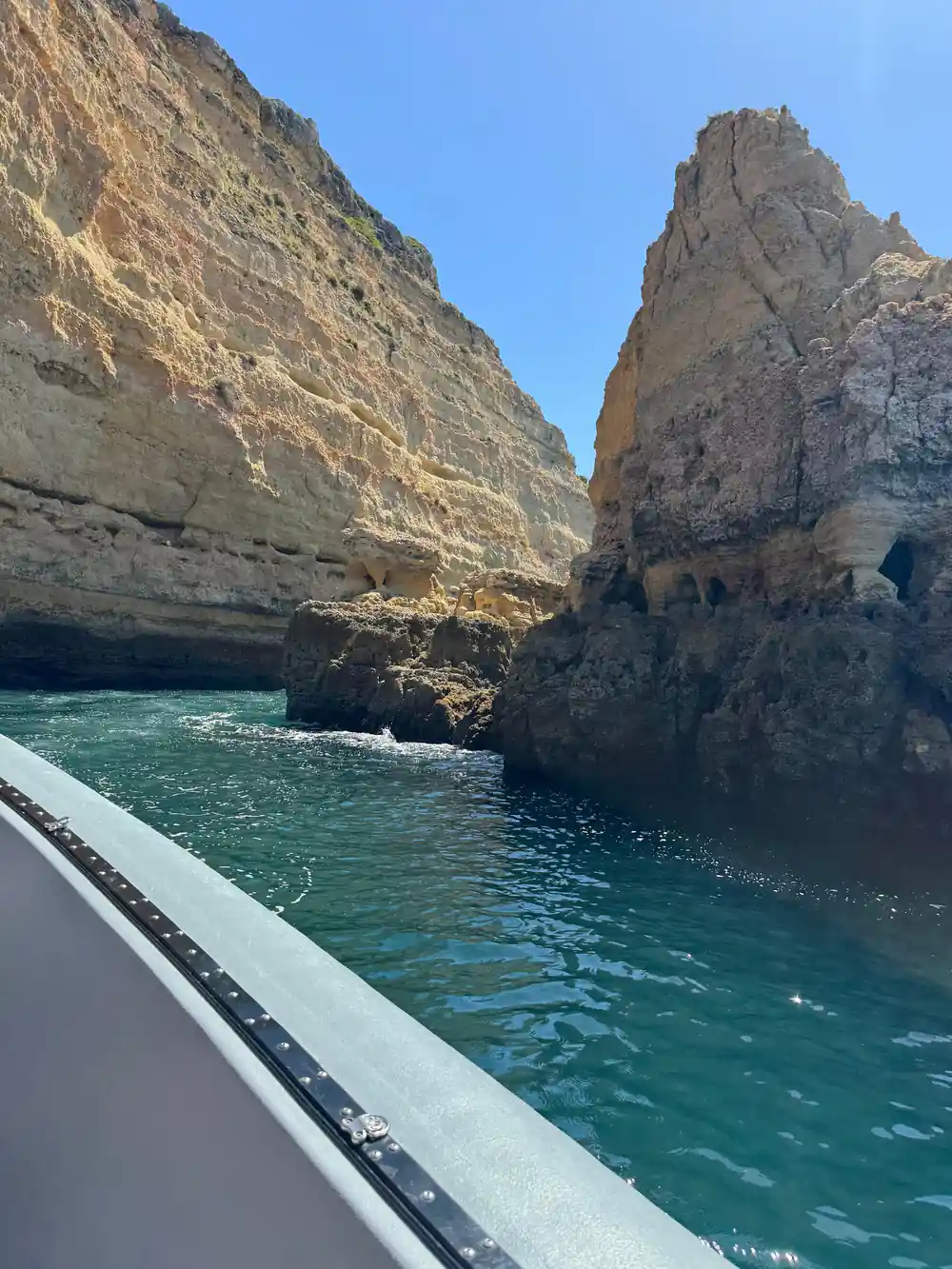
Benagil is a small fishing village in the Lagoa municipality, within Portugal's Algarve region.[7] The cave lies 15 km by coastline from Portimão, and the private yacht cruise follows that shore, past old watchtowers, rock stacks and quiet coves, before it reaches the Benagil Sea Cave.[8] The tour runs for 2.5 - 6 hours, so the morning, the afternoon or a long evening can be shaped around your own plans.[1]
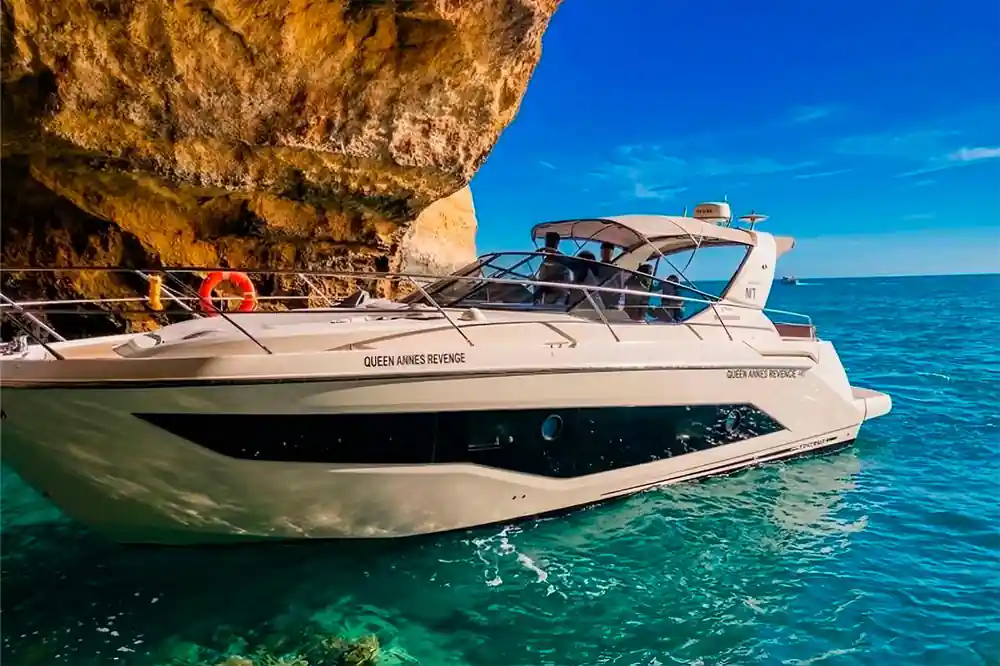
This is a private group tour, which means the deck is yours alone.[1] The driver speaks English, French, Portuguese and Spanish, and skip-the-line access is part of the listing.[1] The route calls at places such as Ferragudo, Carvoeiro, Algar Seco and Praia do Carvalho on its way to Benagil.[1] Marinha Beach, at the far end of the run, is loved for its natural arches, small coves and golden sand.[9]
Boarding at a working marina is part of the atmosphere: ropes, diesel, salt air, and other boats heading out ahead of you. Once you clear the harbour wall the engine note settles and the cliffs begin to tower, first in pale gold, then in deeper orange as the sun drops. Wear a layer even on a hot day, because the wind over open water feels cooler than the beach does. Keep watching the surface as well; gulls, cormorants and the occasional splash are all part of the run.
What is provided, and what is not
The listing names the essentials: a private yacht, a driver who can work in English, French, Portuguese and Spanish, and skip-the-line access.[1] The duration can stretch from 2.5 - 6 hours, giving you a wide window for a gentle cruise, a swim stop, or more time simply floating near the cave.[1]
What you will not find in the listing is a list of extras. It does not mention meals, towels, snorkelling gear or a separate child rate, so families and swimmers should confirm those details with the operator before paying. On a private boat you can also bring your own snacks and drinks, as long as you check any restrictions with the operator first. It is worth asking about cool boxes, glasses and shade as well, because a private yacht is flexible only within what the skipper allows.
It also helps to be clear about what you want from the day before you book. If the priority is a quick look at the cave from the water, a shared boat covers that for far less. If the priority is a slow, unhurried few hours with your own group, a private yacht earns its price. Write down your questions, from life jackets to music on board, and send them to the operator. The answers will tell you quickly whether this is the right boat for your party.
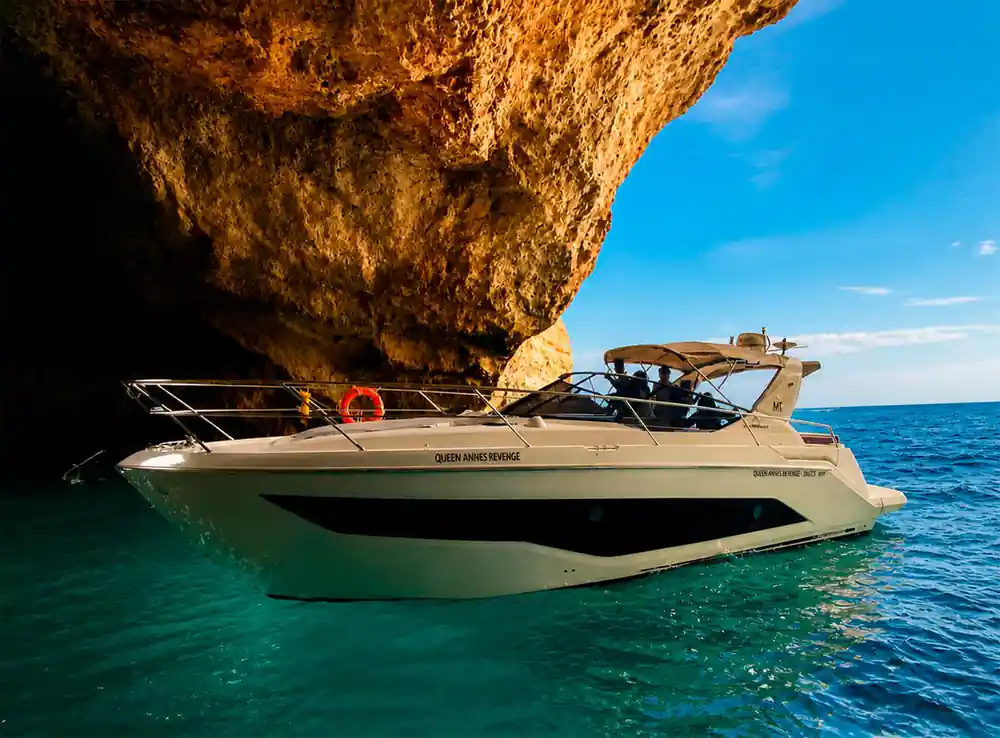
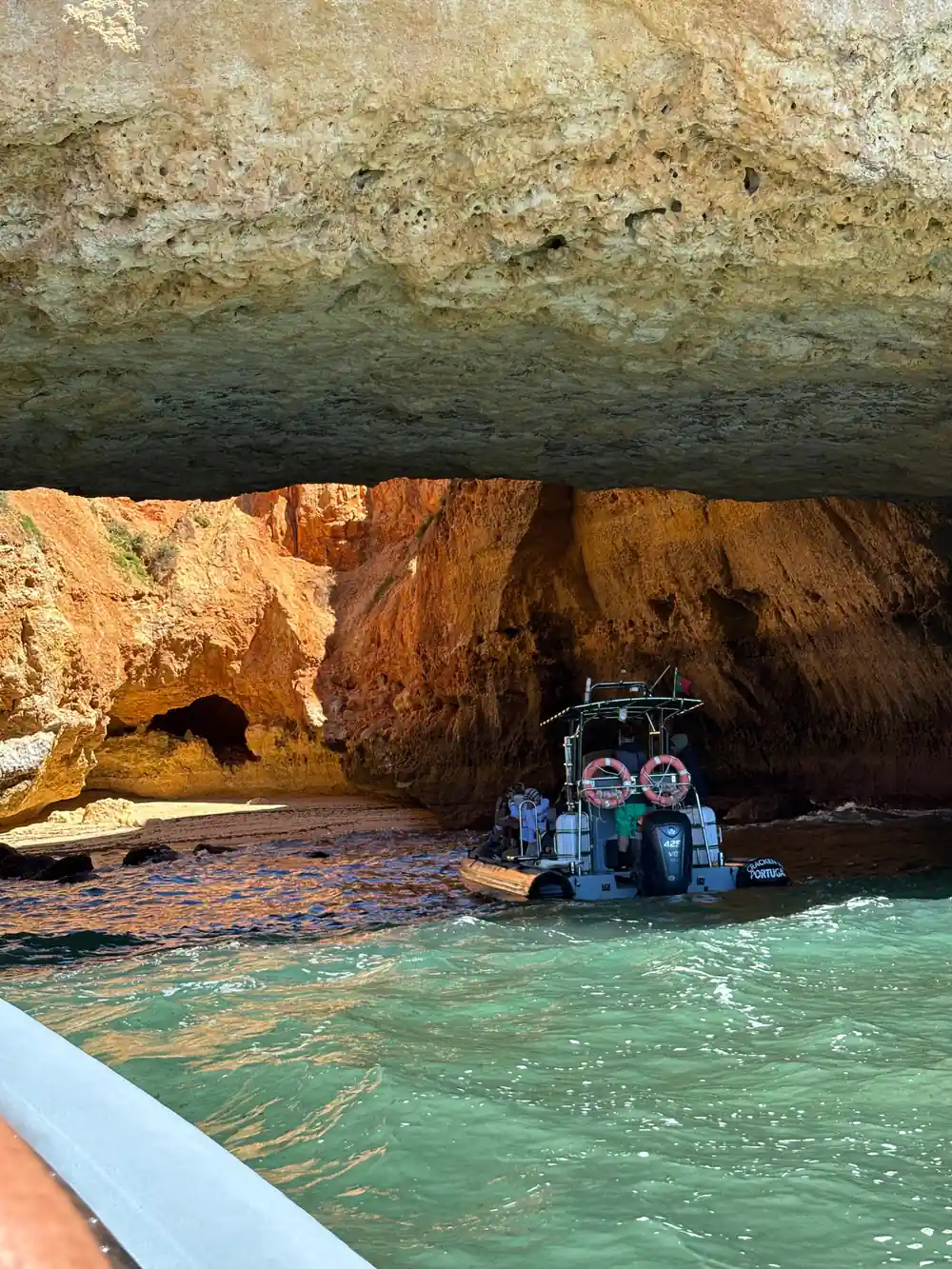
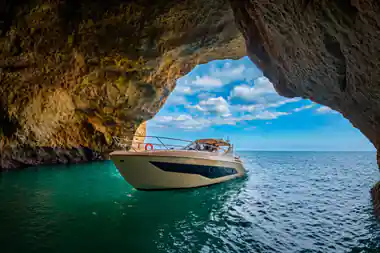
A private yacht at the entrance to the Benagil Sea Cave, light catching the limestone arch.
Day-bag checklist
The Algarve sees over 3,000 hours of sunshine a year, so sun protection is not a small detail on an open boat.[10] Summer daytime highs are around 25 to 29°C.[11] A sun hat, sunglasses, sunscreen and a refillable water bottle cover the basics. A light windproof layer is still a good idea once the yacht is underway.
Sea temperatures in summer reach around 19 to 23°C[12], and the water can feel cooler than the air does. If you plan to go in, bring a towel, a change of clothes and a pair of shoes with grip. In winter, highs stay near 16 to 17°C and the sea drops to around 15 to 16°C, so warm layers are more useful than swimwear.[11][12]
Spring and autumn are the in-between seasons, with a gradual rise or fall in water temperature and softer light on the cliffs.[12] Whether you sail in high summer or midwinter, pack for the hour you will spend sitting still, not just the hour you spend in the sun. A small dry bag, a hair tie and a spare pair of socks are the kind of things people forget and then miss. A refillable bottle saves plastic and money at the marina cafes.
Cameras and phones
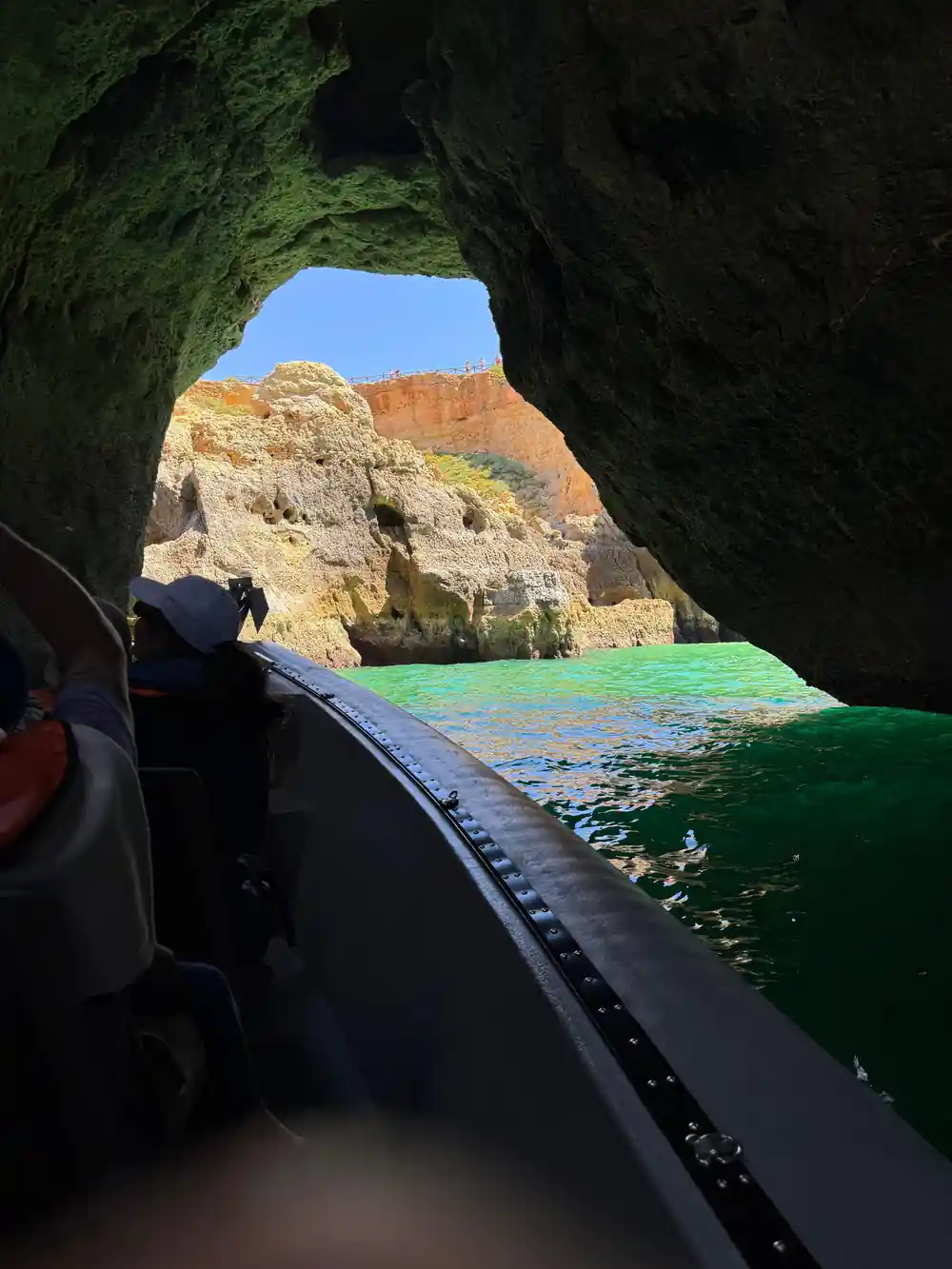
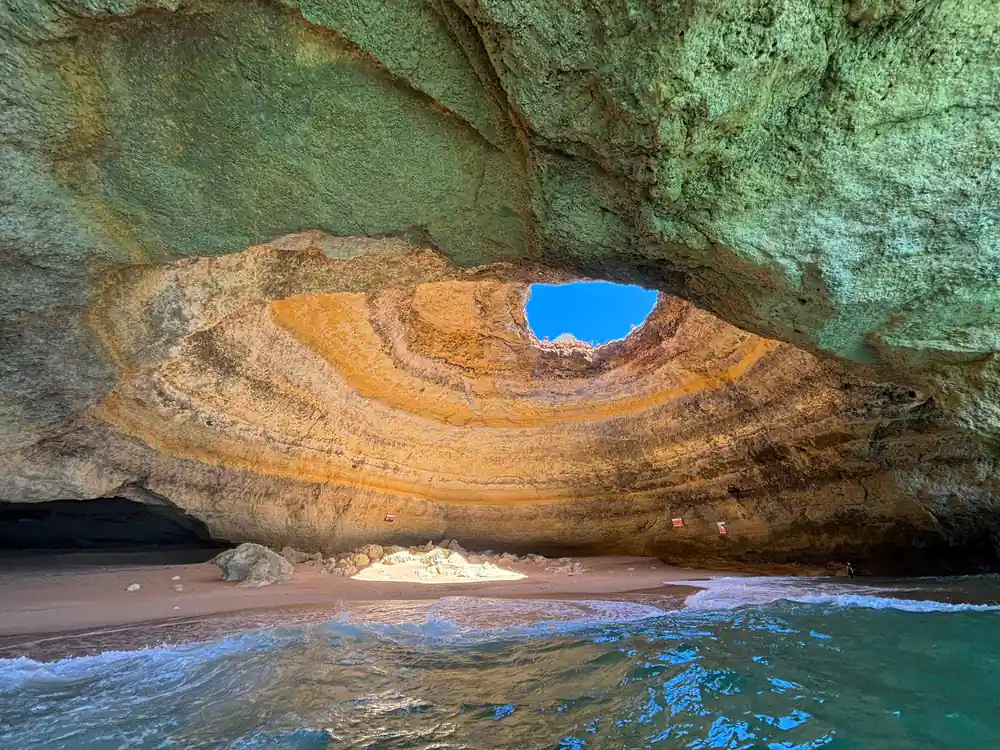
Benagil Cave was formed over millions of years by coastal erosion in limestone.[2] Inside, it is roughly circular and about 50 metres across, with walls rising 15 metres to a domed ceiling.[3] Sunlight drops through an oval opening about 10 metres across, lighting the water below.[3] That light-throw is what makes the cave photographs so distinctive.
On an open boat, spray can reach anywhere. A waterproof pouch or dry bag keeps a phone or camera safe, and a lanyard stops it blowing away. Hold your device two-handed when the boat is moving, and wait until the yacht is steady before leaning out for a low-angle shot. A microfiber cloth in a pocket is useful, because a single smear of salt can soften every picture you take for the rest of the day.
Salt spray is the quiet enemy of electronics, so rinse nothing and wipe gently, and keep the pouch sealed until you are back on land. If you are shooting video, brace your elbows on the gunwale and let the boat's own movement do the panning; a steady, slow clip beats a shaky zoom every time. Ask the skipper where the light falls best inside the cave, then put the phone down for a minute and simply look up at the opening.
from US$545
Private yacht cruise to Benagil Caves and Marinha Beach from Portimão, with skip-the-line access and free cancellation.
Who should not book this
If you are prone to motion sickness, think carefully before spending 2.5 - 6 hours on the water.[1] The open sea can be lively even on a calm day, and the cave itself is reached by boat rather than by foot. A shorter, faster trip is not necessarily easier, but it is over sooner.
The listing does not state that the yacht is wheelchair accessible, and boarding from marina pontoons involves steps and movement.[1] If you have limited mobility, ask the operator about boarding help before you book. For families, the private group format gives you flexibility[1], but confirm age policies and life jackets with the operator before booking.
Small children need watching on any boat, and the listing does not set an age limit, so ask before you book.[1] People who burn easily should think about shade, because an open yacht may offer less of it than a large catamaran. Anyone who expects a narrated commentary all the way round should check what is provided, since this listing names a driver rather than a live tour guide.[1] Knowing these details in advance is what turns a good day on the water into a smooth one.
The rules at the cave
The rule that matters most is recent and firm. As of August 13, 2024, visitors are no longer allowed to disembark onto the beach inside the Benagil Cave or swim into it.[4] That means your yacht will take you into the cave, but everyone stays on board. The ban applies to all visitors.
The cave is limestone shaped by coastal erosion.[2] The rock is dramatic but not indestructible. Follow the skipper's instructions, keep hands and feet inside the boat, and do not ask to be put ashore near the cave mouth. The whole point of the current rule is to protect the cave for the people coming after you.
Photographs from the deck still work beautifully, especially when the sun is high and the beam lands on the sand below.[3] Look up at the opening, watch the water change colour, and listen; the echo under the dome is part of the experience. Skippers and local operators enforce the rules closely, and a calm, cooperative group tends to get a longer, closer look than one that pushes against them. It is worth remembering that this is a working coastline, not a theme park.
Planning the day around the sea
Tides on the Algarve coast have two highs and two lows on most days, roughly twelve hours and twenty-five minutes apart.[13] The skipper will plan the run around the conditions, and the listing asks you to check availability for starting times.[1] An early start often means calmer water and softer light, while a later start can line up with sunset.
From May through October, sightings of common, bottlenose and striped dolphins peak along this coast, and bottlenose dolphins are the year-round resident pod.[14] The 15 km coastline between Portimão and the cave gives you a long stretch of water to scan.[8] If you see a pod, tell the skipper; they may be able to adjust the course without disturbing the animals.
Whatever you choose, build some slack into the day. Traffic along the Algarve coast can be slow in high season, parking near the marinas fills up, and a boat will not wait. Pack light, arrive early, and keep the rest of the afternoon free in case the skipper suggests heading further along the coast. Late light is one reason to choose an evening departure, and Marinha Beach at that time is a memorable sight.
Inside Benagil Cave
Every value here comes from[3].
Compare your Benagil boat options
From-prices in US dollars from GetYourGuide listings[1],[5],[6],[15].
Best times and seasons
How to prepare
Confirm the details
Check your booking for meeting point, duration and start time; the tour runs 2.5 - 6 hours.[1]
Pack for sun and spray
Take sunscreen, a hat, a light layer and a towel. Summer sea temperatures reach around 19 to 23°C.[12]
Protect your phone
Bring a waterproof pouch and a lanyard. You want to shoot the cave without losing your device.
Learn the cave rule
Remember that since August 13, 2024, you cannot disembark inside the cave or swim into it.[4]
Arrive ready to board
Be at the departure point in good time and let the operator know if you have mobility needs.
Ready to plan your Benagil yacht day?
from US$546Reserve now & pay later