The quick version
- A private listing puts one party on the boat. The private yacht cruise to Benagil and Marinha Beach is listed from US$545 and runs 2.5 - 6 hours.[1]
- A private boat to Benagil Cave and Marinha Beach is listed from US$234 and takes 75 minutes, rated 4.99 from 58 reviews.[2]
- A shared speedboat adventure from Portimão is listed from US$14 and takes 1.5 hours, rated 4.81 from 7,820 reviews.[3]
- Visitors cannot disembark onto the beach inside Benagil Cave or swim into it, and the cave interior is roughly 50 metres across.[4][5]
- Sea temperatures run about 19-23°C in summer and 15-16°C in winter, and dolphin sightings peak from May through October.[6][7]
- Top choice Private Yacht Cruise from US$545 Duration2.5 - 6 hours[1]Rating4.74 from 1,768 reviews[1]Guide languagesEnglish, French, Portuguese, Spanish[1]CancellationFree cancellation up to 24 hours[1] Check availability
- Sea Caves Speedboat from US$14 Duration1.5 hours[3]Rating4.81 from 7,820 reviews[3]Guide languagesEnglish, Spanish, French, Portuguese[3]CancellationFree cancellation up to 24 hours[3] See this tour
- Benagil Sunset Cruise from US$13 Duration75 minutes[8]Rating4.81 from 2,545 reviews[8]Guide languagesSpanish, English, French, Portuguese[8]CancellationFree cancellation up to 24 hours[8] See this tour
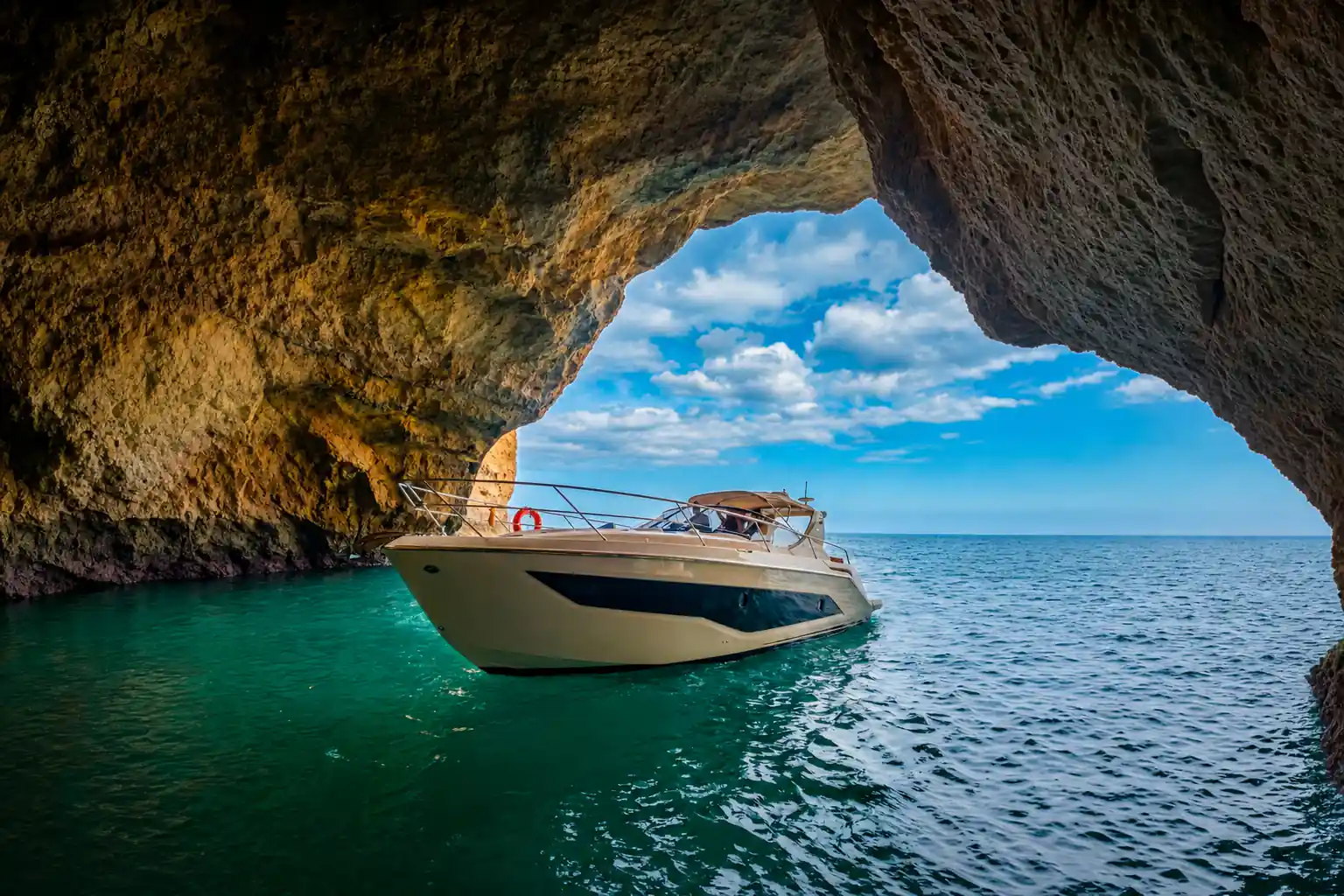
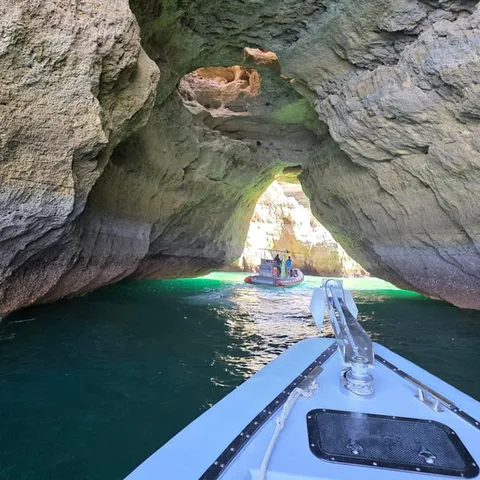
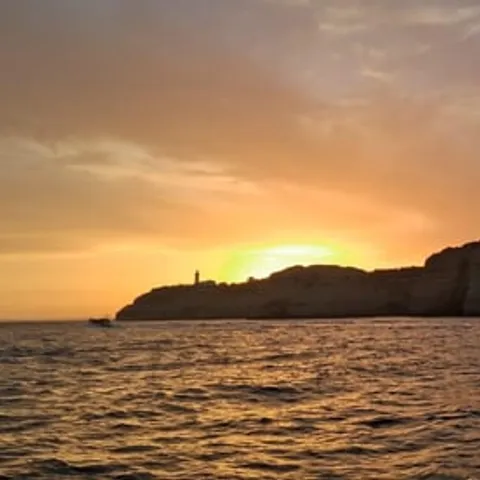
As of August 13, 2024, visitors will no longer be allowed to disembark onto the beach inside the Benagil Cave or swim into it.
Private or shared: which one to book
Before reserving
What private means on the Algarve coast
Private, along this stretch of the Algarve, describes the boat rather than the cave. Listings marked private group put a single party aboard, and the hulls that carry them range from short-hopping ribs and speedboats to sailing yachts and catamarans. The arches, the sea caves and the harbour mouths stay the same whether the boat is full or carrying one family.
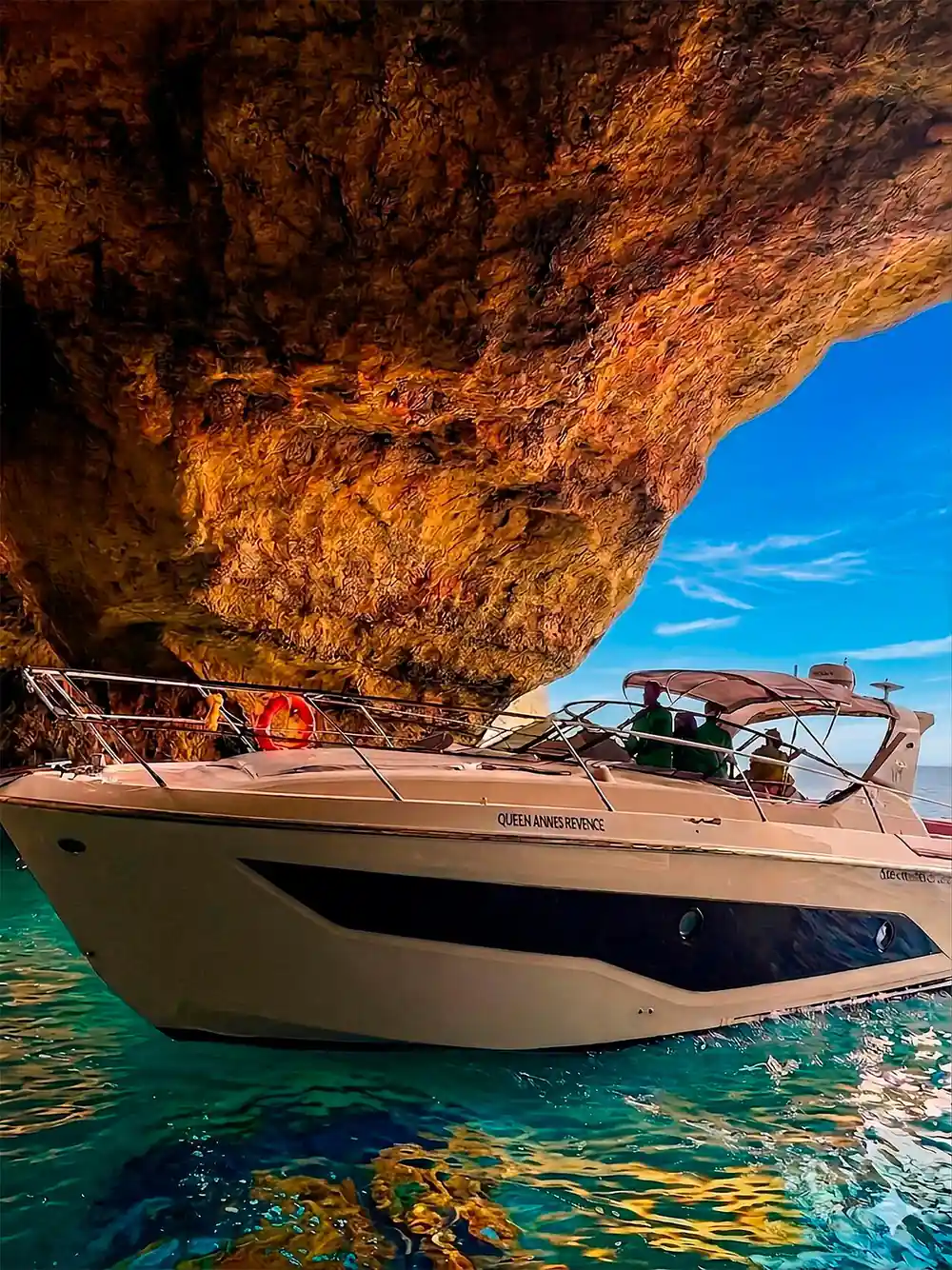
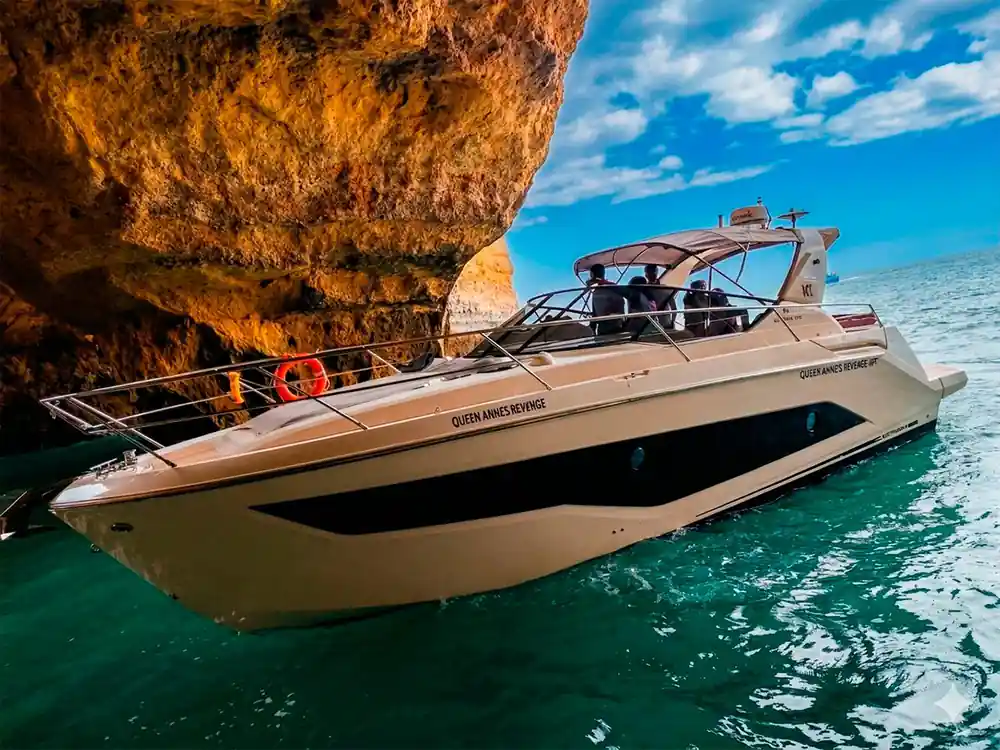
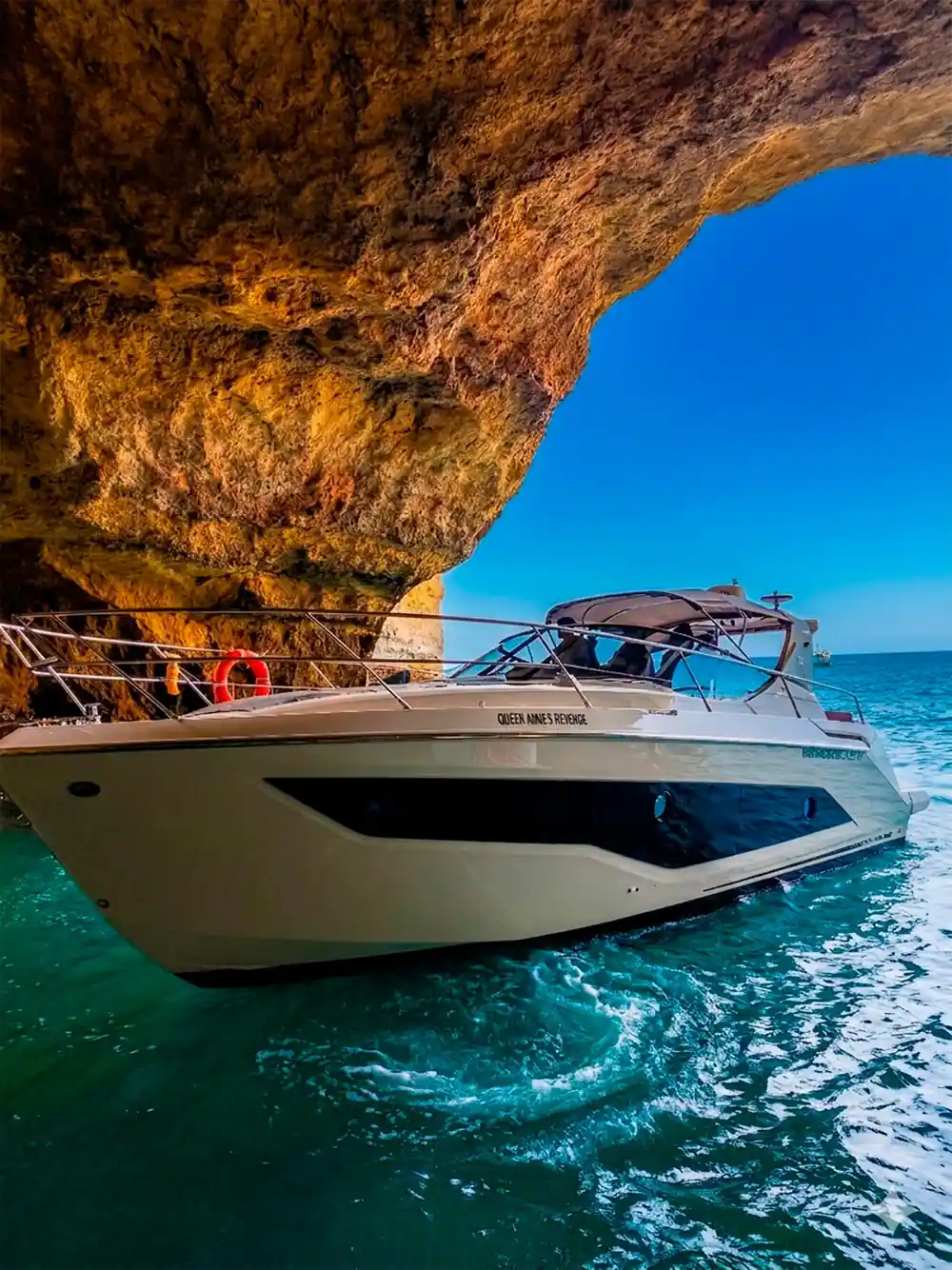
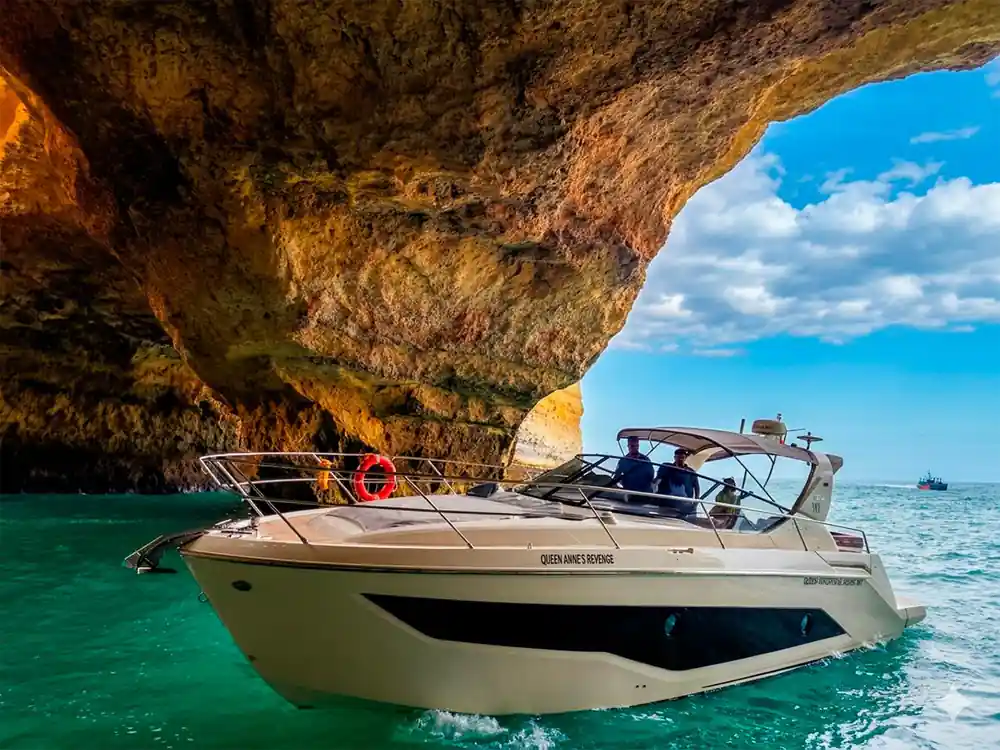
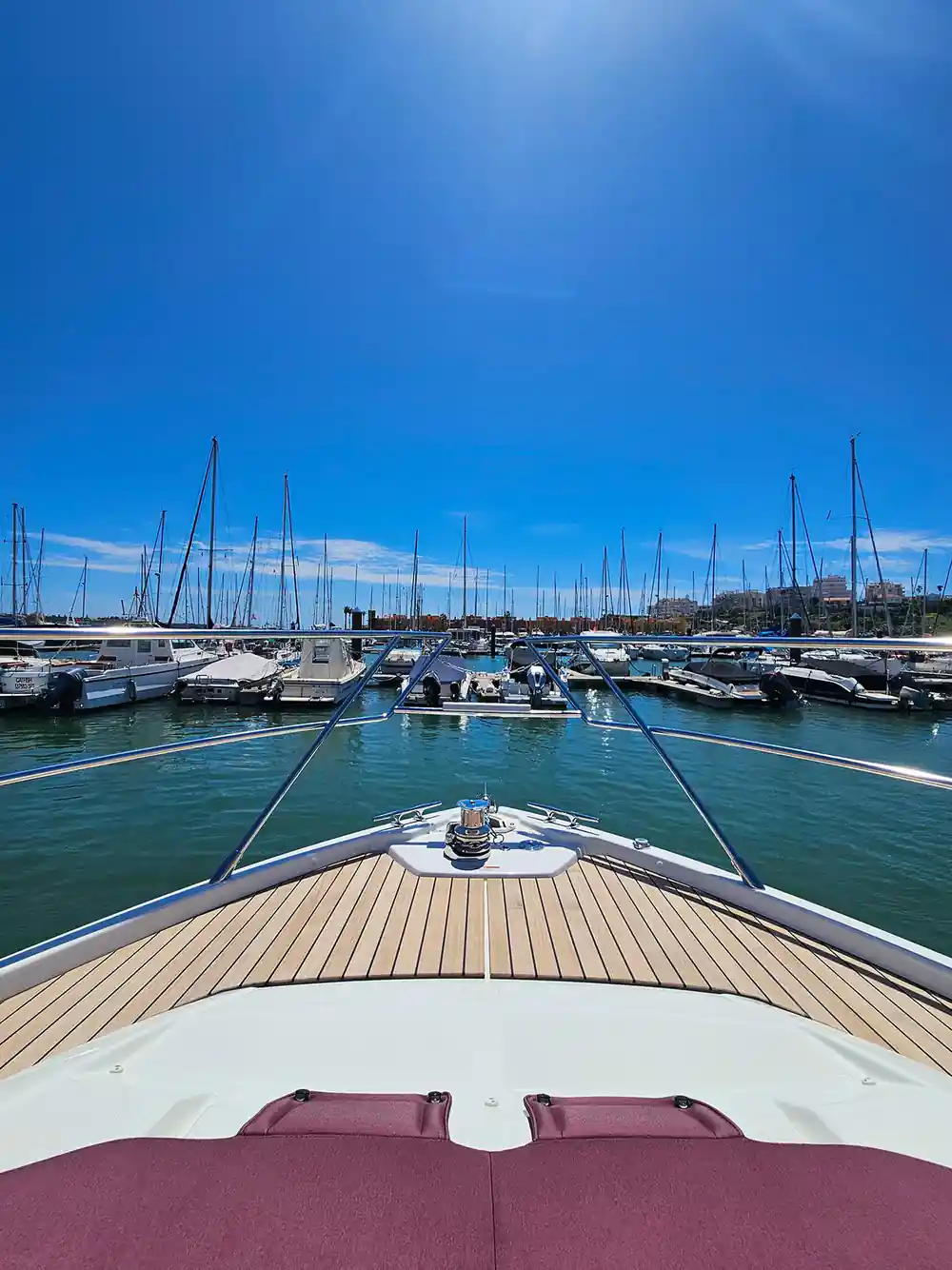
One private yacht cruise to the Benagil Caves and Marinha Beach is a private group listing from US$545, rated 4.74 from 1,768 reviews, running 2.5 - 6 hours with a driver who speaks English, French, Portuguese and Spanish, and it lets you skip the ticket line.[1] A shorter private option, a boat trip to Benagil Cave and Marinha Beach, is listed from US$234 and takes 75 minutes, rated 4.99 from 58 reviews.[2]
The private listings here cover a wide range. A private speedboat from Portimão is listed from US$346 for 1.5 hours, and a private boat trip to the caves from US$403 for 2 hours.[11][12] Further up, a private catamaran and kayak tour is listed from US$1,038 for 2.5 hours, and a private boat ride covering Lagos and Benagil with snacks and drinks from US$1,151 for 4 hours.[9][13]
The four things private changes
Route comes first. A private boat runs the coast at its own pace, and the longer listings string more of the coastline together. The yacht cruise listing works out of Portimão past Praia da Angrinha, Ferragudo and Praia da Rocha, along the Carvoeiro cliffs and Algar Seco, by the Alfanzina lighthouse and Carvalho Beach, then into Benagil Sea Cave and Benagil beach.[1]
Time is the second. Private listings here run from 75 minutes on a short cave and Marinha run to 2.5 - 6 hours on the private yacht cruise.[1][2] The length of the day out is a choice rather than a fixed menu.
People are the third: a private group listing means your party and nobody else aboard.[1] Language is the fourth, and it varies by operator. The private yacht cruise has a driver who speaks English, French, Portuguese and Spanish, and one private boat to Benagil and Marinha lists English, French, Portuguese, German, Spanish and Italian.[1][14]
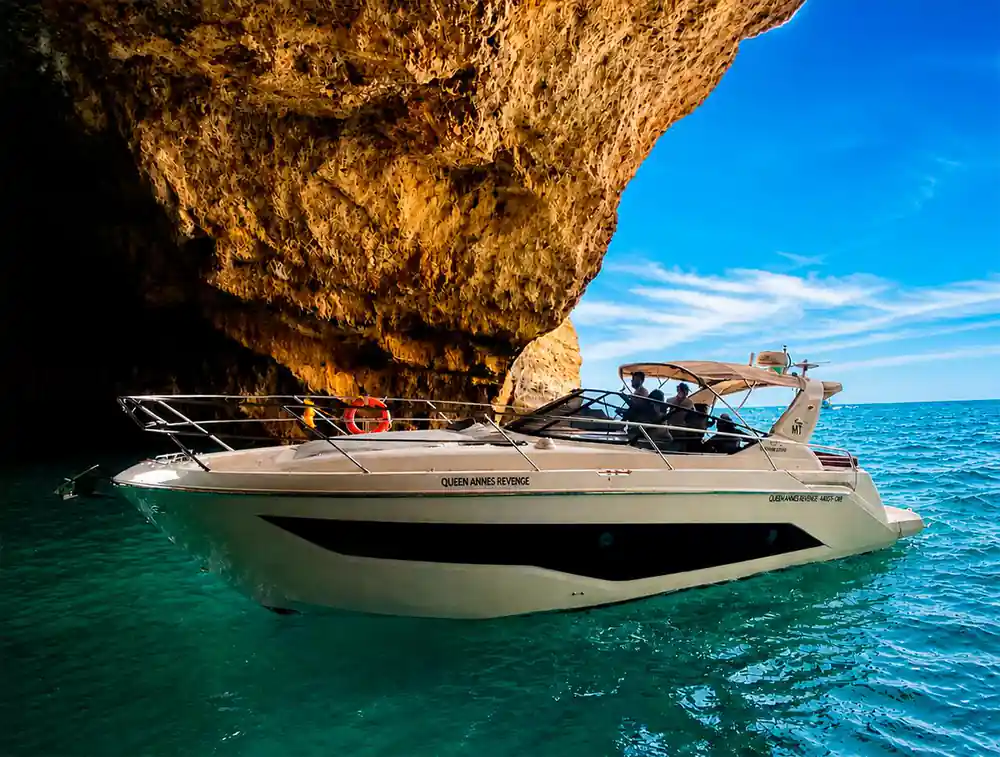
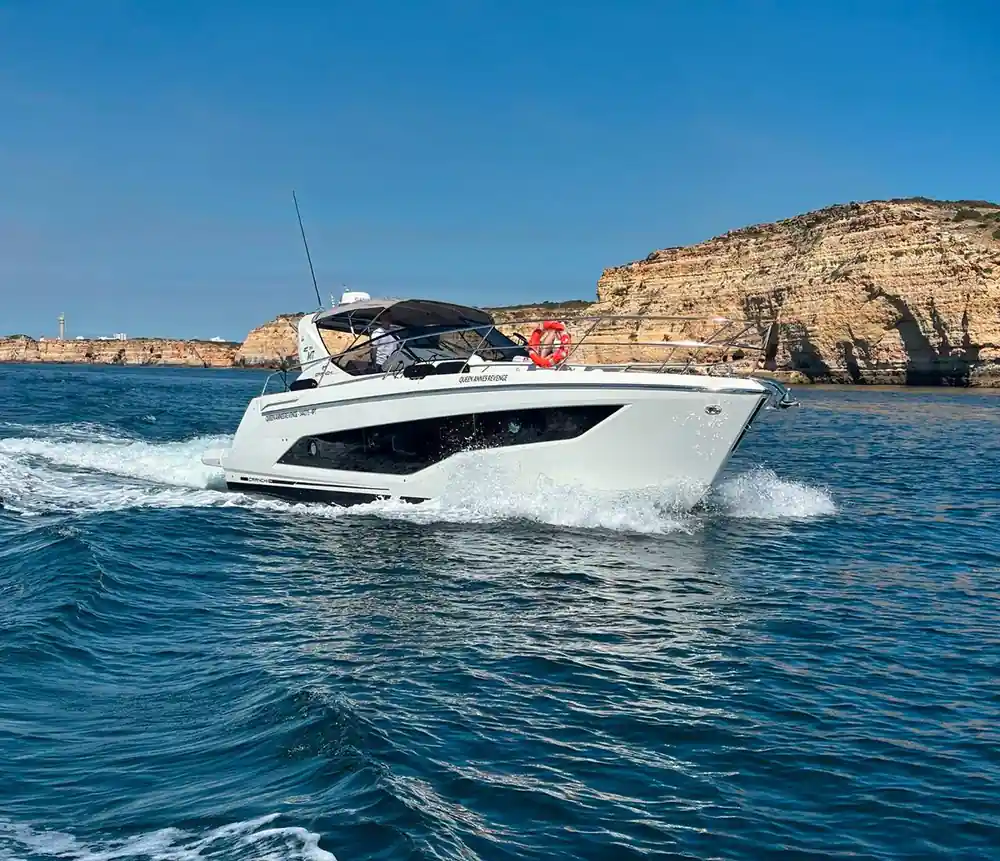
The cliff line between Carvoeiro and Marinha, seen from the water.
What a private boat does not change
The rules apply to everyone. Visitors are not allowed to disembark onto the beach inside Benagil Cave or to swim into it, a prohibition in force since August 13, 2024.[4] It makes no difference whether you arrive by kayak, by shared catamaran or by private yacht.
The cave itself is fixed. Its interior is roughly circular and about 50 metres across, with walls rising 15 metres to a domed ceiling, and the roof opening is an oval about 10 metres across.[5] The rock behind it is limestone, shaped over millions of years by coastal erosion.[15] A kayak sits close to the water; a yacht deck sits well above it. The cave reads differently from each.
Water and weather are constants too. Sea temperatures run about 19-23°C in summer and 15-16°C in winter.[6] Summer daytime highs sit around 25 to 29 C and winter highs near 16 to 17 C.[16] Tides run two highs and two lows on most days, roughly twelve hours and twenty-five minutes apart, whatever boat you are on.[17]
When the shared boat is the better buy
If the cave is the whole point of the day, shared boats are hard to argue with. A speedboat adventure from Portimão is listed from US$14 and takes 1.5 hours, rated 4.81 from 7,820 reviews.[3] A sunset cruise to Benagil Cave and Marinha Beach is listed from US$13 and takes 75 minutes, rated 4.81 from 2,545 reviews.[8]
Shared catamarans tend to be steadier and roomier. One catamaran tour from Portimão is listed from US$28 for 2 hours, a catamaran from Lagos at from US$32 for 2.5 hours, and a coastline catamaran from Albufeira at from US$33 for 2.5 hours. All three listings are wheelchair accessible.[18][19][20]
Dolphins usually come attached to a shared ticket, and to some private ones. Common dolphins are the most-seen species in summer off the Algarve, bottlenose are the only year-round resident pod, and sightings of these species peak from May through October.[7] A shared cruise from Albufeira pairs the caves with dolphin watching and is listed from US$46 for 2.5 hours.[21]
from US$545
The Private Yacht Cruise to the Benagil Caves and Marinha Beach is a private group listing rated 4.74 from 1,768 reviews.[1]
Yacht, rib or speedboat: the private options
Private does not mean one kind of boat. The private listings on this coast mix hulls and durations. A 75-minute run to Benagil Cave and Marinha Beach is listed from US$234, and a private boat from Portimão to Benagil and Marinha from US$460 for 2 hours.[2][22]
Yachts and catamarans sit at the comfortable end. They carry shade and seating and move gently, and the trade is speed. A private catamaran and kayak tour runs 2.5 hours from US$1,038, and the yacht cruise to the caves and Marinha Beach runs 2.5 - 6 hours from US$545.[1][13]
Ribs and speedboats sit at the quick end. They run close to the waterline, reach the cave mouths fast, and turn a long stretch of coast into a short ride. A private rib from Albufeira combines dolphins and the caves in 2.5 hours from US$576, and a private speedboat to Benagil from Portimão is listed from US$346 for 1.5 hours.[11][23] There is no wrong answer here, only a different shape of day.
Getting the most out of a private cruise
Choose the window that matches your day. The yacht cruise runs 2.5 - 6 hours, which gives you a short version and a long one to choose between, and both take in Portimão, Carvoeiro, Carvalho Beach and Benagil Sea Cave.[1] Starting times are not fixed: the listings say to check availability for the date you want.[1]
Light is worth planning around. The roof opening in the cave is about 10 metres across and drops a bright shaft into a shaded chamber.[5] Around the middle of the day that shaft falls straight down; later it slants across the walls. The Algarve records over 3,000 hours of sunshine a year.[10]
Pack for open water rather than the beach. Sea temperatures are about 19-23°C in summer and 15-16°C in winter, which makes a summer swim stop and a winter one very different propositions.[6] Wind on the water feels cooler than the beach forecast suggests, and the sun off pale limestone is stronger than it looks. A light layer, a hat and sun cream earn their place in the bag.
Picking your harbour and your season
Portimão is the closest big harbour to the cave, 15 km away by coastline.[24] Boats also leave from Ferragudo, Carvoeiro, Armação de Pêra, Albufeira, Vilamoura and Lagos, and those trips begin with a longer run along the cliffs before they reach Benagil.
Season shapes the trip more than the hull does. Summer highs are around 25 to 29 C with the sea near 19-23°C; winter highs are near 16 to 17 C with water around 15-16°C. Spring water sits at about 16-19°C and autumn at about 18-20°C.[6][16] The same water can feel like two different coasts at either end of the season.
There is more than rock on this coast. White storks nest at sea here, a behaviour that has spread south onto the Algarve coast.[25] Praia da Marinha, at the eastern end of the boat circuit, is known for natural arches, small coves and golden sand.[26] If you have a land day too, the Seven Hanging Valleys Trail passes Benagil Cave and Benagil Beach on its Marinha Beach to Carvalho Beach section.[27]
Private Benagil boat tours: from-prices
From-prices of private Benagil boat listings:[1][2][12][22][28][29]
What private Benagil boats cost in US dollars
All amounts are US dollar from-prices of the private listings[1][2][12][28]
When to go on the Algarve coast
Choosing your Benagil boat
Start with the harbour
Portimão, Ferragudo, Carvoeiro, Albufeira, Lagos and Vilamoura all launch boats this way. Pick the harbour nearest where you are staying.
Then pick private or shared
A private listing gives you the whole boat. A shared listing gives you a seat at a far lower fare, with other travellers aboard.
Check the duration
Private options here run from 75 minutes to 2.5 - 6 hours. The length of the trip is a real choice.[1][2]
Book the slot you want
Starting times are set by availability. Pick your date first and see what the operator offers that day.[1]
Pack for open water
Wind on the water is cooler than the beach and the sun off pale rock is strong. Bring a light layer, a hat and sun cream.
See the private yacht cruise to Benagil and Marinha
from US$546Reserve now & pay later