









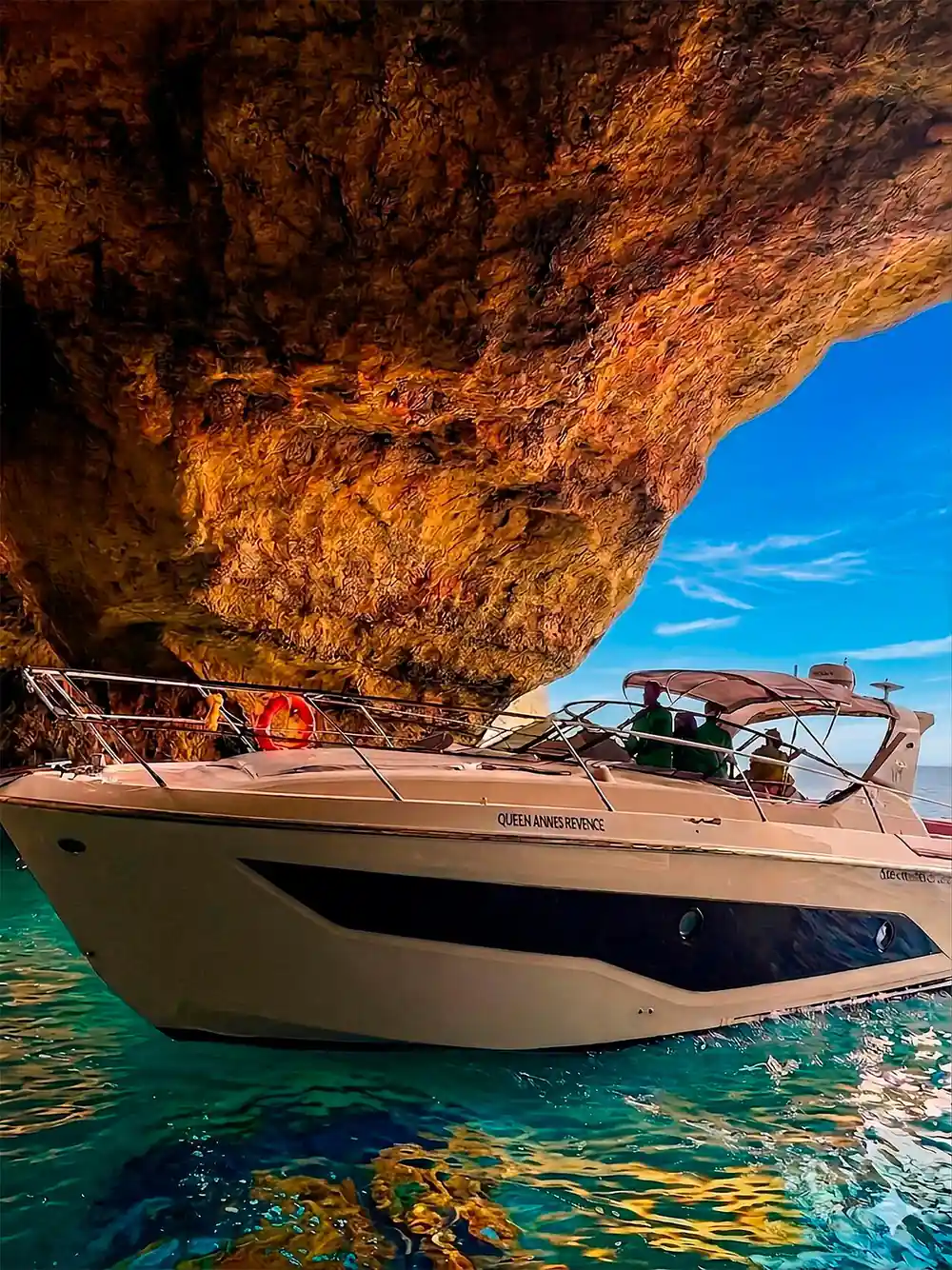
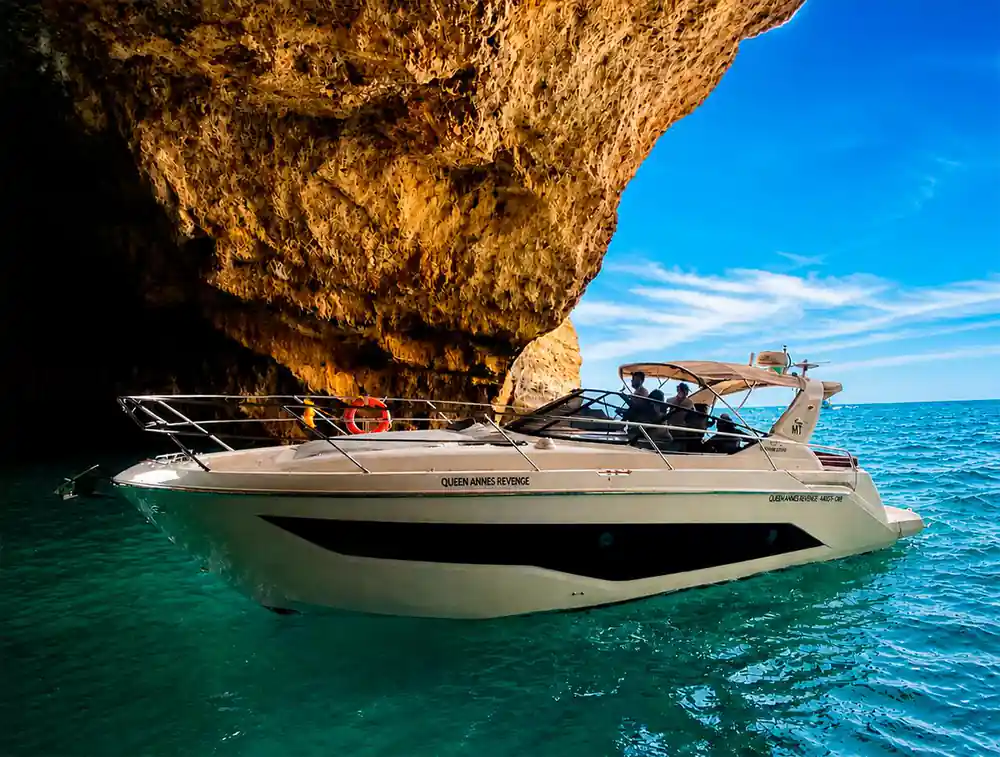
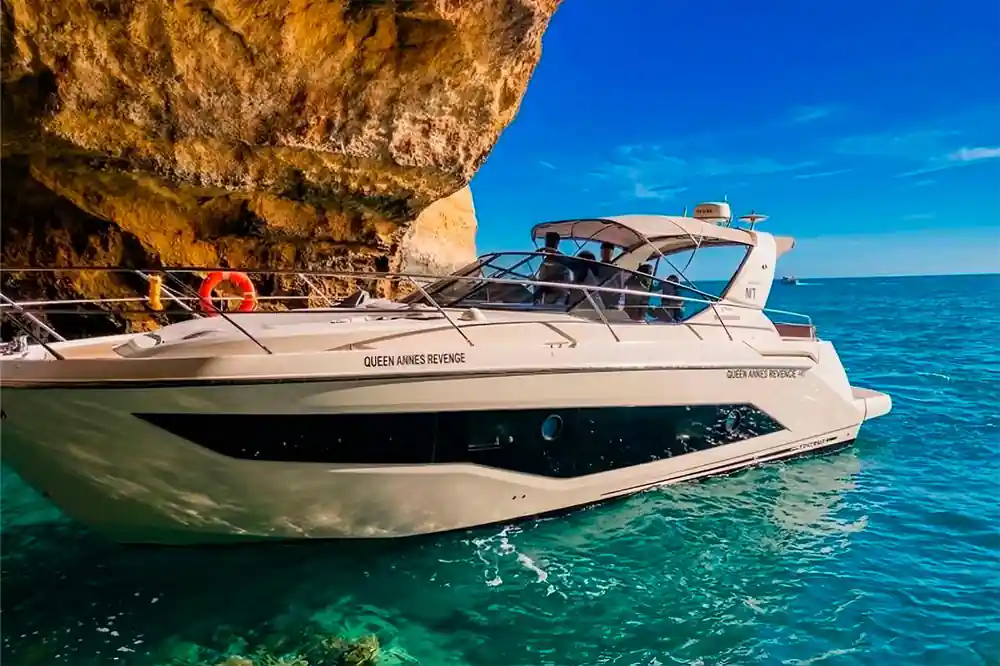
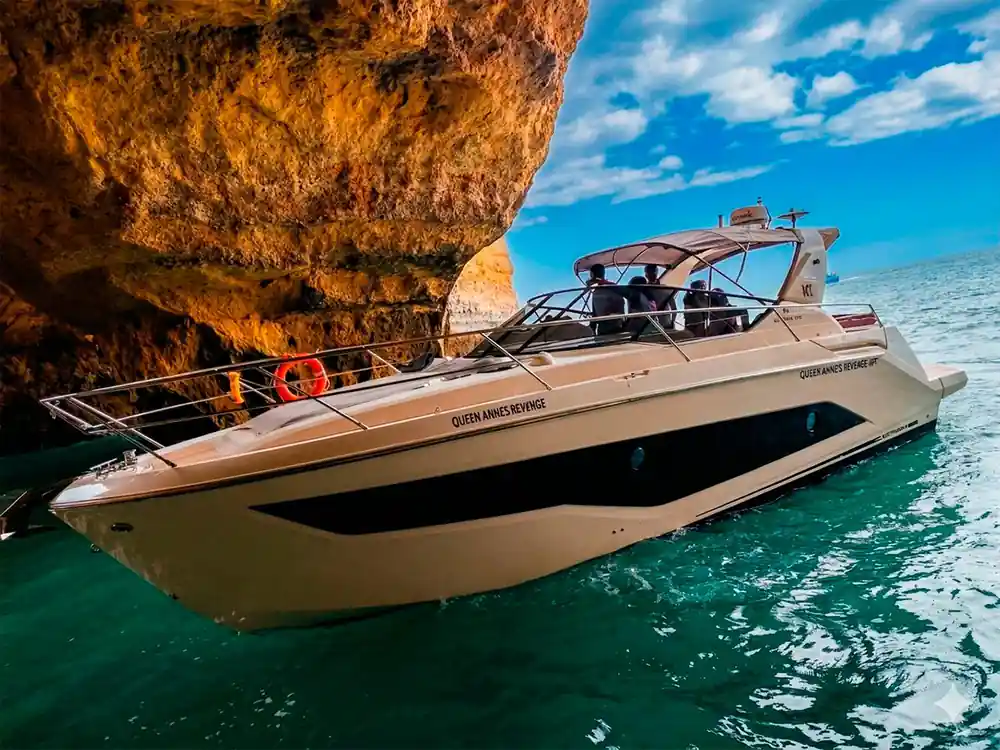
What the Benagil cave actually is
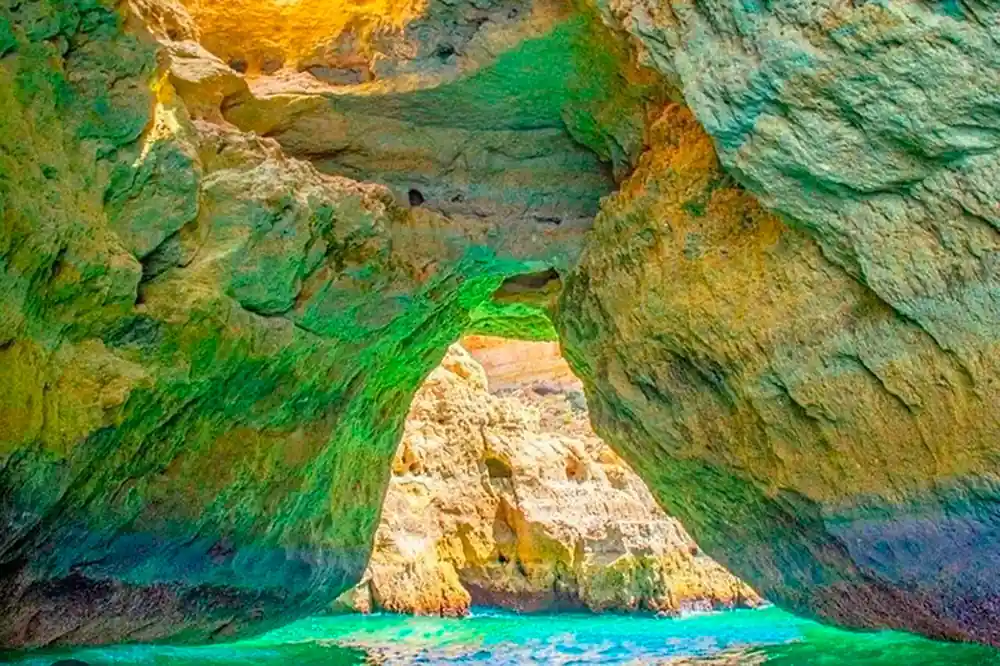
Its proper name is the Algar de Benagil, and algar is the Portuguese word for a chasm or swallow hole. The name is a clue to how it formed, and it is more accurate than calling it a cave.
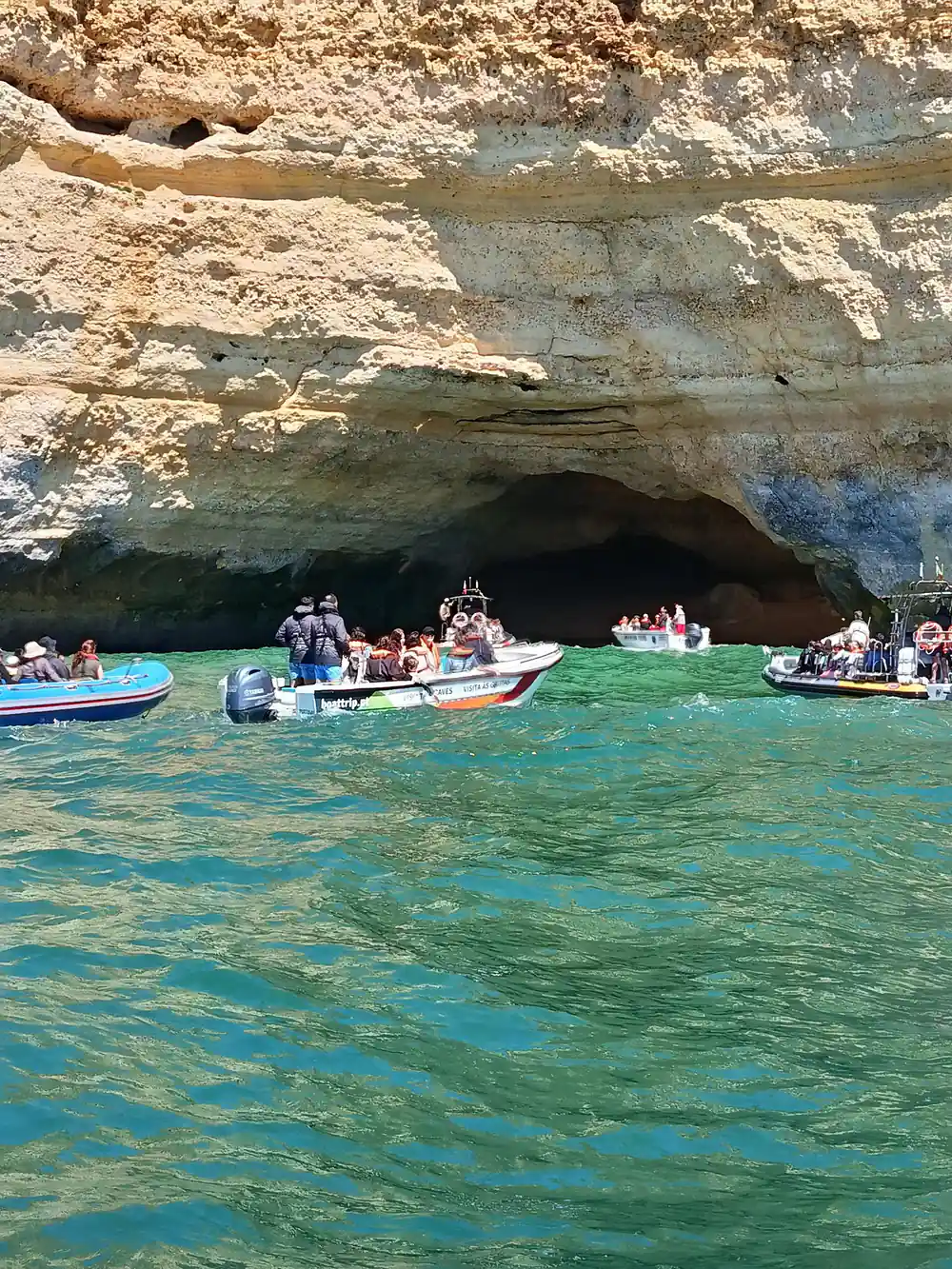
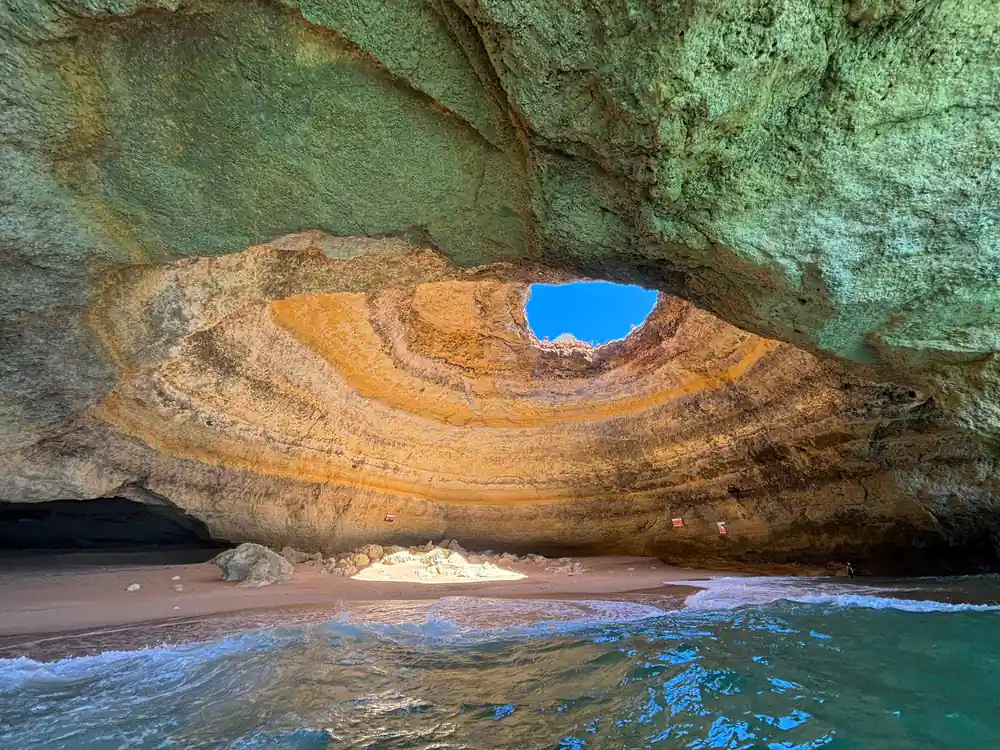
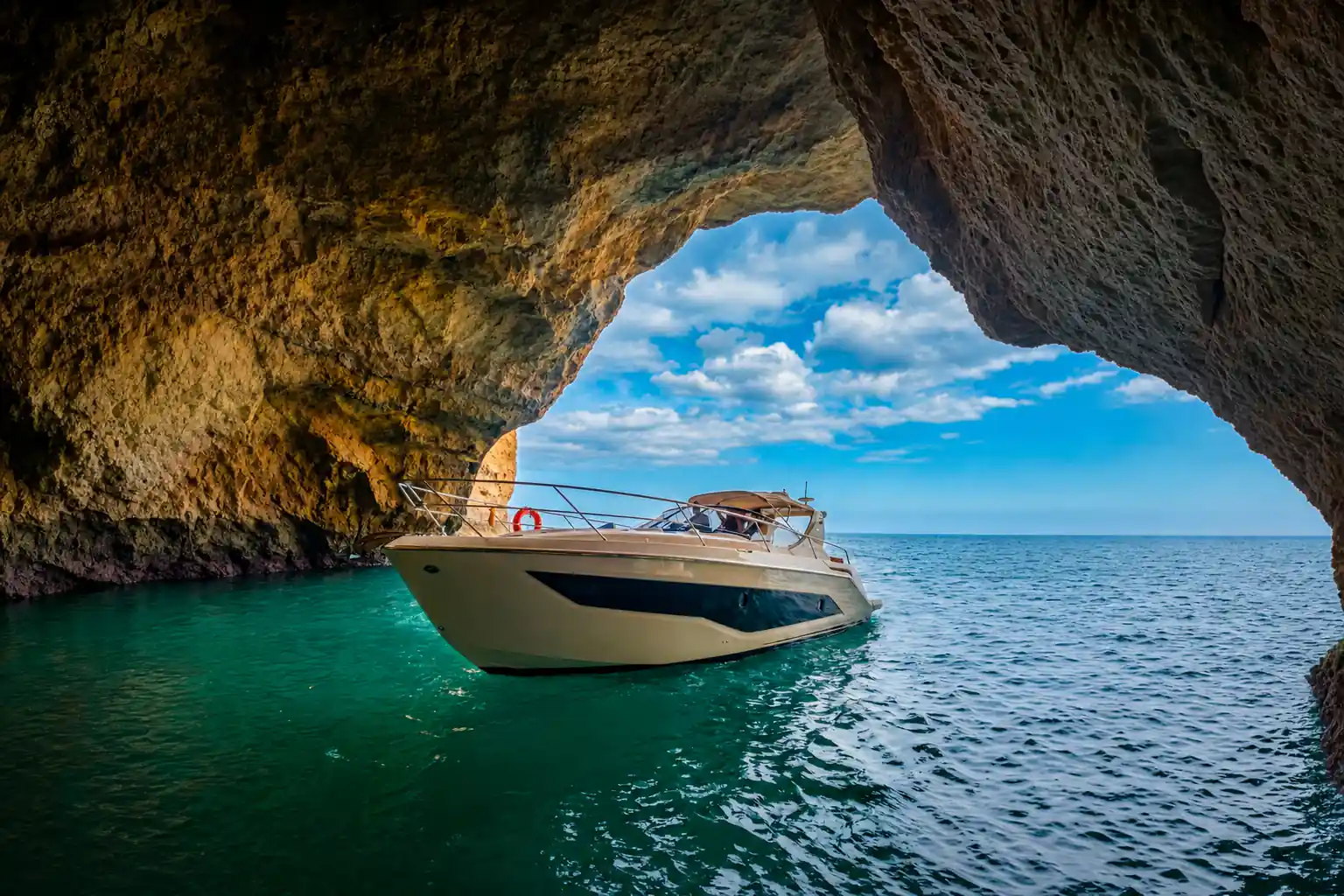
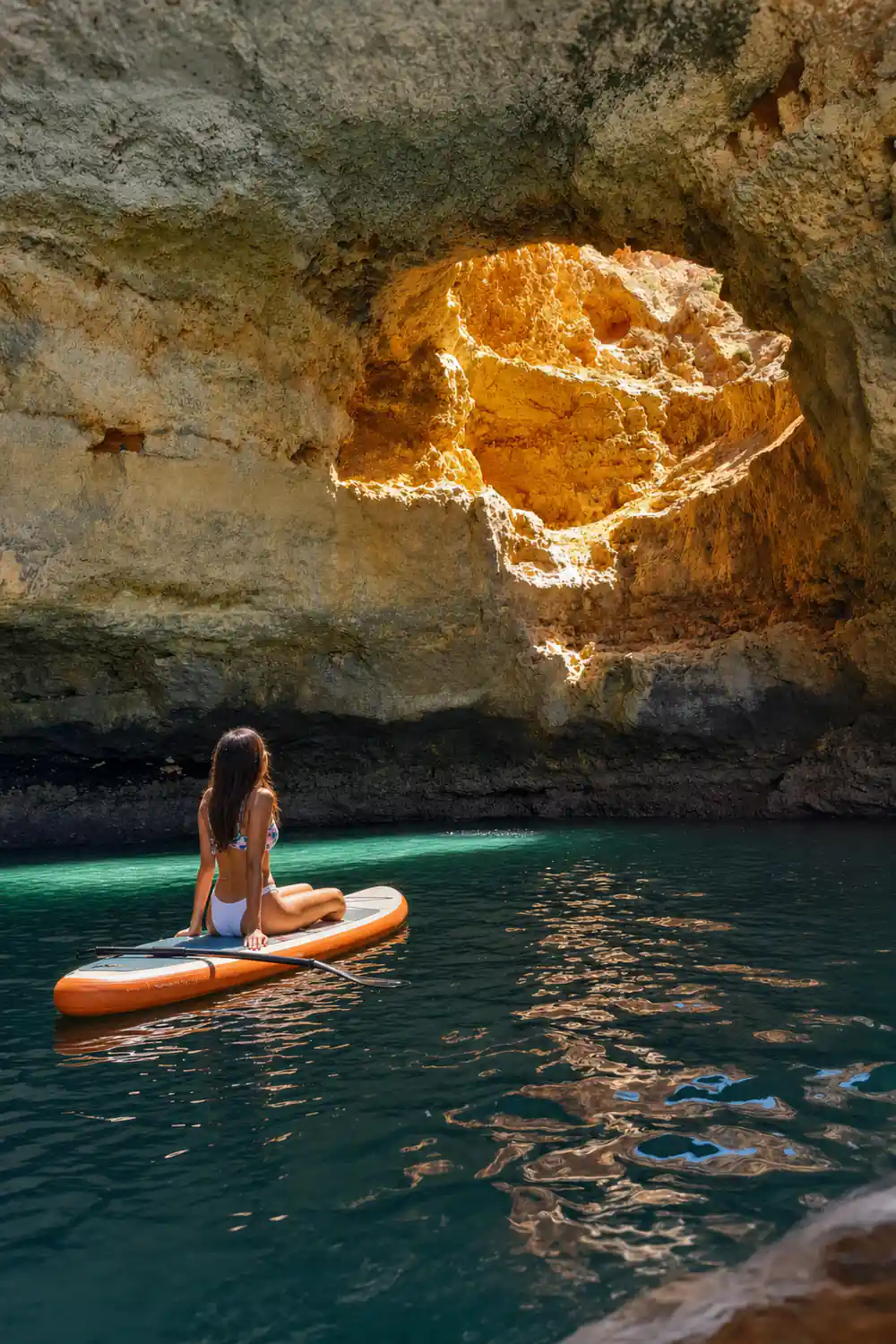
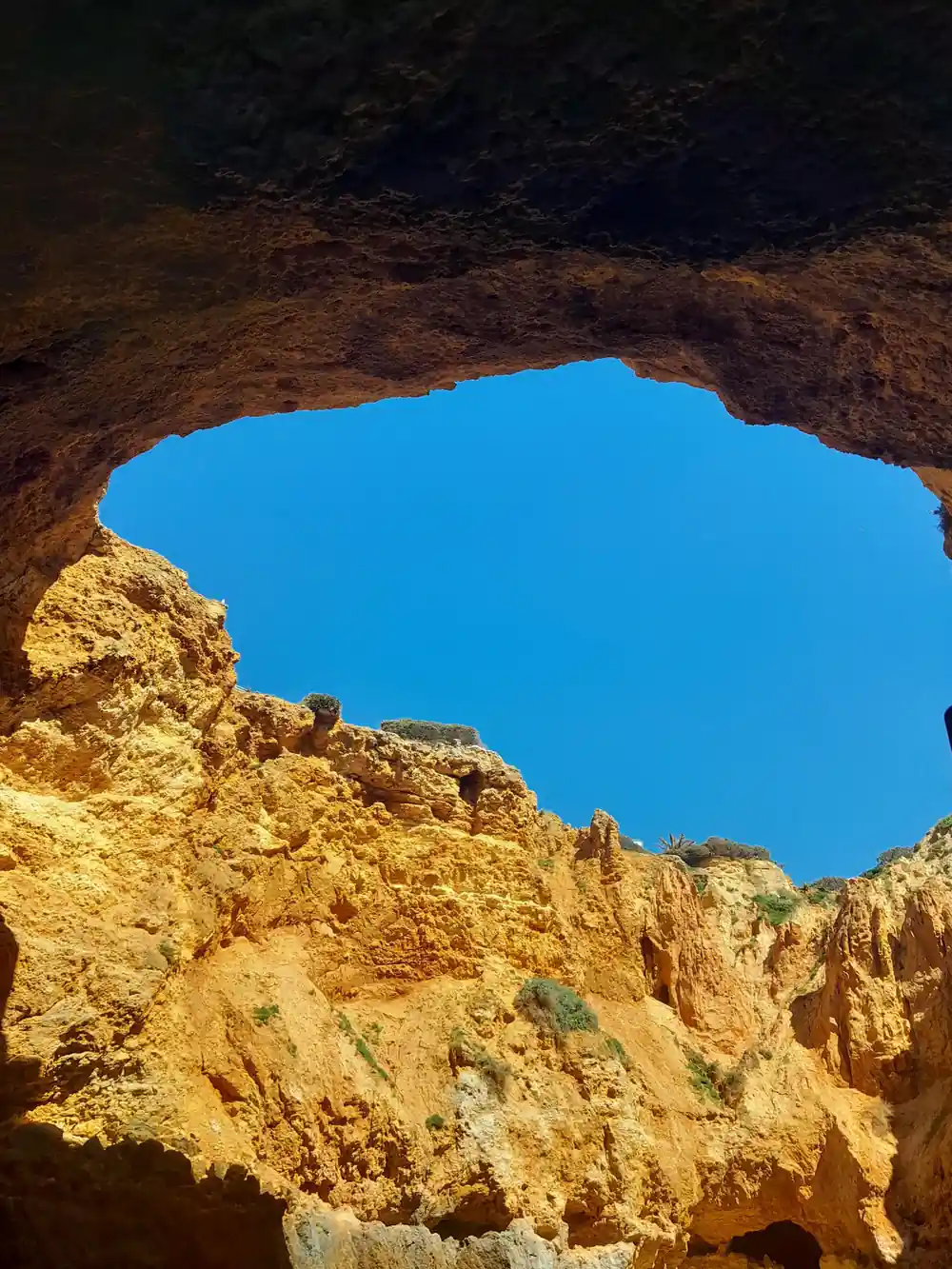
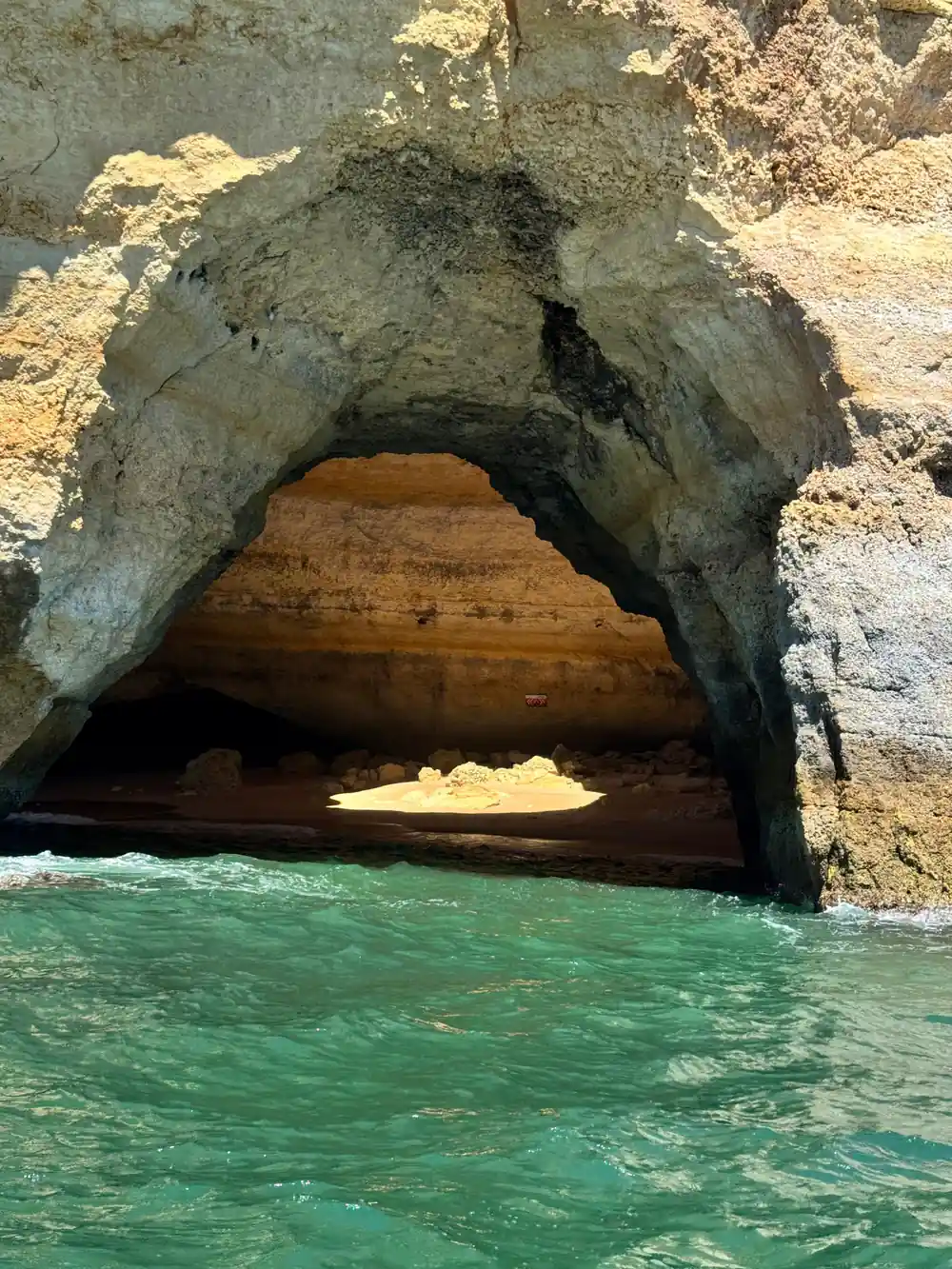
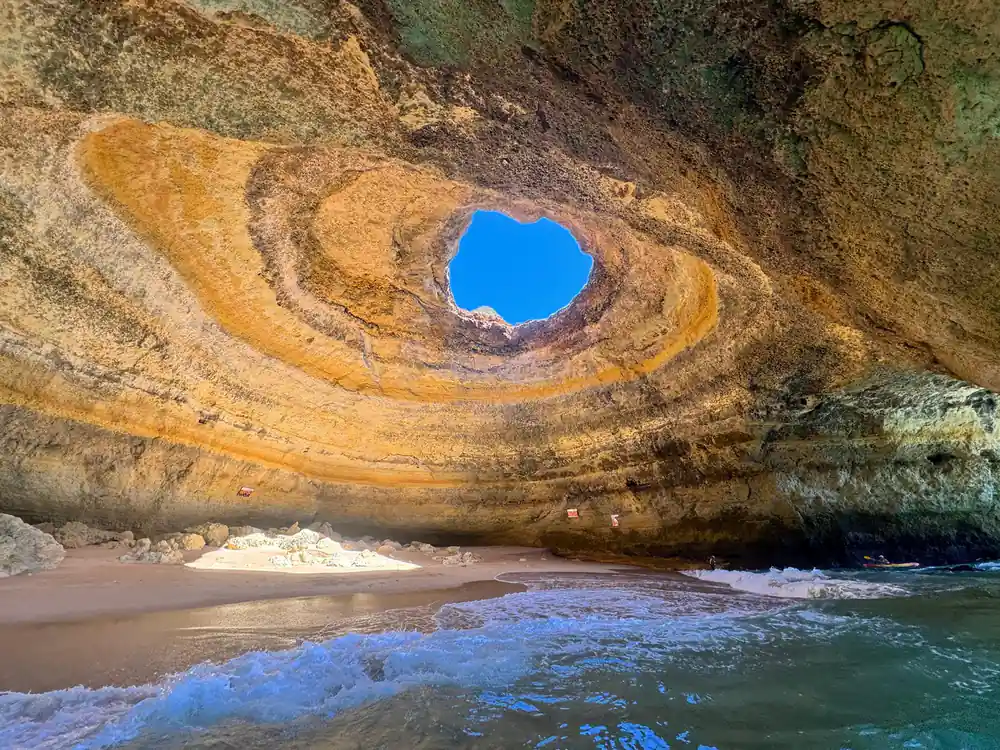
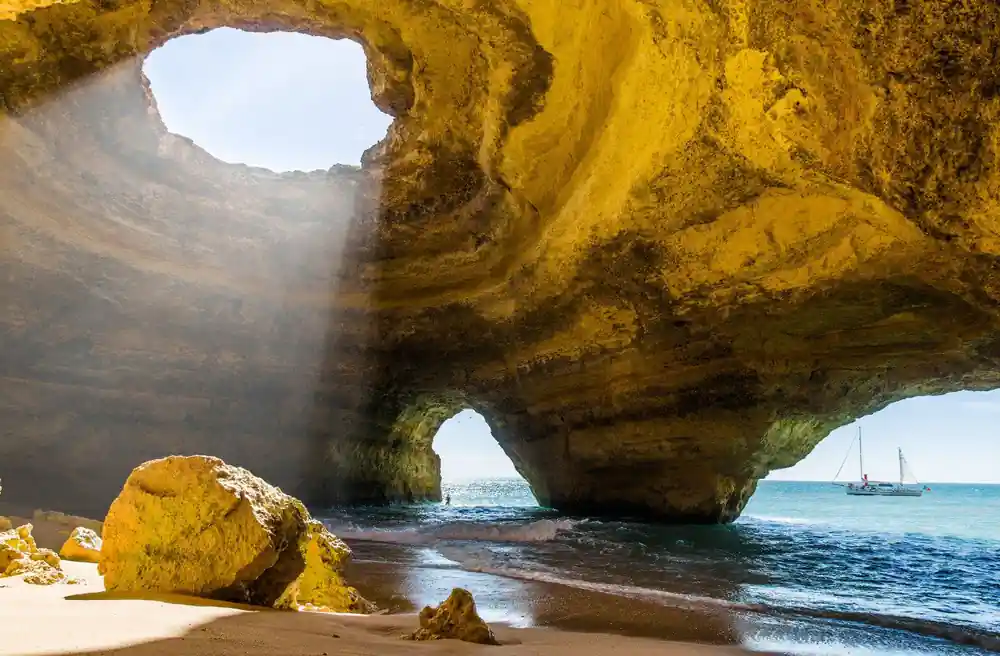
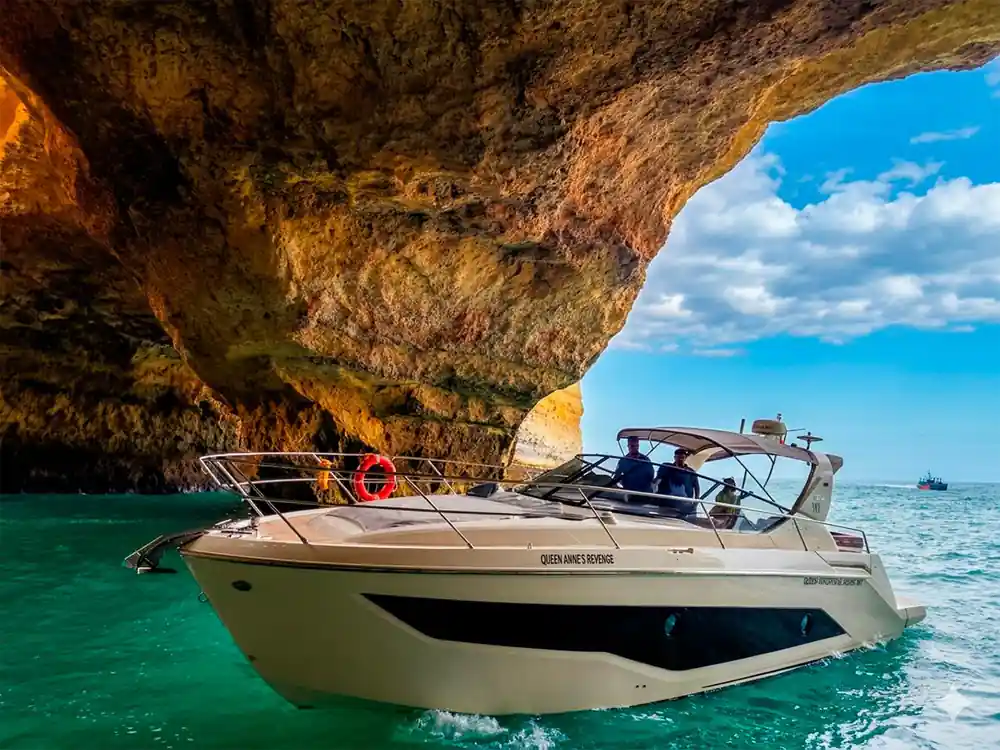
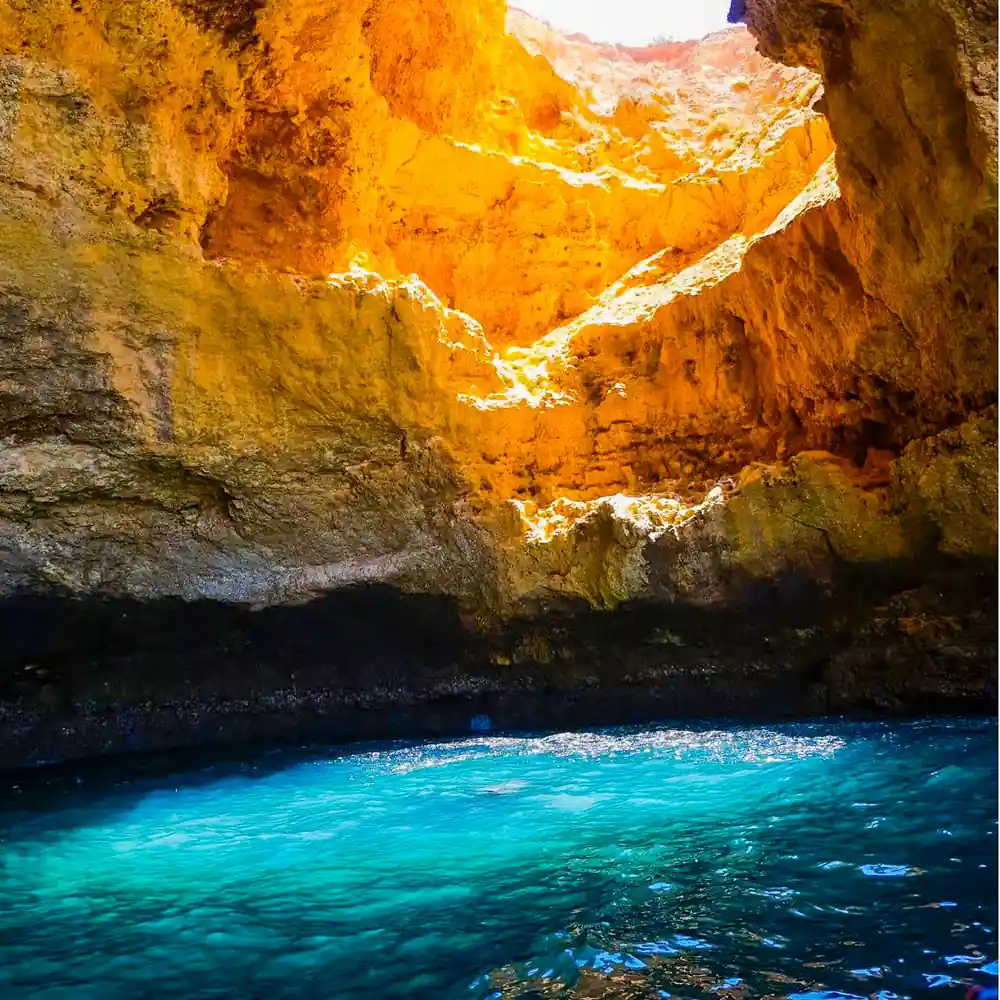
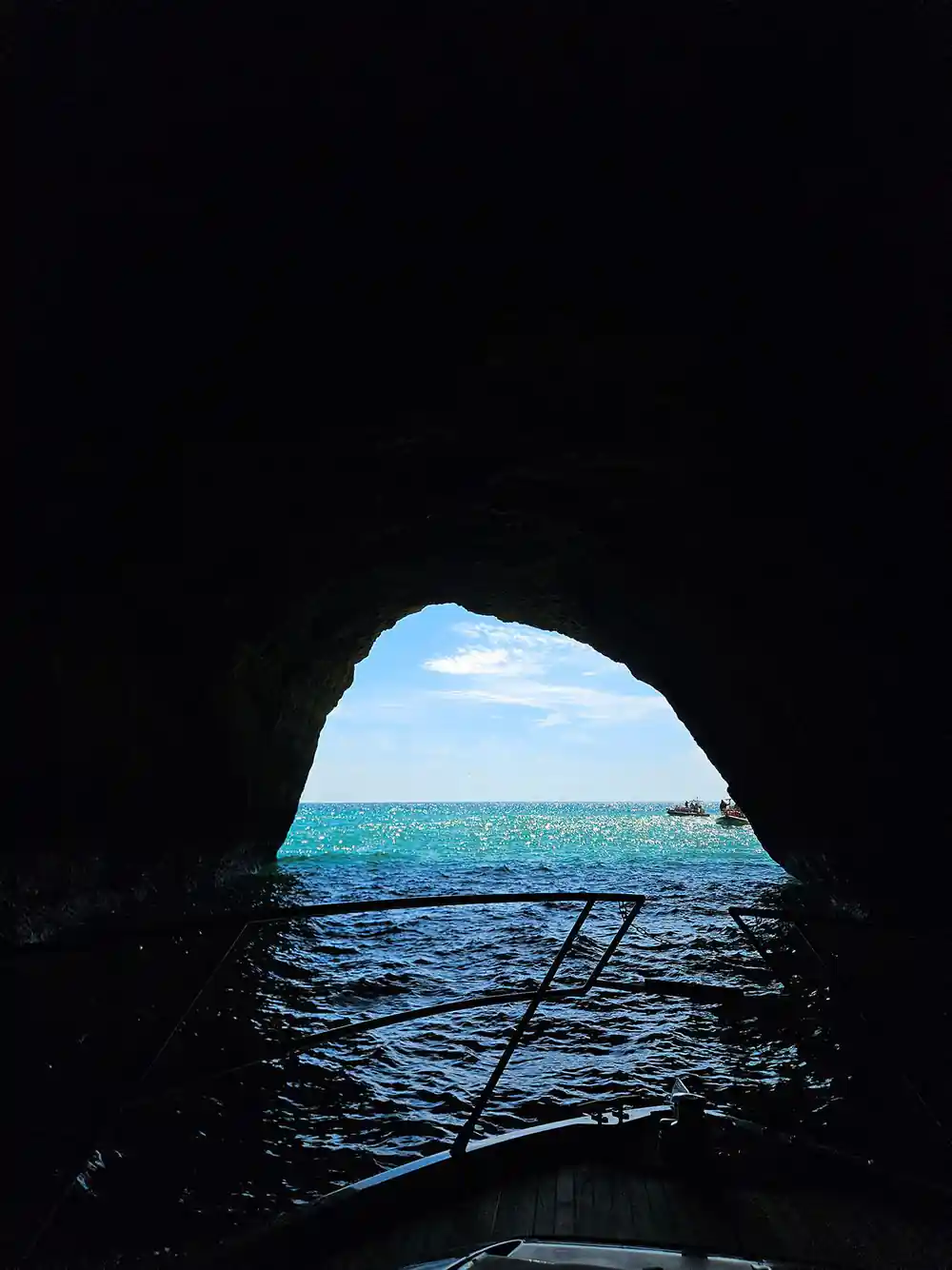
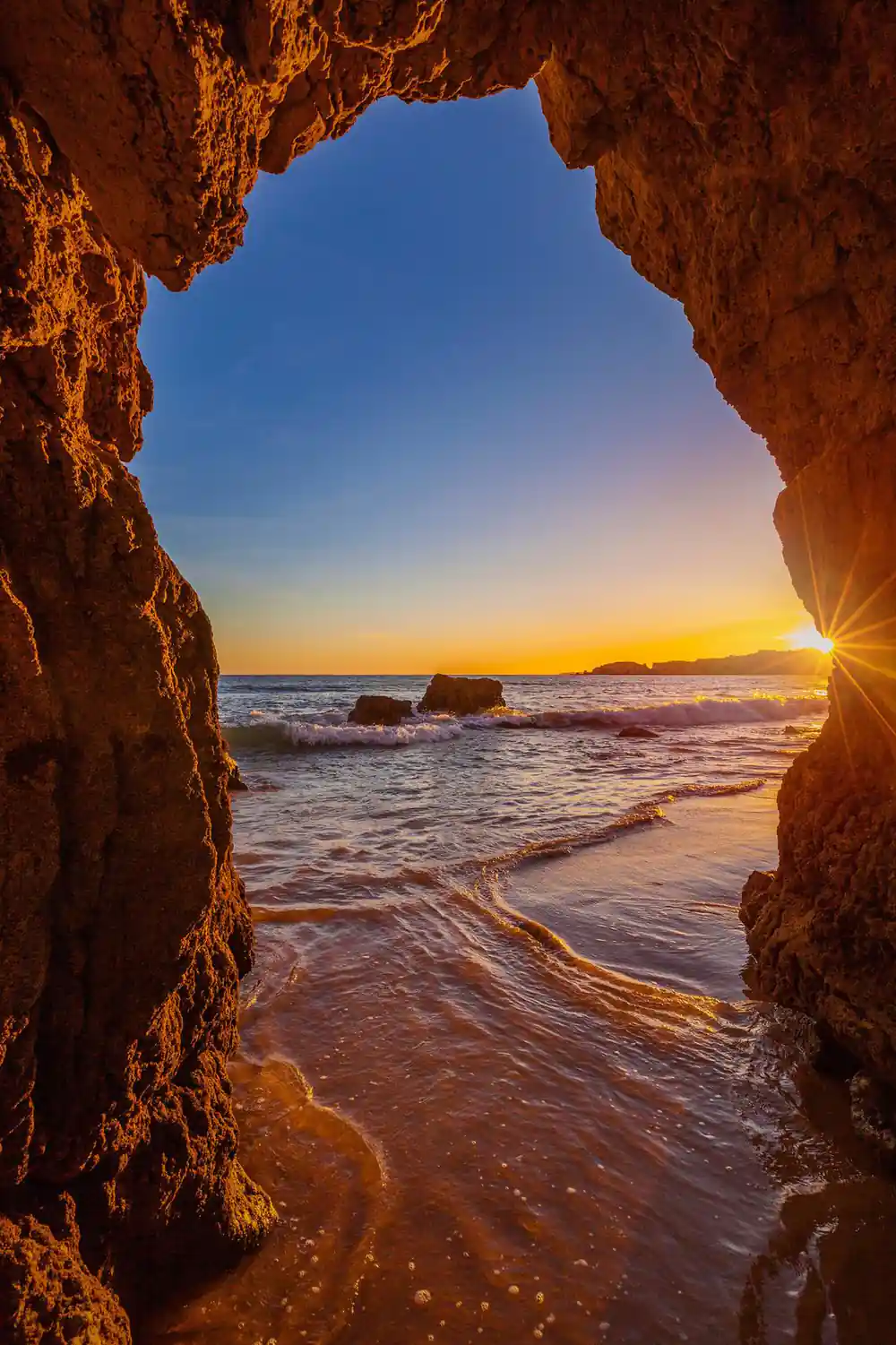
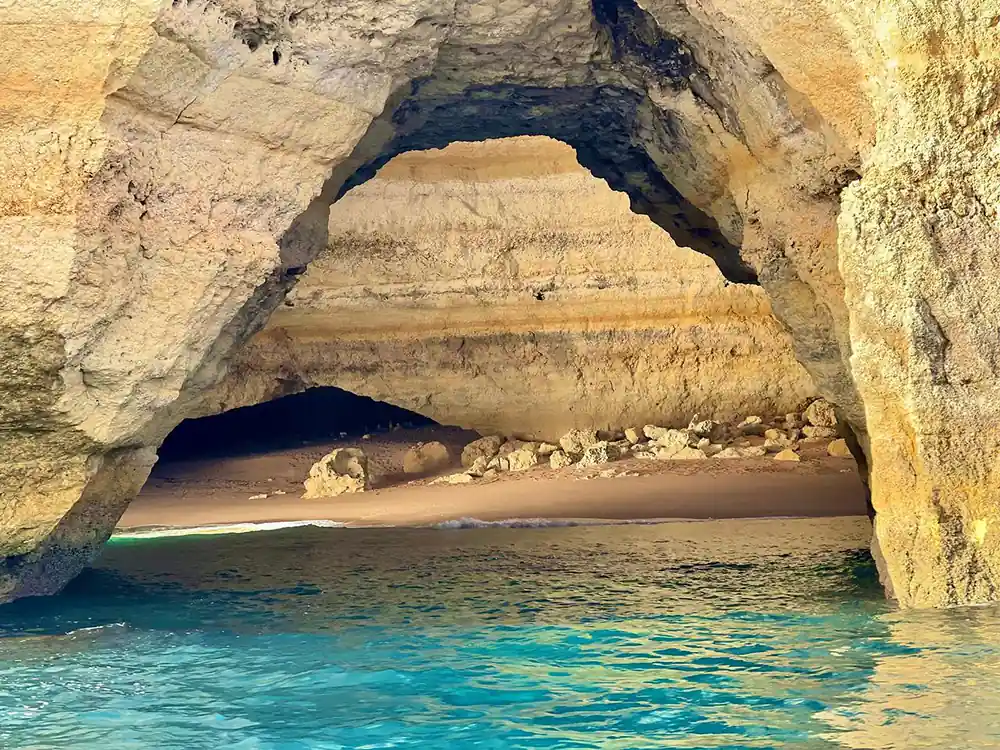
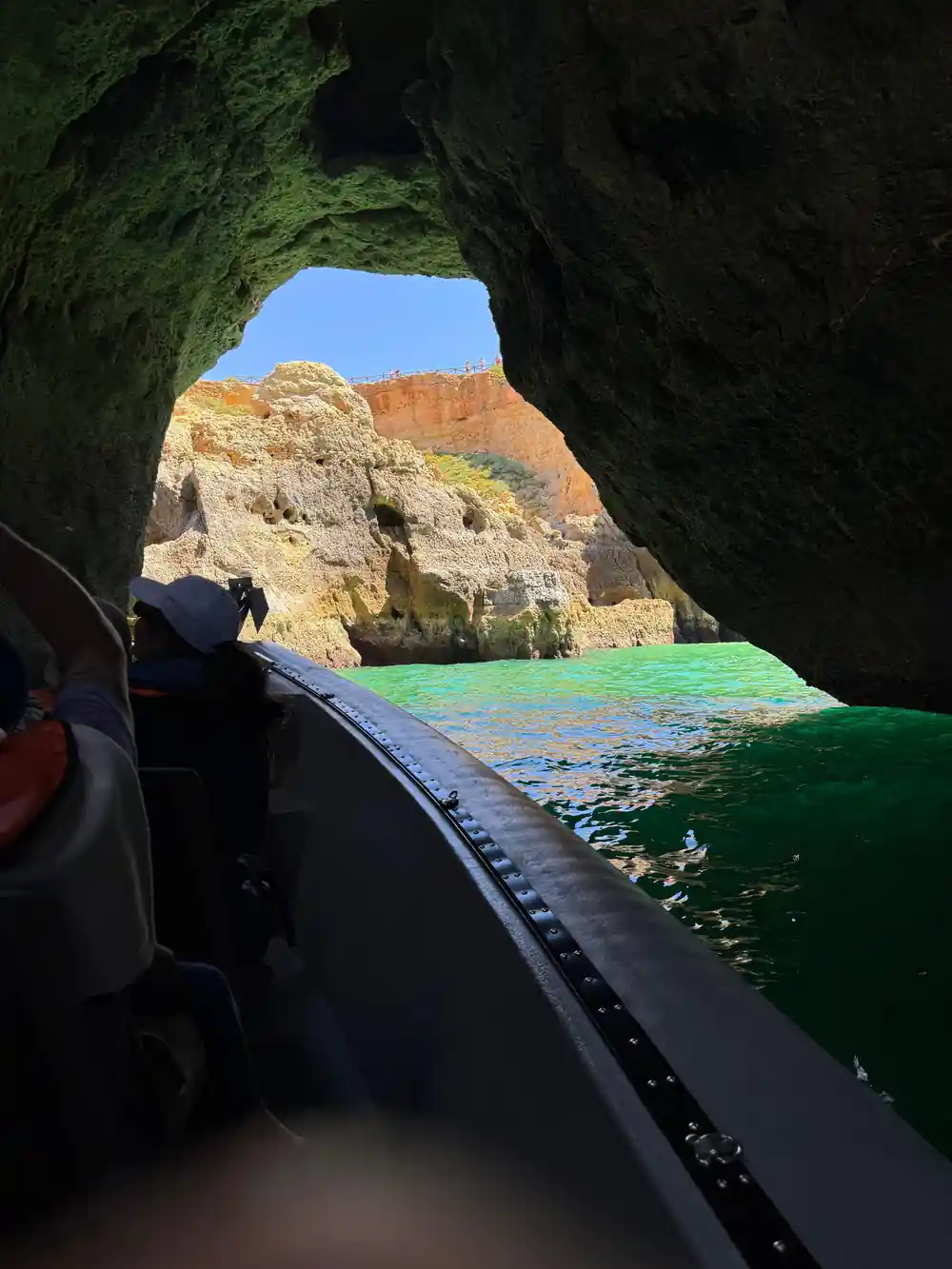
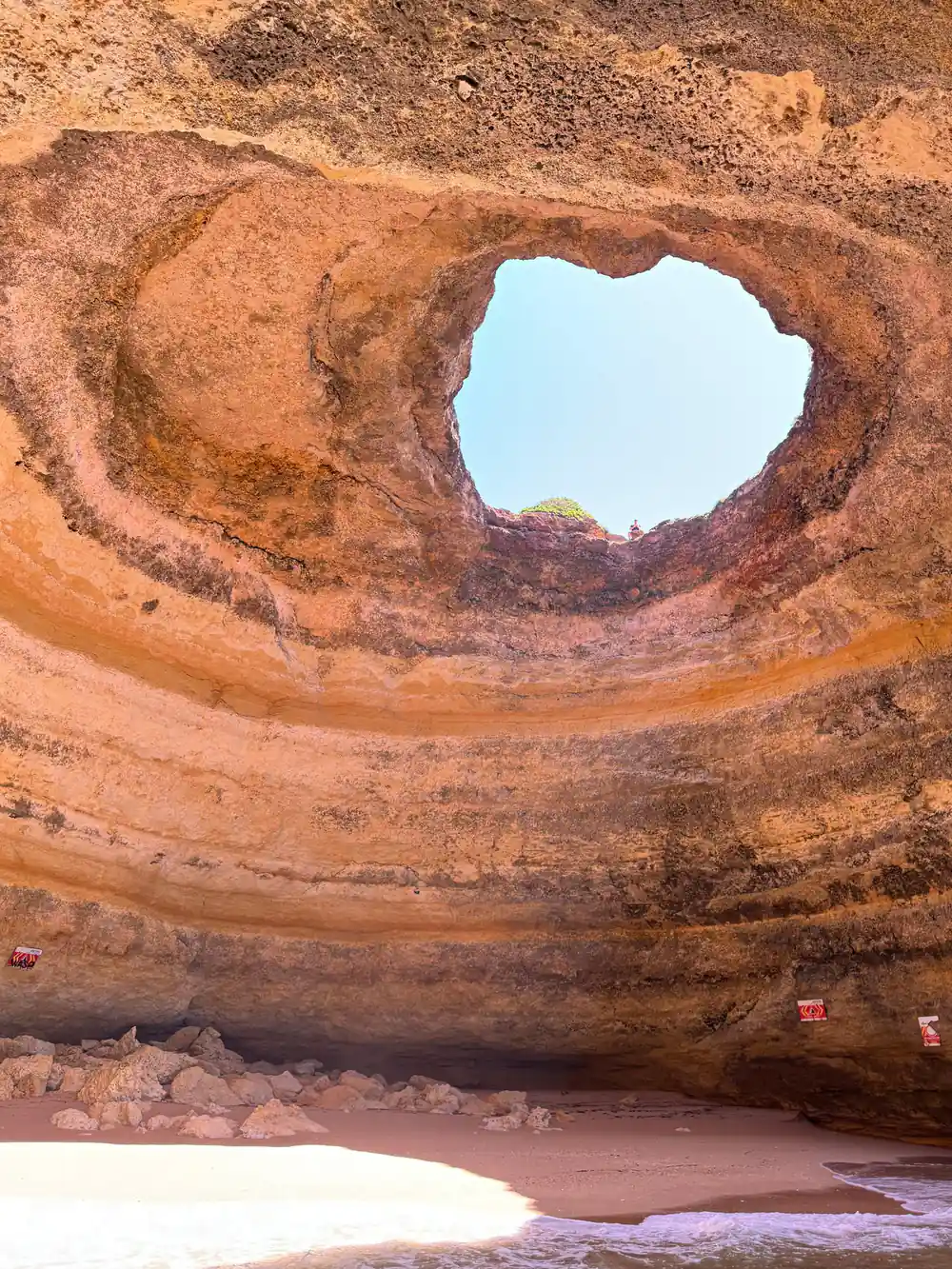
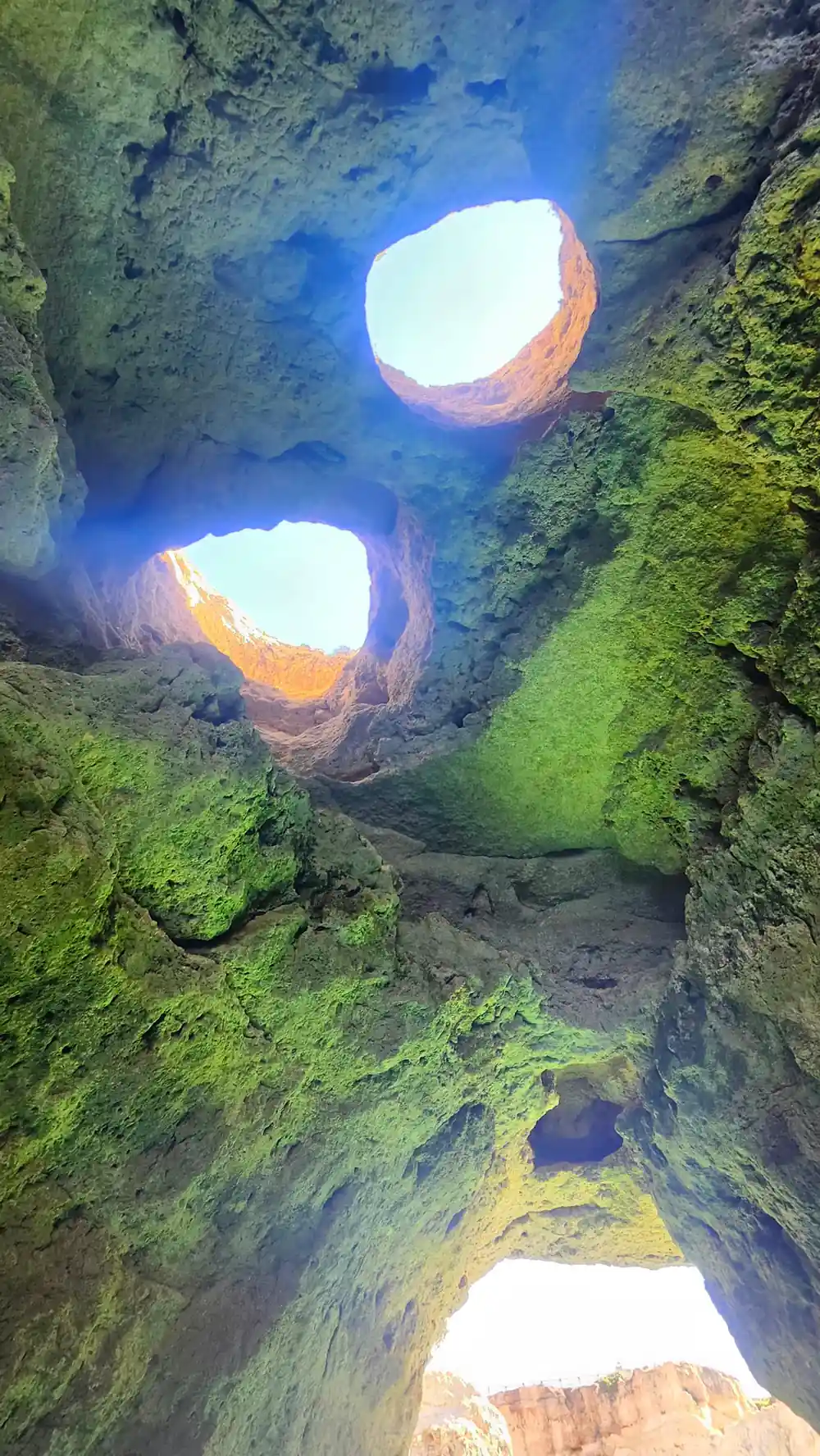
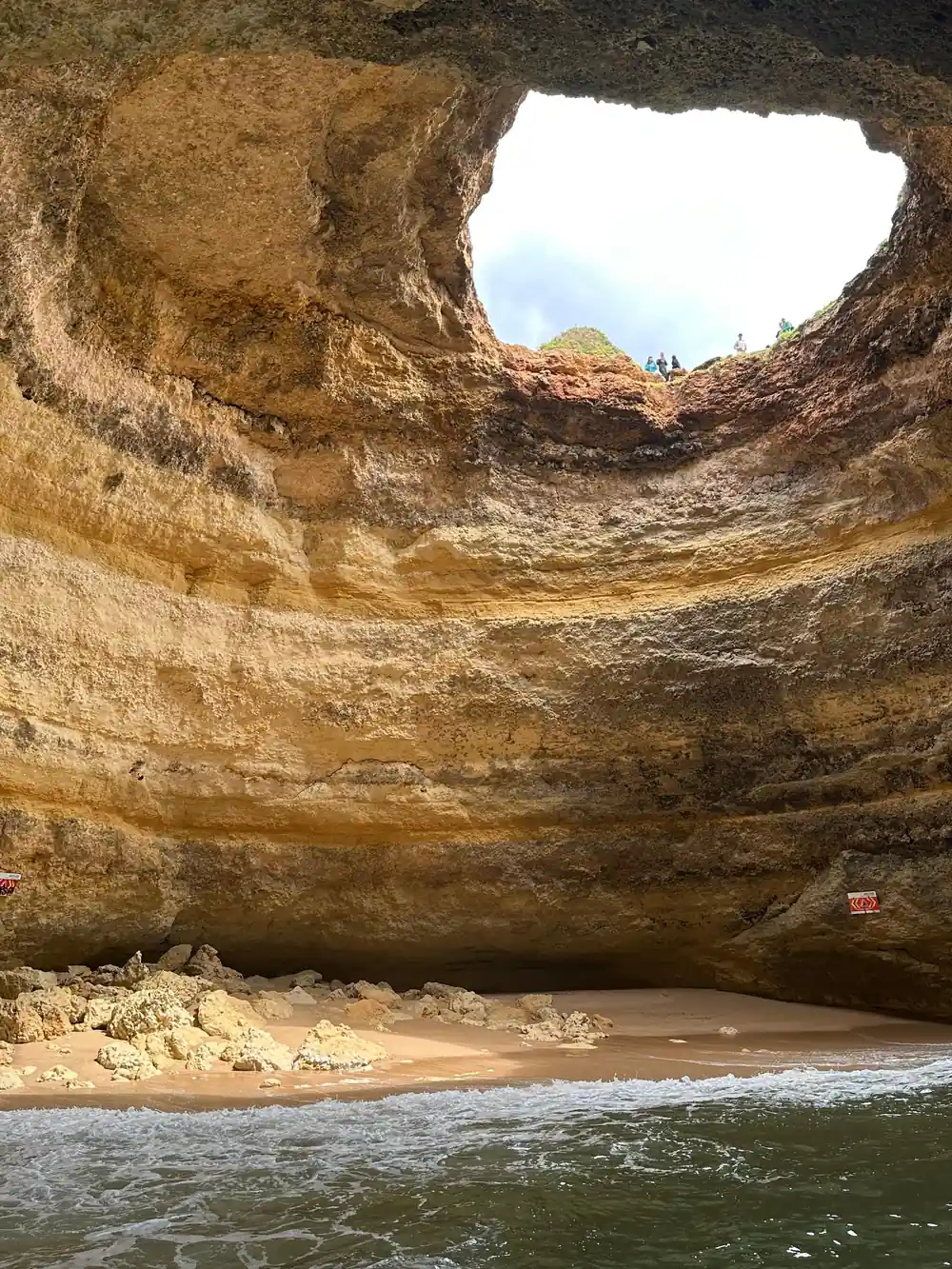
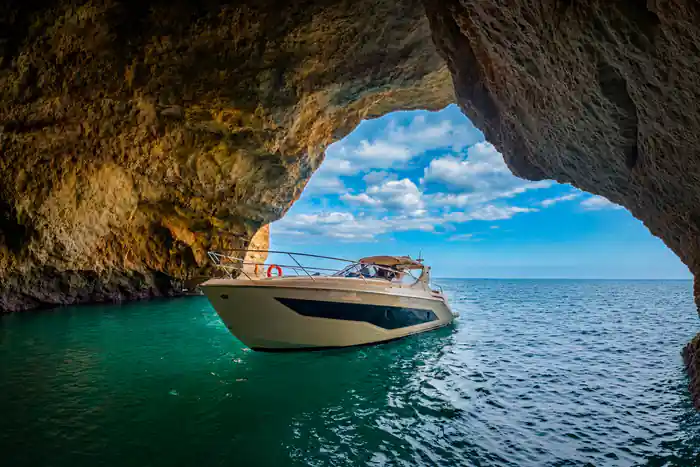
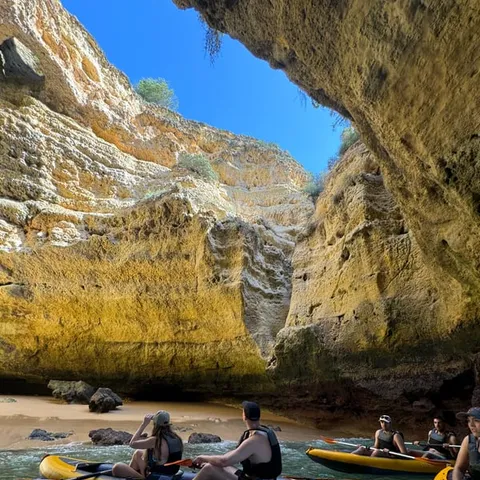
Physically it is a chamber in soft limestone with two arches at water level letting the sea in, a floor of sand at the back, and a roughly circular opening in the roof. Sunlight comes through that opening and lands on the sand, which is the image everybody has seen.
The photographs mislead in one specific way. They are taken with very wide lenses from inside a small space, so the chamber looks cathedral-sized. It is impressive and it is not enormous, and knowing that in advance makes the visit better rather than worse.
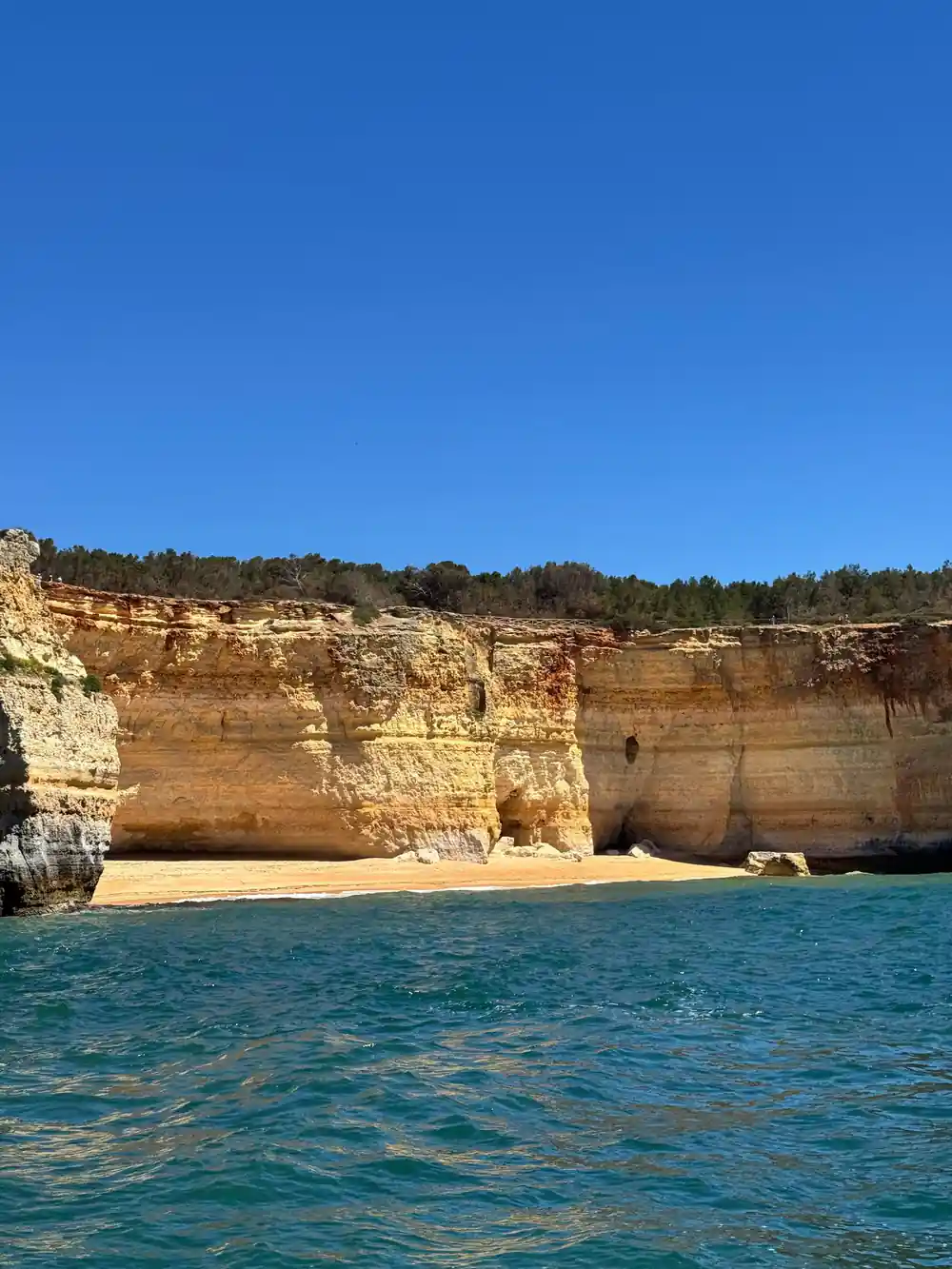
The rock is banded in orange, cream and grey, and those bands are the layers the limestone was laid down in. The colour under direct light through the roof is the thing photographs genuinely do not capture.
Whether you can go inside
This is the question everybody asks and most pages answer out of date, so here it is plainly.
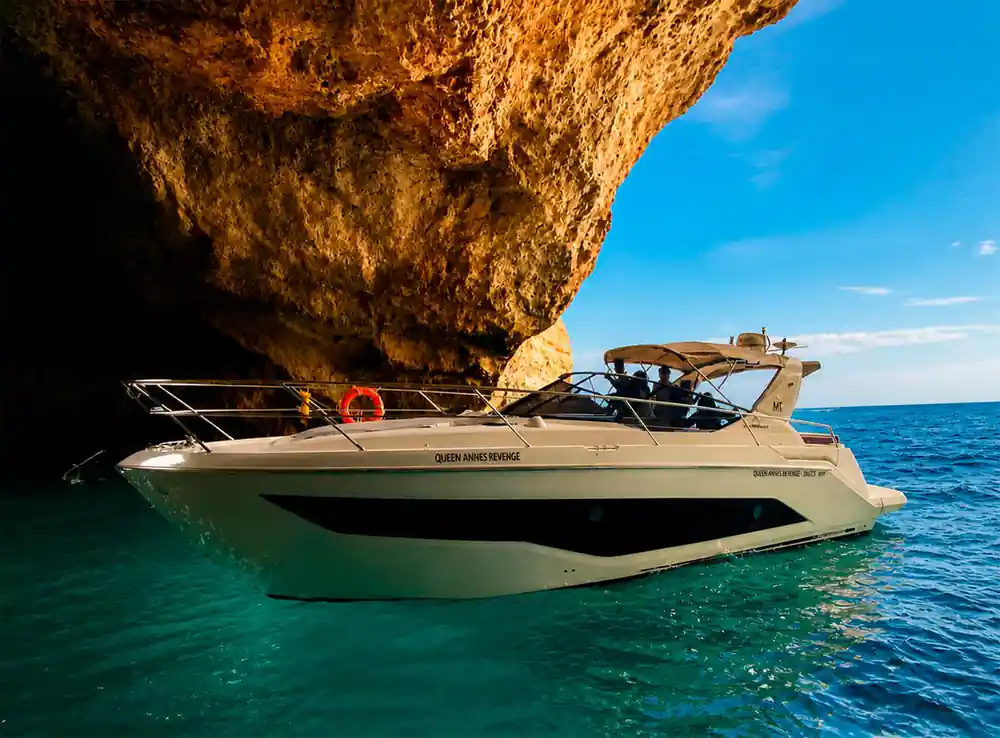
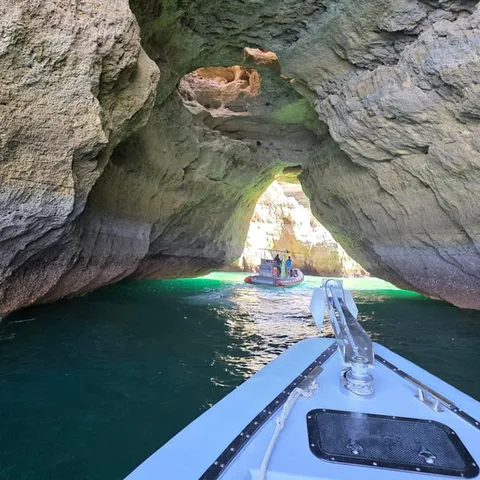
The boat may go inside when the sea allows. Nobody gets off it. Landing on the sand inside the cave is not permitted, and swimming to or in the cave is not permitted either.
Whether the boat enters at all on a given day is decided by the skipper within the limits the maritime authority sets. A swell running into those arches makes a confined chamber with rock on all sides a genuinely bad place to be, and a skipper who declines to enter is doing the job properly.
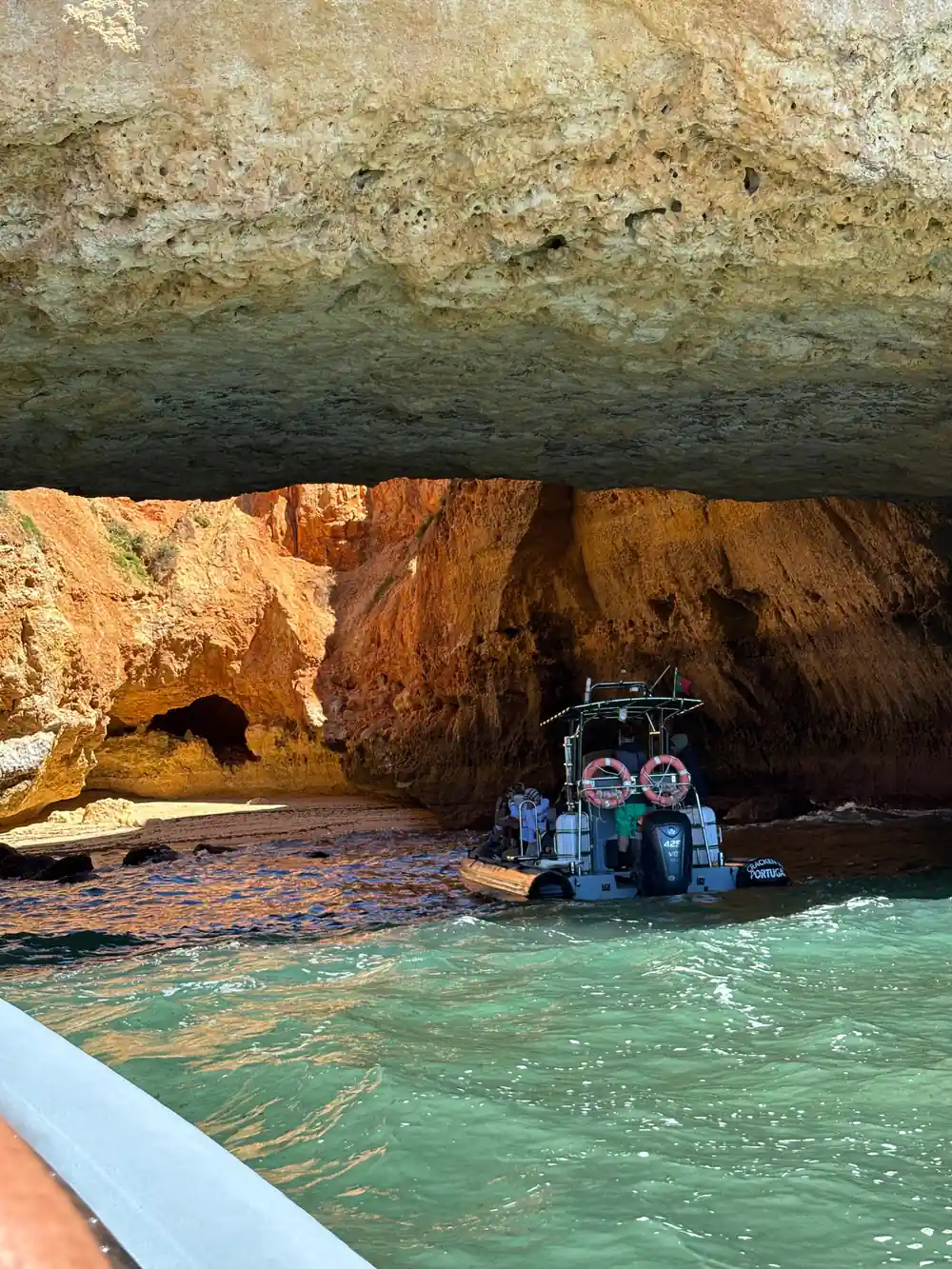
If the sea says no, the trip does not stop. The coast either side is full of arches, chambers and stacks, and a good skipper spends the time showing you those instead.
The coast is most of the day
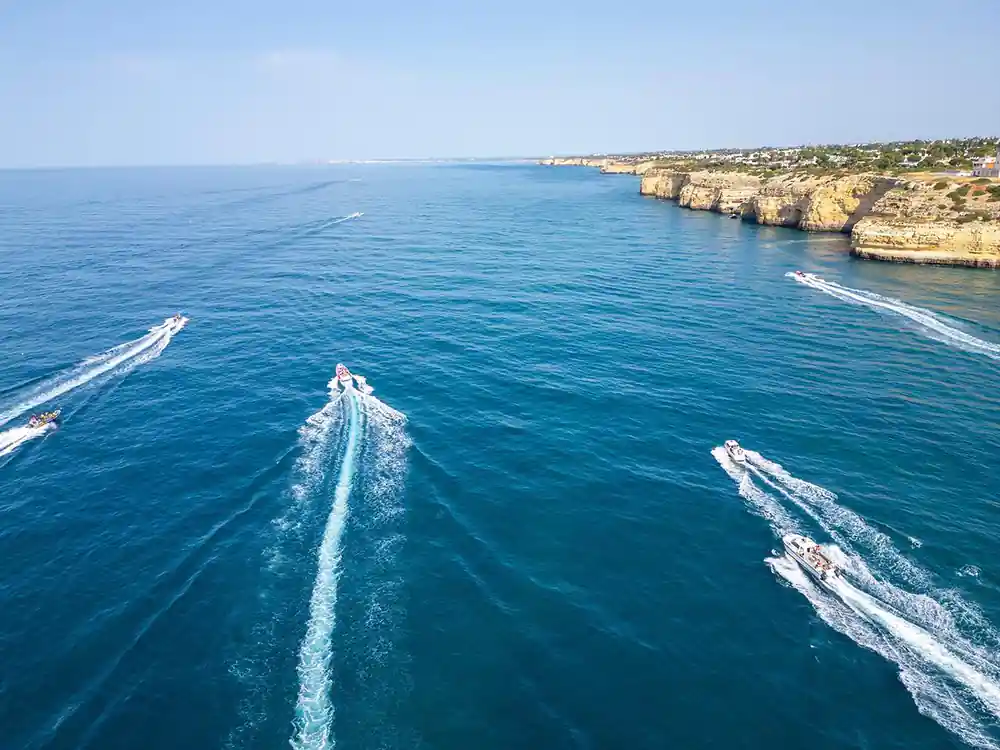
The cave is the headline and it occupies a small part of the time on the water. The coastline between is the rest, and it is the part people describe afterwards.
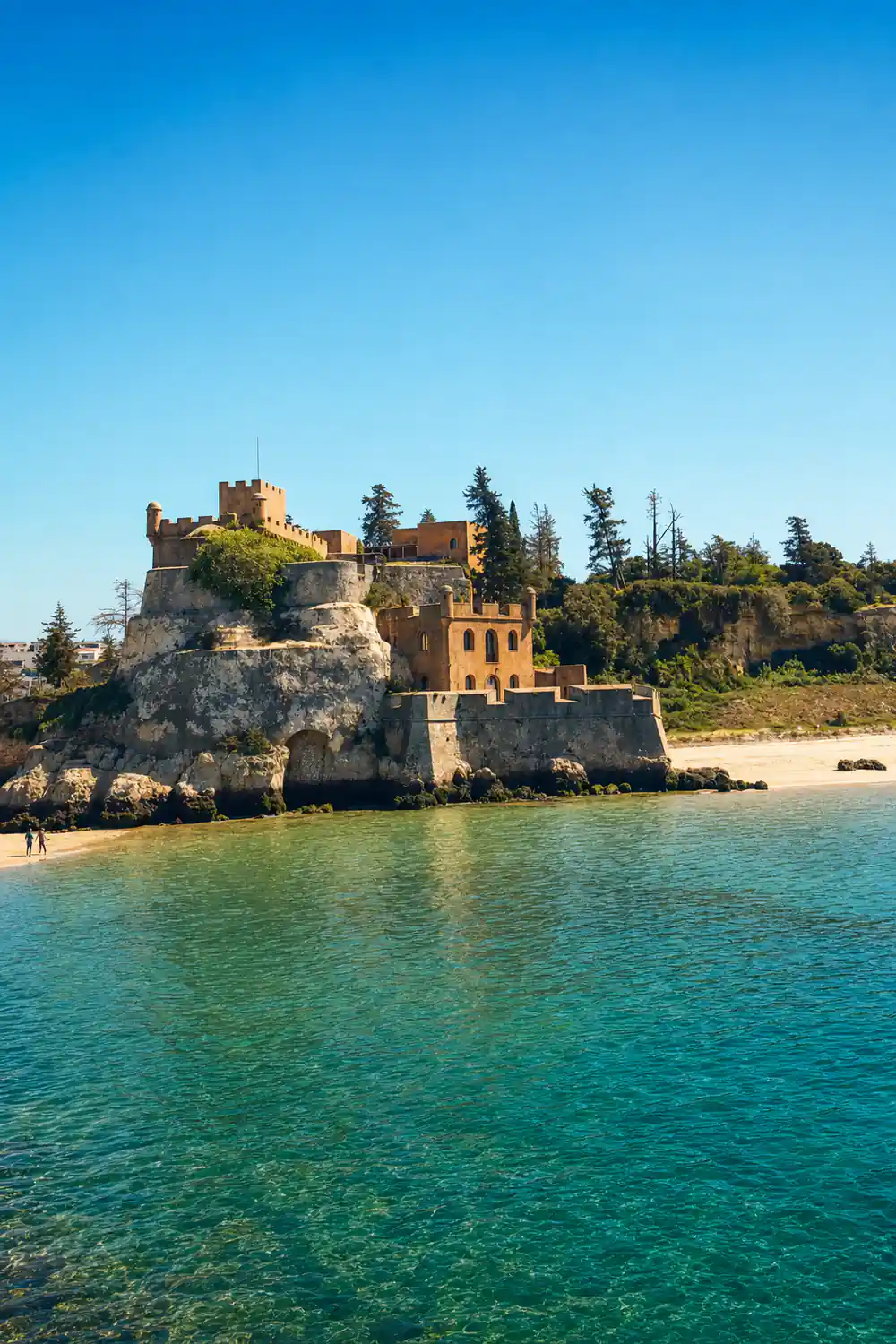
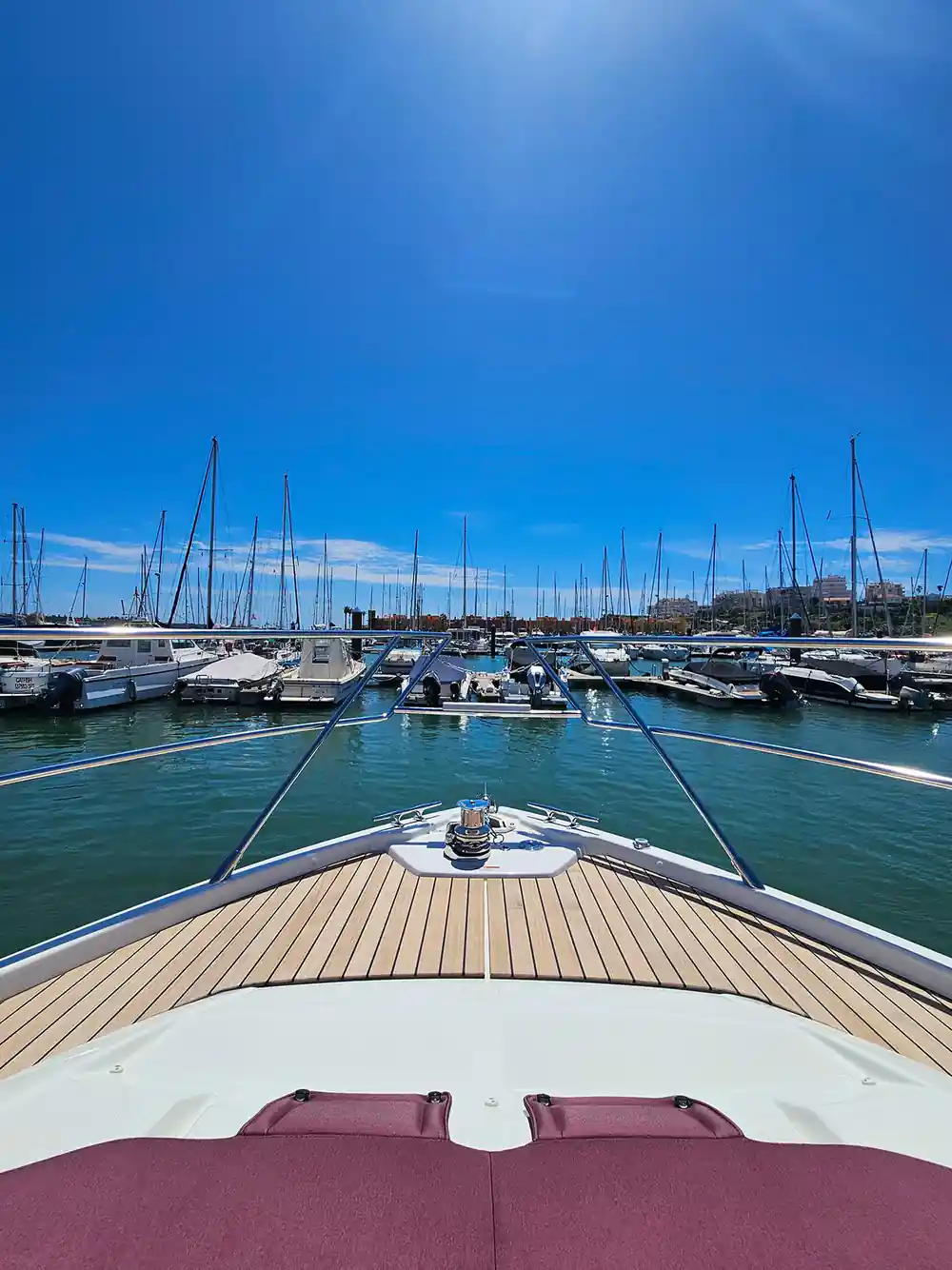
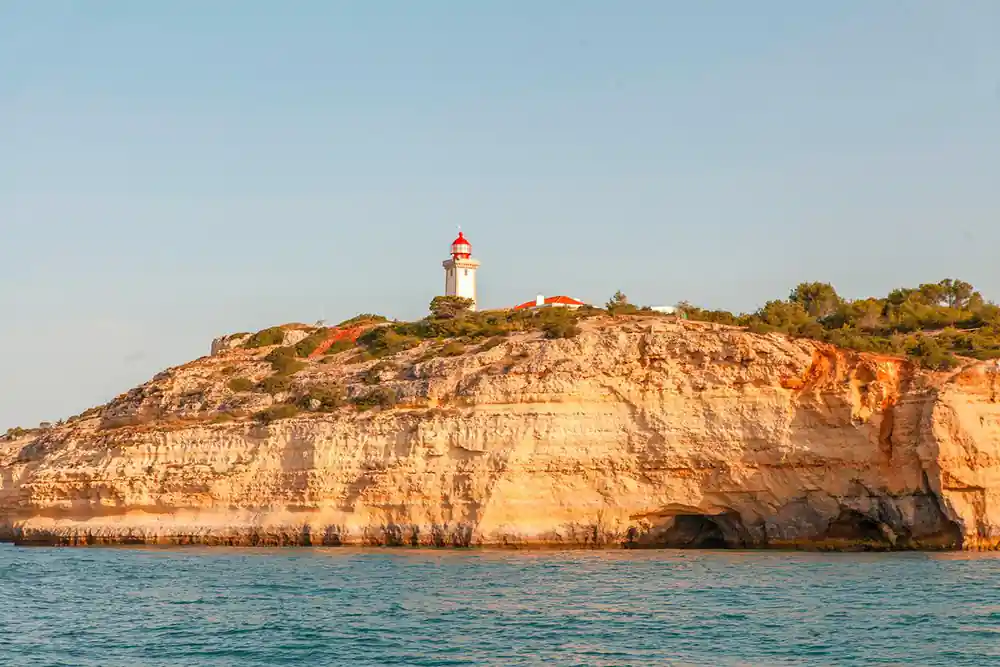
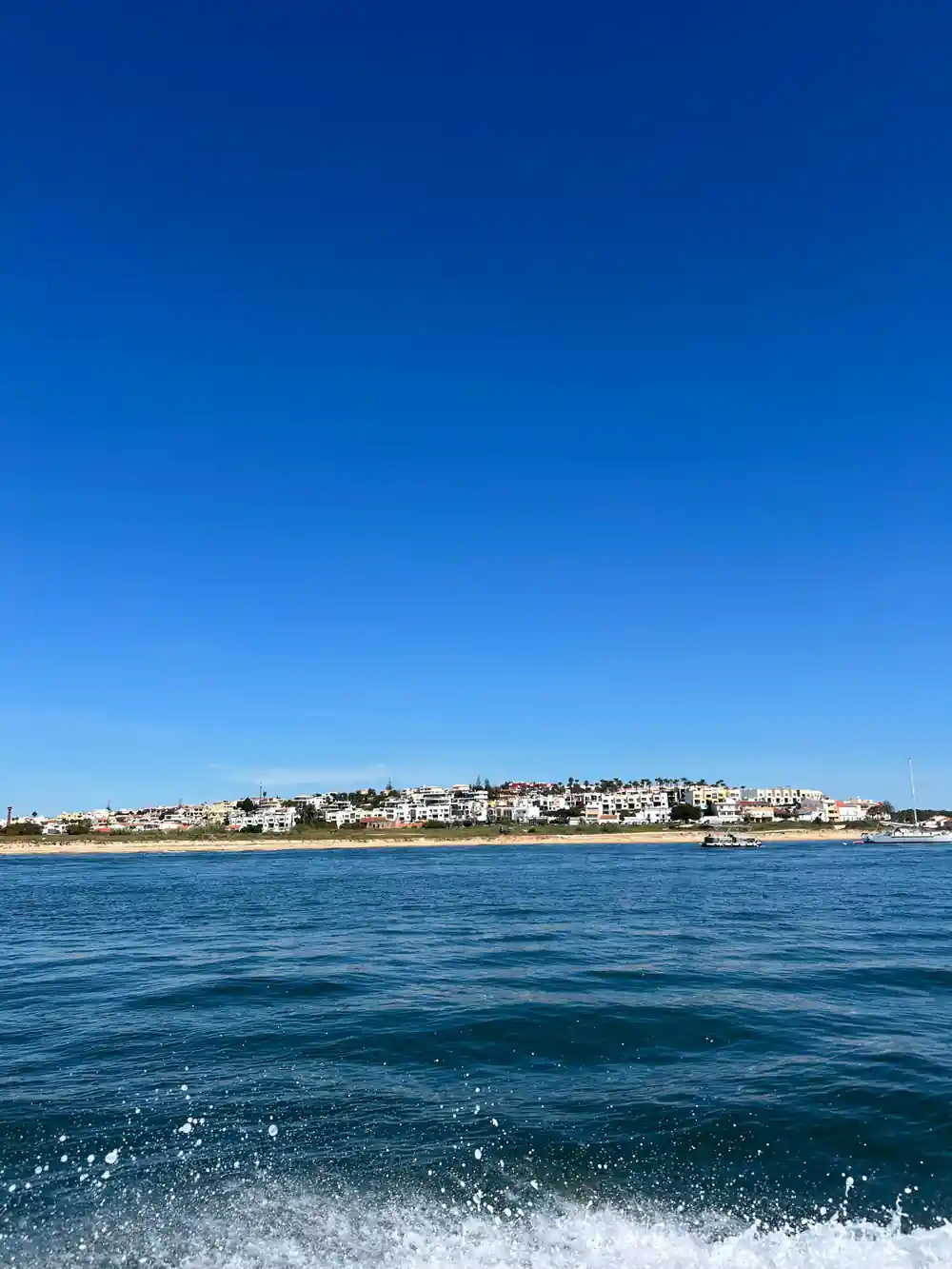
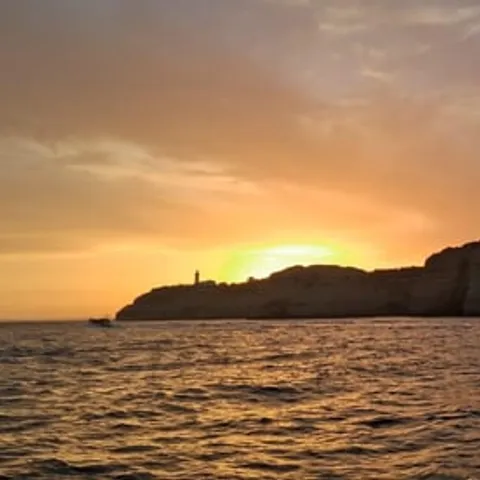
Out of Portimao you pass the river mouth with Ferragudo on its hill, white houses stacked above a working fishing harbour, and a fort on the point. Then Praia da Rocha and its stacks, and the lighthouse on Ponta do Altar.
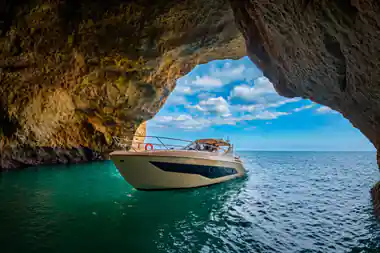
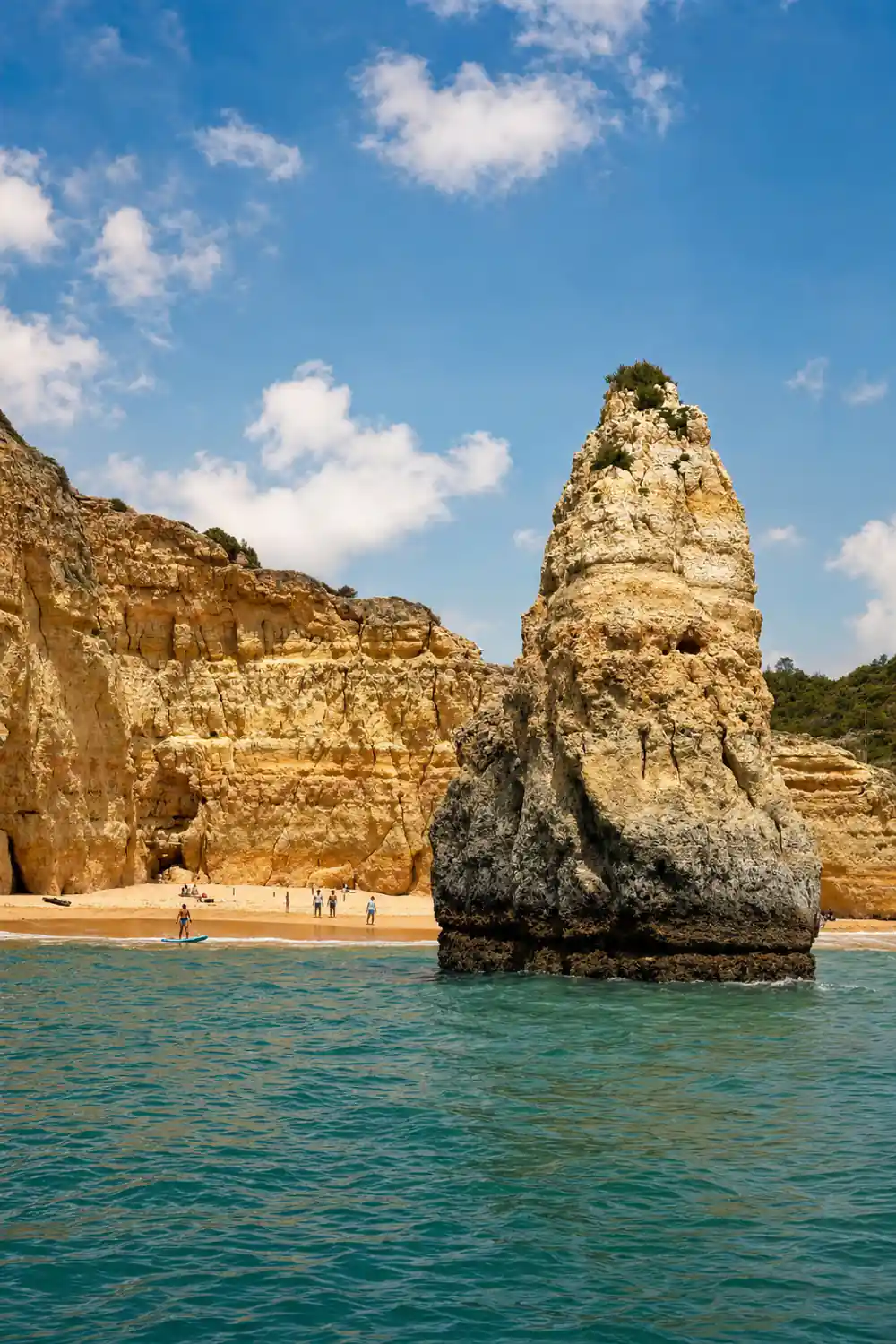
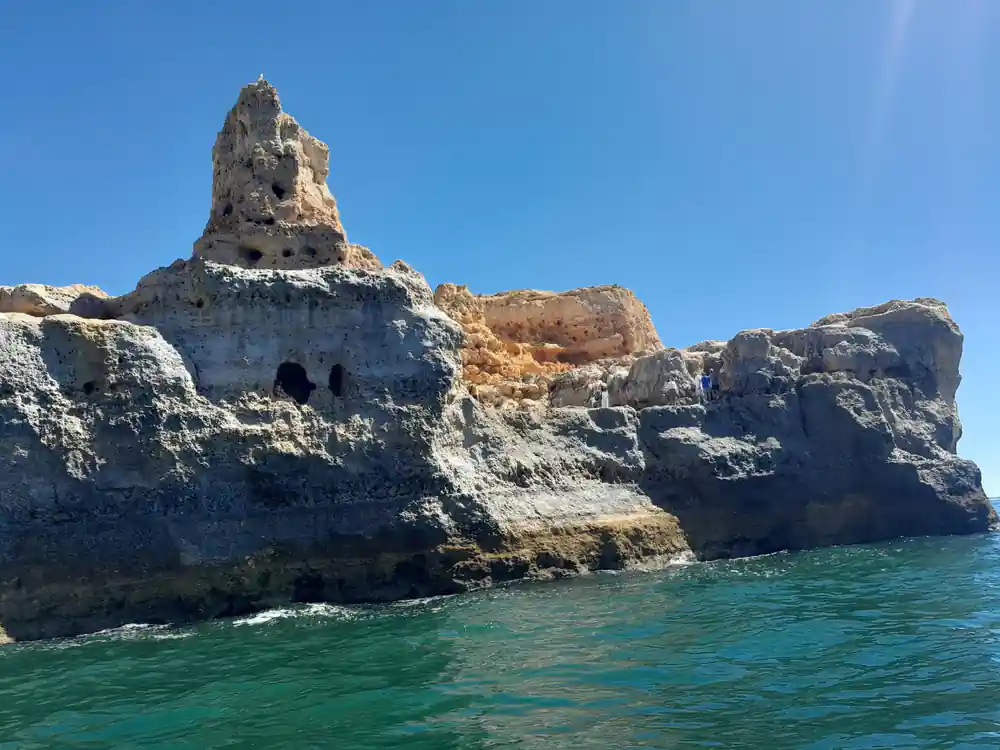
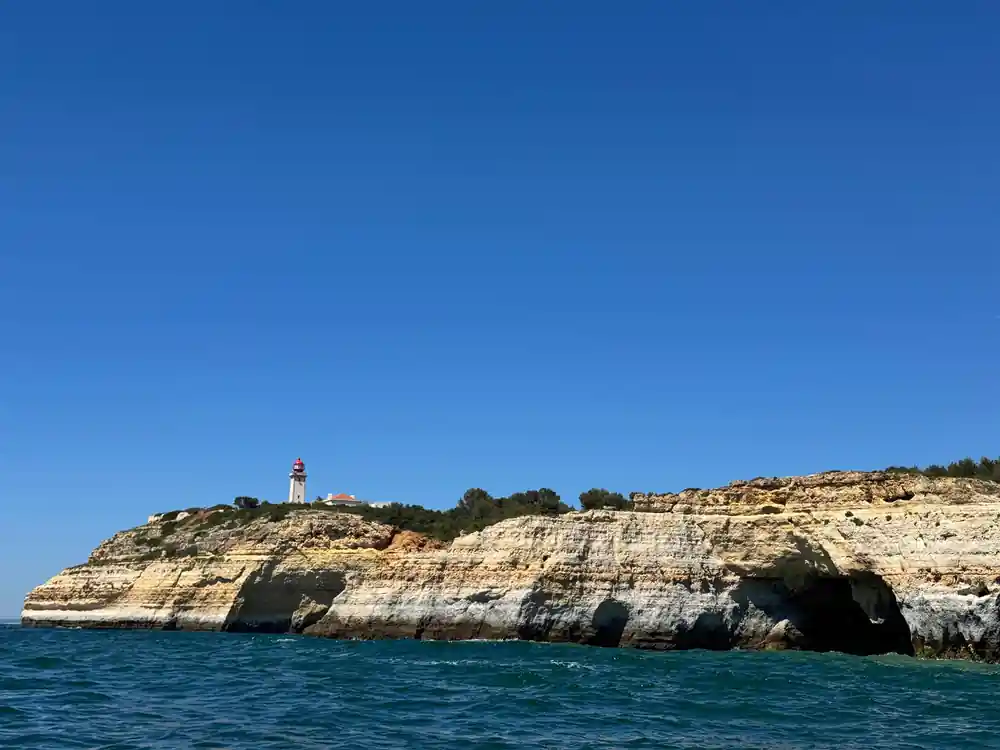
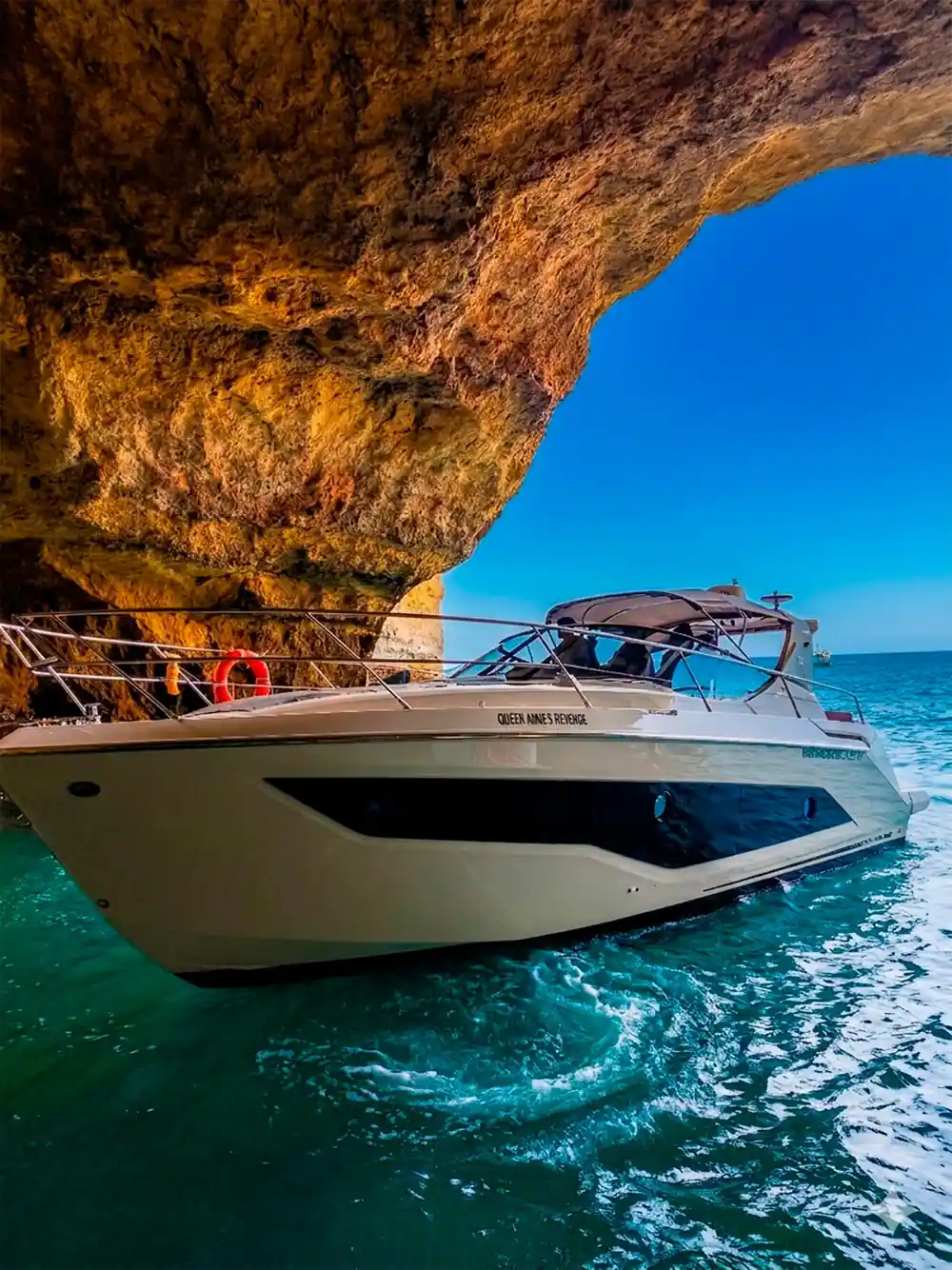
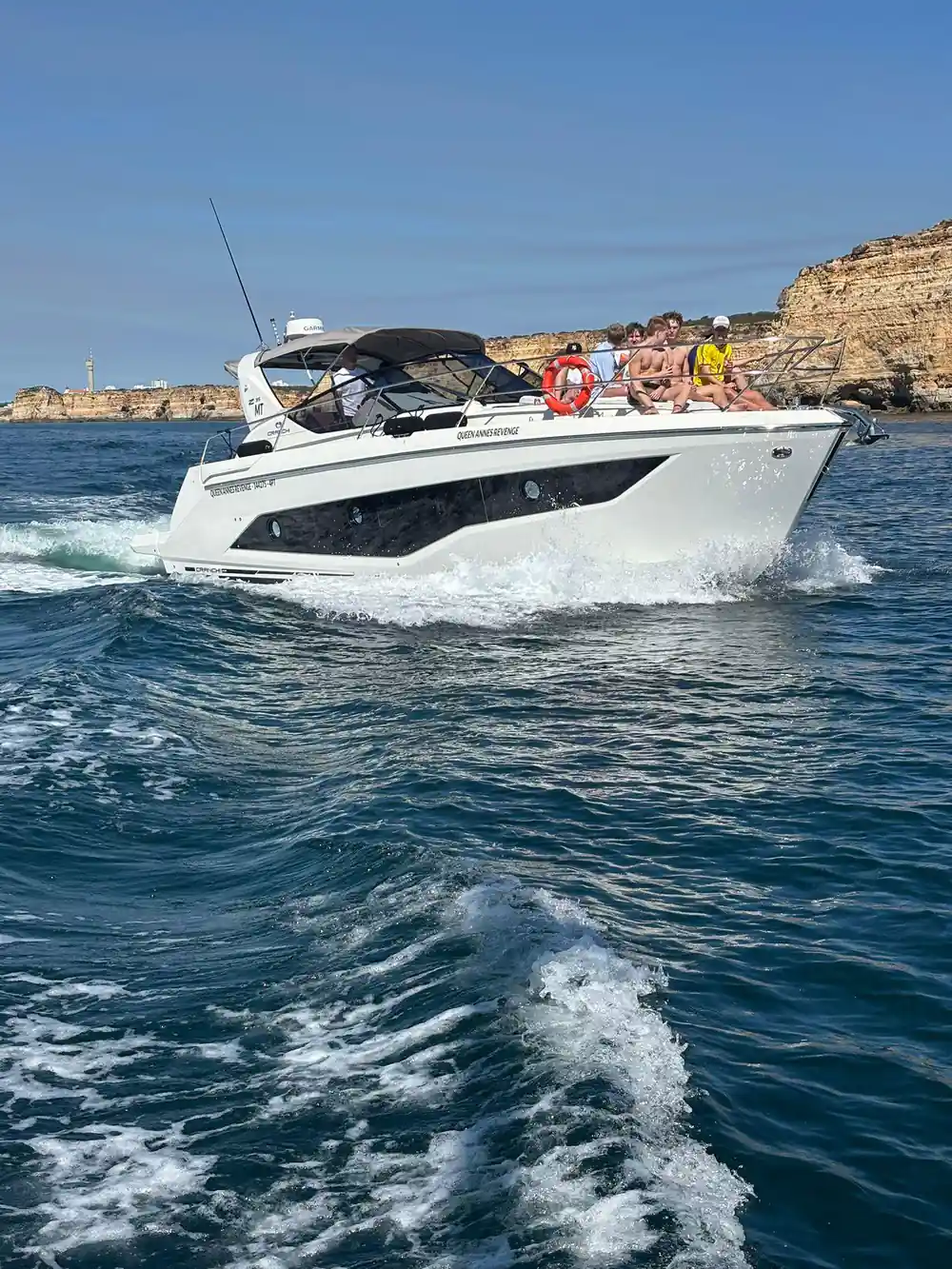
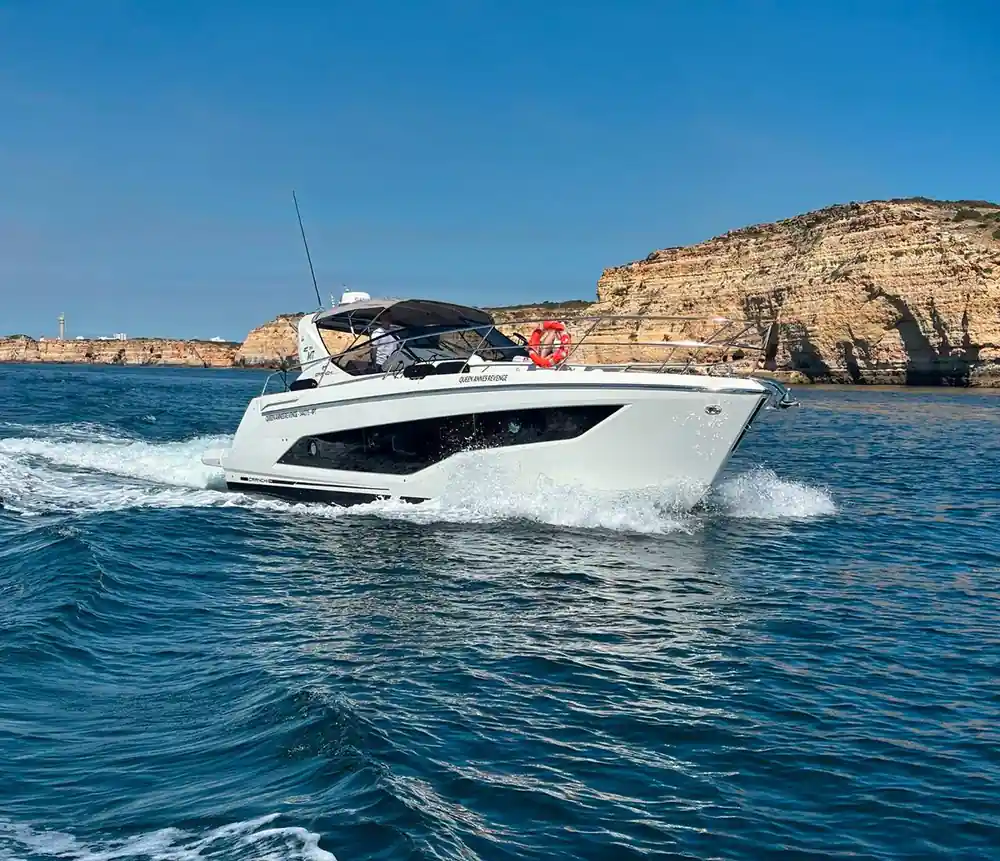
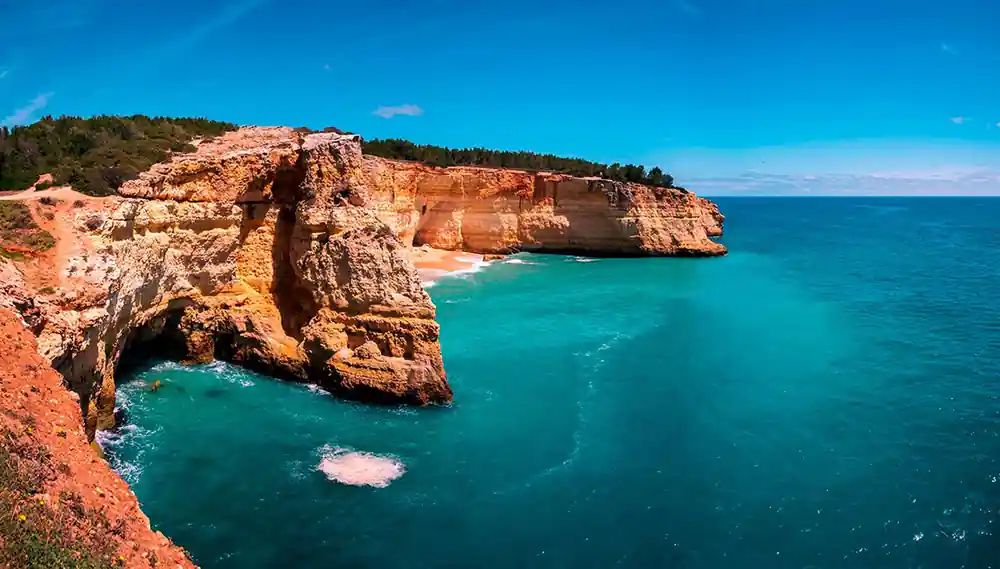
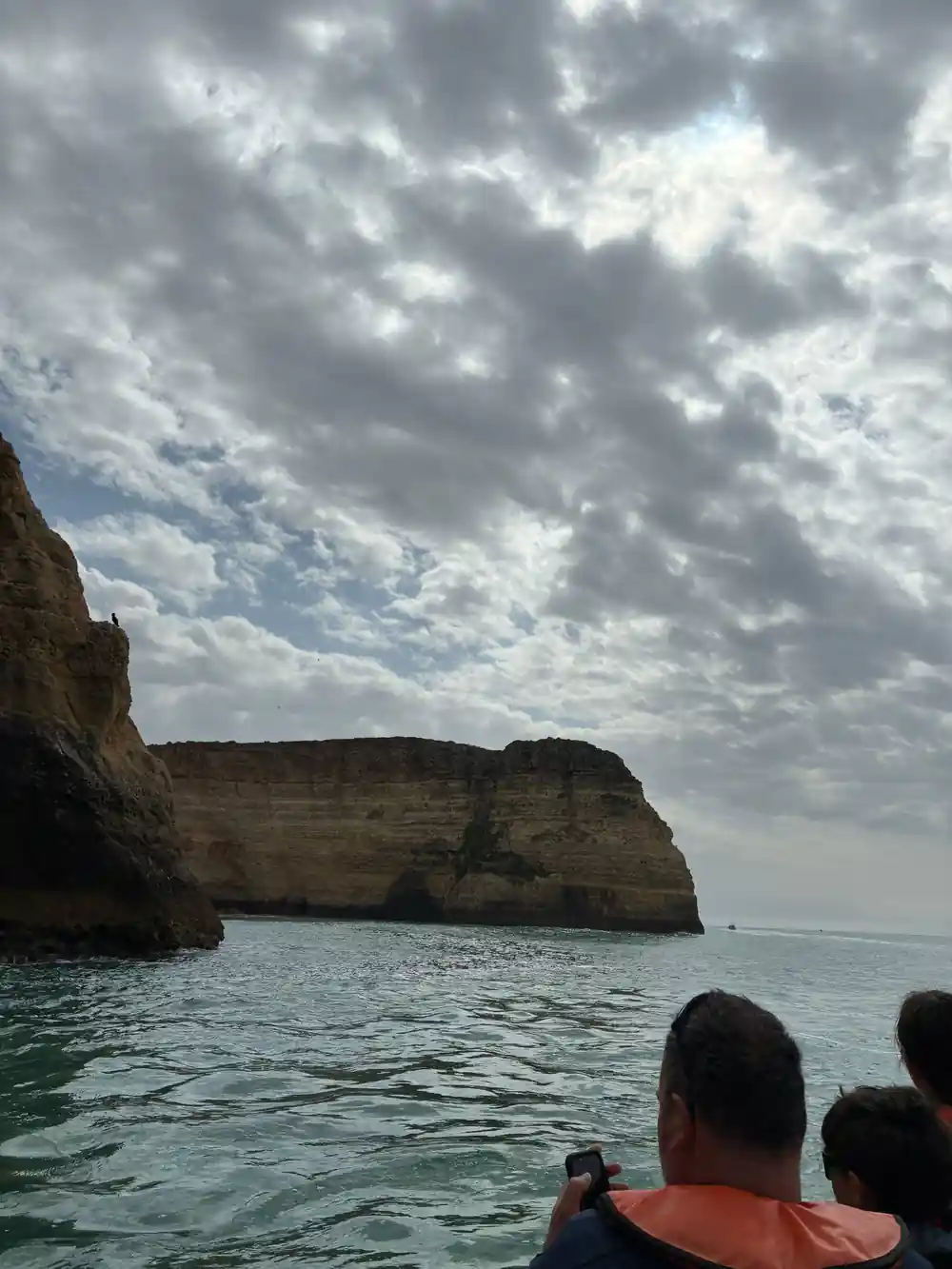
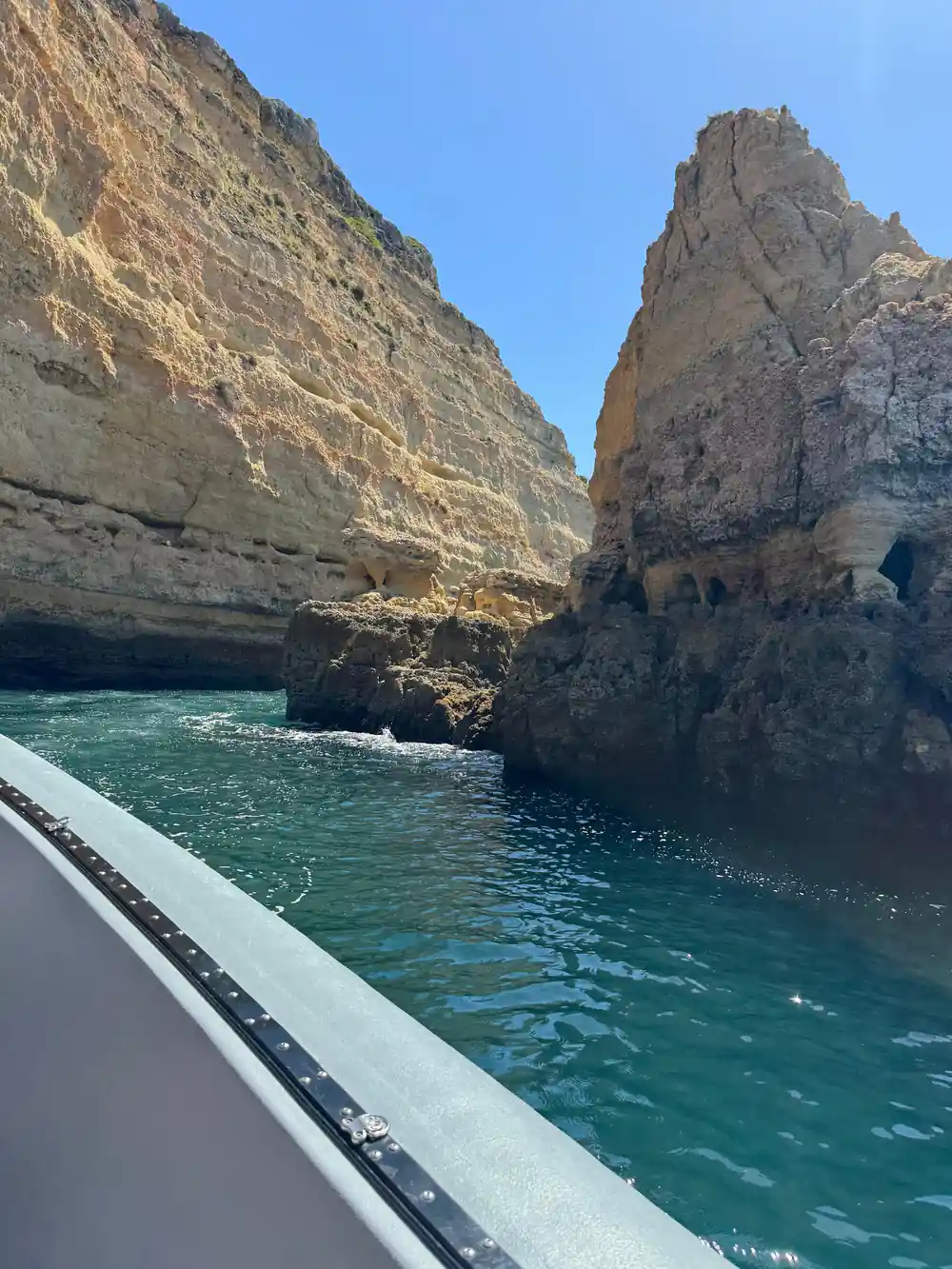
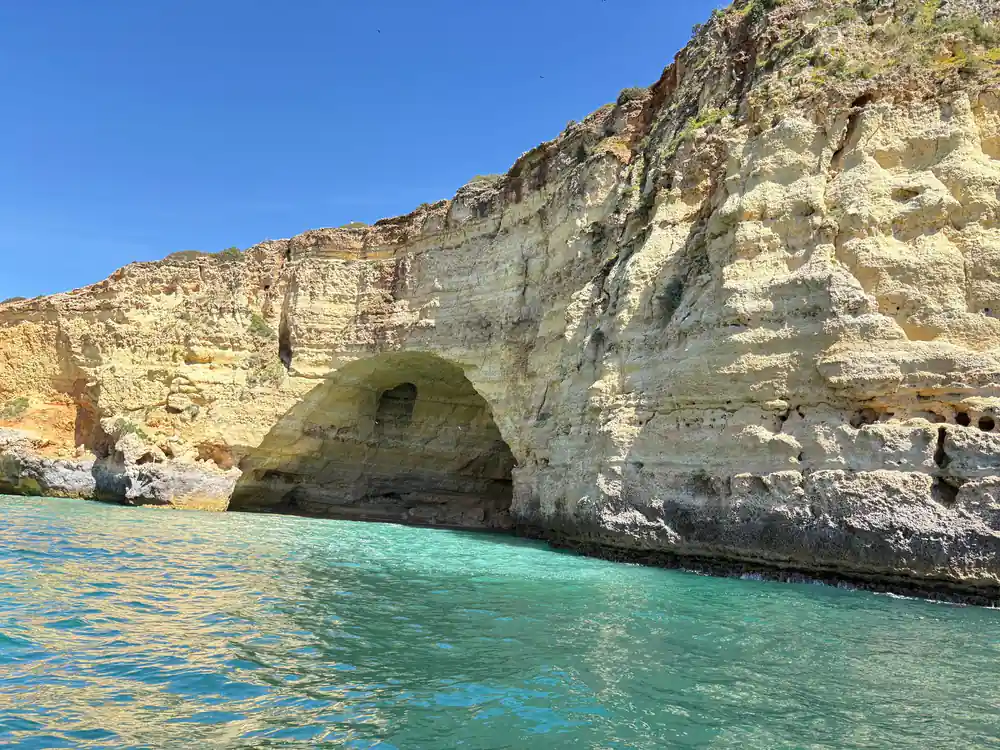
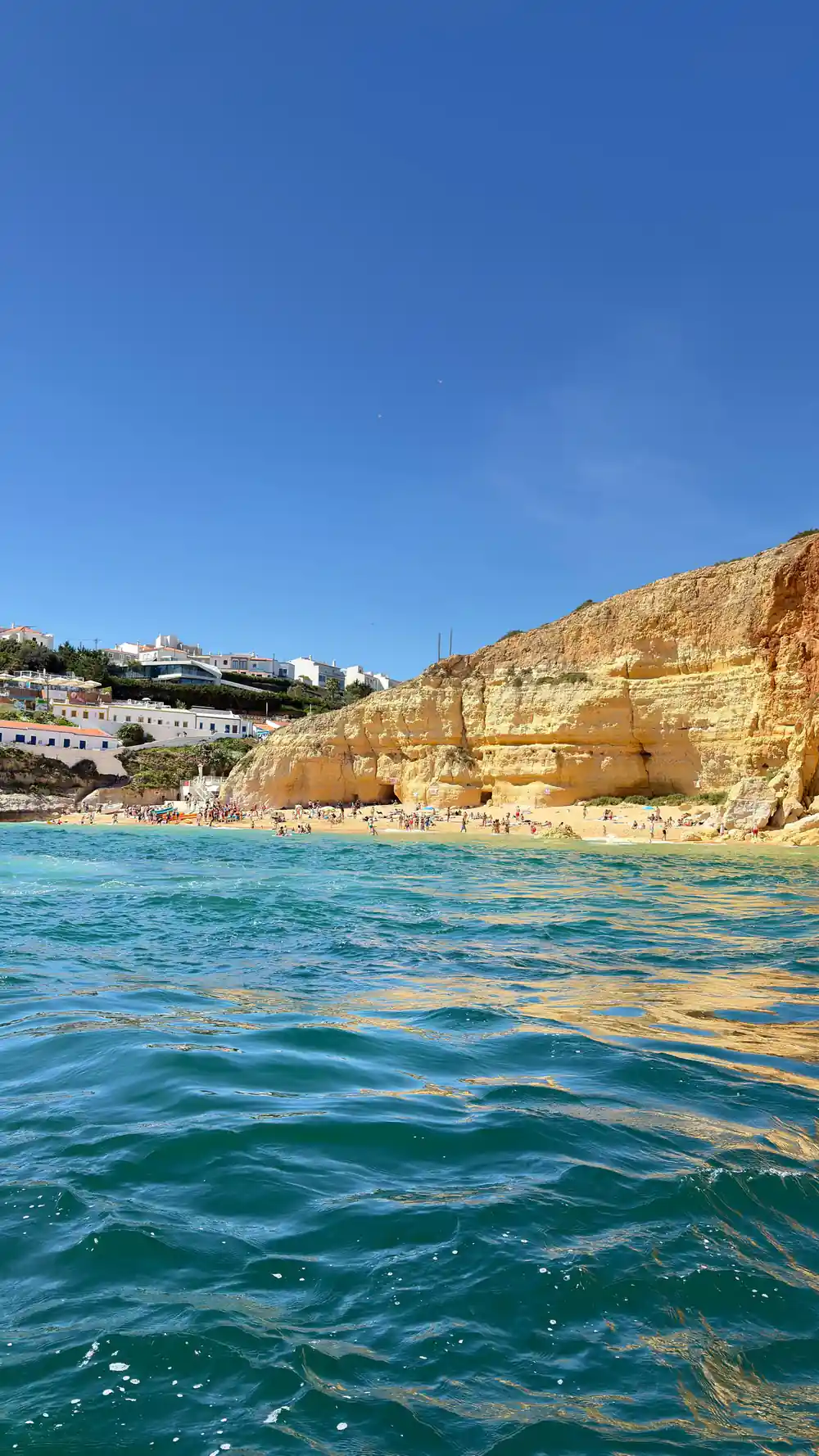
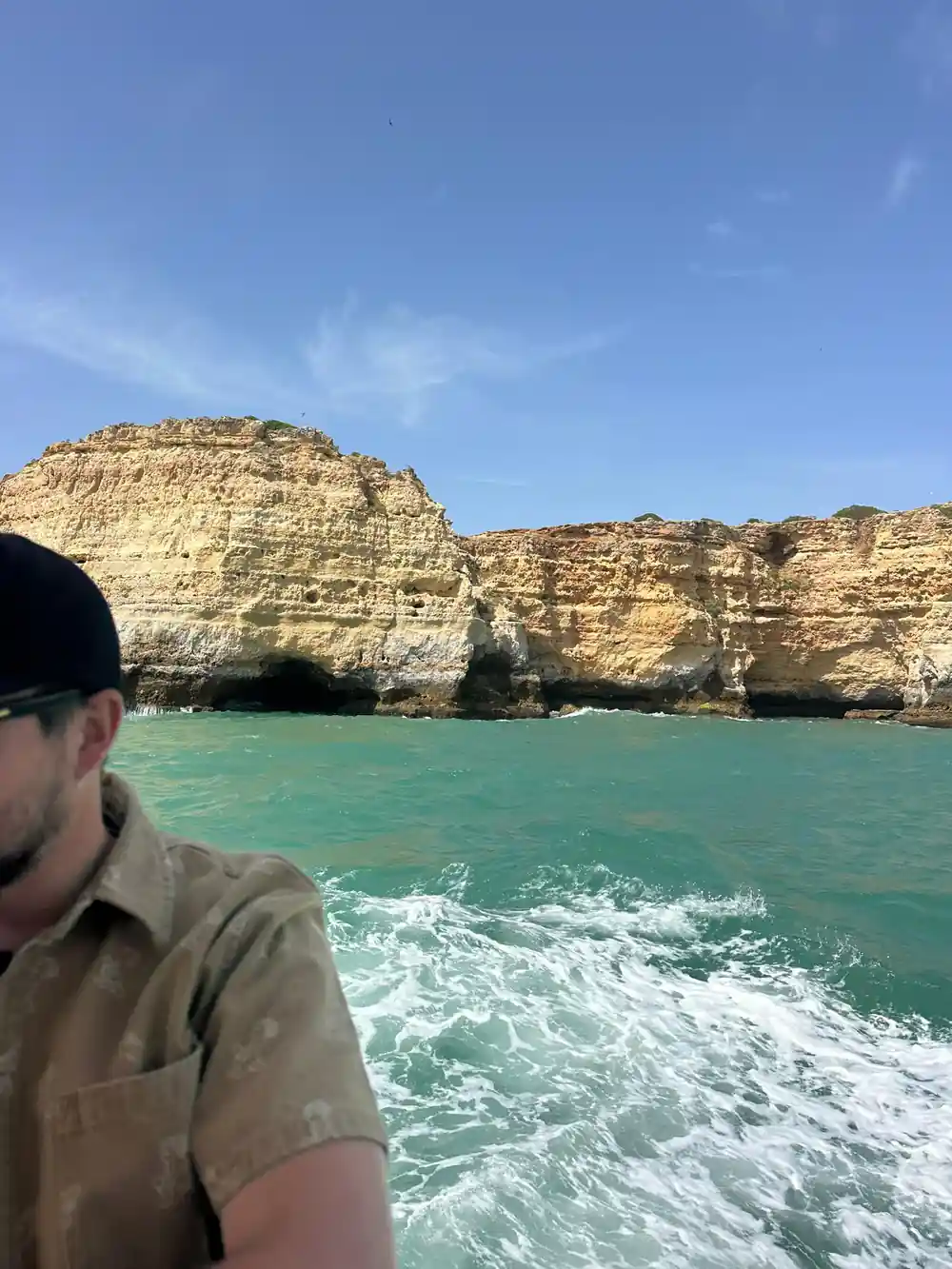
East of that the cliffs become continuous: gold and orange limestone, sixty or seventy metres of it, hollowed at the waterline into caves, pierced into arches, and left standing offshore as isolated towers where the roof of an arch has gone.
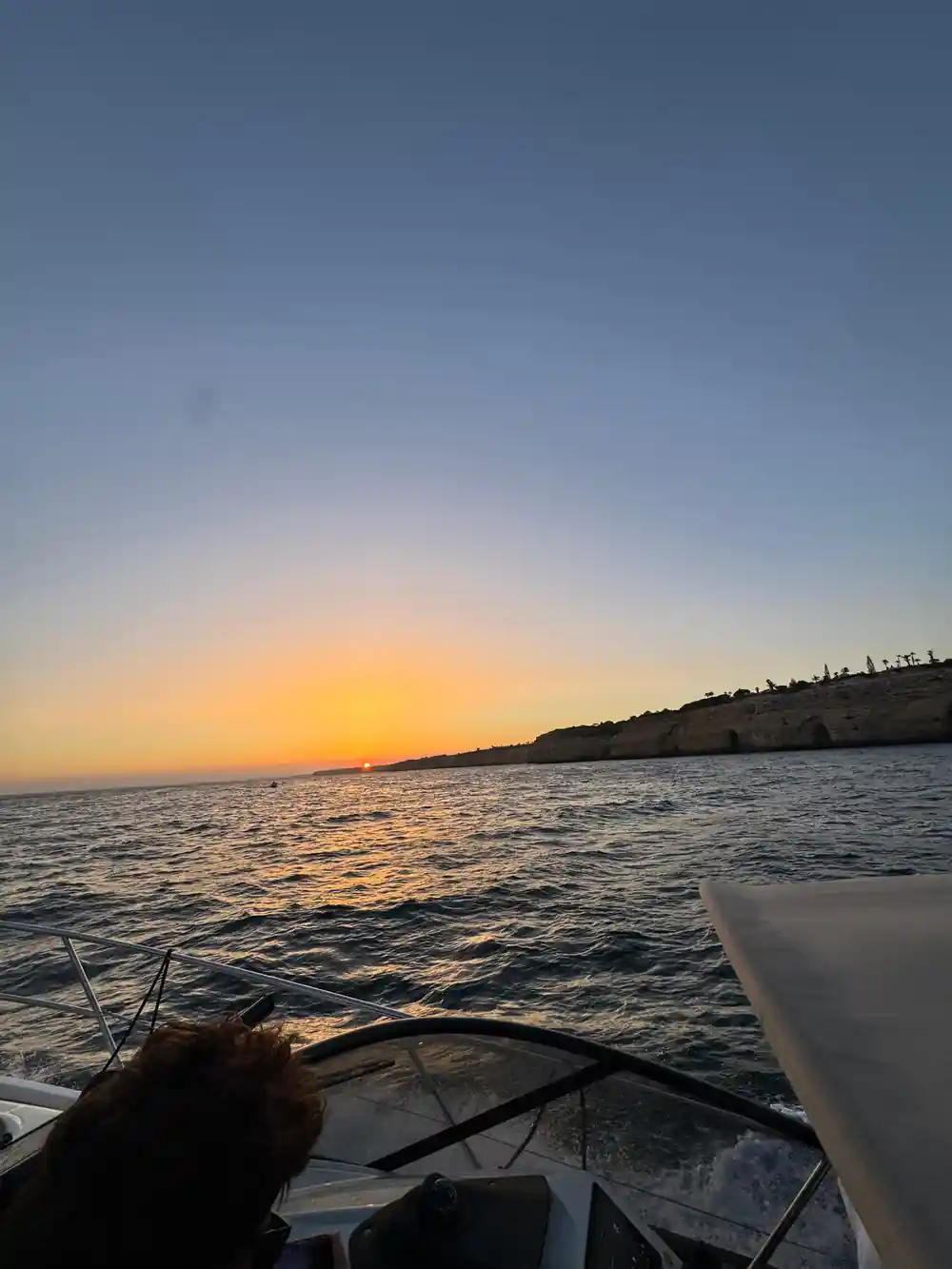
There is no stretch of it without something worth looking at, and from a boat you see the whole face, which is exactly the view the clifftop path cannot give you.
What private changes
The boat is taken by your party rather than filled with strangers, and that changes the day in four practical ways.
There is no schedule to keep beyond the length you booked, so the boat stops where your group is interested and moves when you are ready. There is nobody else's timetable at the cave and nobody else's preference about how long to sit in front of an arch.
It is quiet. A shared boat with forty people on it has forty conversations; this one has yours, and on a coast where the sound of water in a cave is part of the experience, that matters more than it sounds.
It is better with a camera and better with children, for the same reason: space, and a skipper who can be asked things.
What it does not change is the cave rules, the sea state or the coastline. Private buys you the pace and the company, not different access.
Dolphins, and the honest odds
Common dolphins are resident along this coast and are seen from boats regularly, often in groups, often behaving as though the boat is the interesting thing.
The operator states plainly that sightings cannot be guaranteed, and that is the correct thing to say. Nobody controls where dolphins are on a given afternoon.
What improves the odds is time on the water and a boat that can divert, both of which favour the longer options and the private format. A skipper who sees something can go towards it.
Treat it as a bonus rather than a reason. The cave and the coast are the reason; the dolphins are what makes some trips the one people talk about for years.
Who should not book this
The operator is specific, and it is better read now than at the pontoon.
Not suitable for pregnant passengers, for anyone with back problems, for anyone with heart problems, or for wheelchair users. A yacht at sea moves constantly, boarding is a step onto a moving deck, and there is no way to make either of those things flat.
No food or drink is provided, which surprises people on the longer options. Bring what you need, or eat properly beforehand.
And bring sun protection. There is shade on the boat but not everywhere on it, and the Algarve sun reflecting off water is the single most underestimated thing about a day like this.