The quick version
- Common dolphins are the most-seen species in summer; bottlenose dolphins are the only year-round resident pod; striped dolphins favour deeper offshore water. Sightings of all three peak from May through October.[1]
- The private yacht cruise from Portimão gives you a private group, a driver who speaks English, French, Portuguese and Spanish, and 2.5 to 6 hours on the water.[2]
- Dolphins are wild animals, not a scheduled part of the cruise. From Portimão, the Benagil Cave is 15 km by coastline, so the whole run can offer sightings.[3]
- Portugal has the only known white storks that nest at sea, and this behaviour has spread onto the southern coast of the Algarve.[4]
- Since August 13, 2024, visitors are no longer allowed to disembark onto the beach inside Benagil Cave or swim into it.[5]
| Private yacht cruise | Speedboat adventure | Sunset cruise | |
|---|---|---|---|
| From | from US$545[2] | from US$14[6] | from US$13[7] |
| Time on water | 2.5 - 6 hours[2] | 1.5 hours[6] | 75 minutes[7] |
| Rating | 4.74 from 1,768 reviews[2] | 4.81 from 7,820 reviews[6] | 4.81 from 2,545 reviews[7] |
| Languages | English, French, Portuguese, Spanish[2] | English, Spanish, French, Portuguese[6] | Spanish, English, French, Portuguese[7] |
| Free cancellation | Up to 24 hours in advance[2] | Up to 24 hours in advance[6] | Up to 24 hours in advance[7] |
Common dolphins are the most-seen species in summer; bottlenose are the only year-round resident pod; striped dolphins favour deeper, offshore water. Sightings of all three peak from May through October, with bottlenose visible year-round on calm days.
A private yacht can turn a famous sight into a calmer day
Before reserving
Which dolphins
The short answer is that the Algarve coast has three dolphins to look for. Common dolphins are the most-seen species in summer, bottlenose dolphins are the only year-round resident pod, and striped dolphins favour deeper, offshore water. Sightings of all three peak from May through October.[1] That gives you a clear season for wildlife-watching, but it also means the sea is never empty for long: even outside the peak months, a calm day can bring a bottlenose pod past the boat.[1]
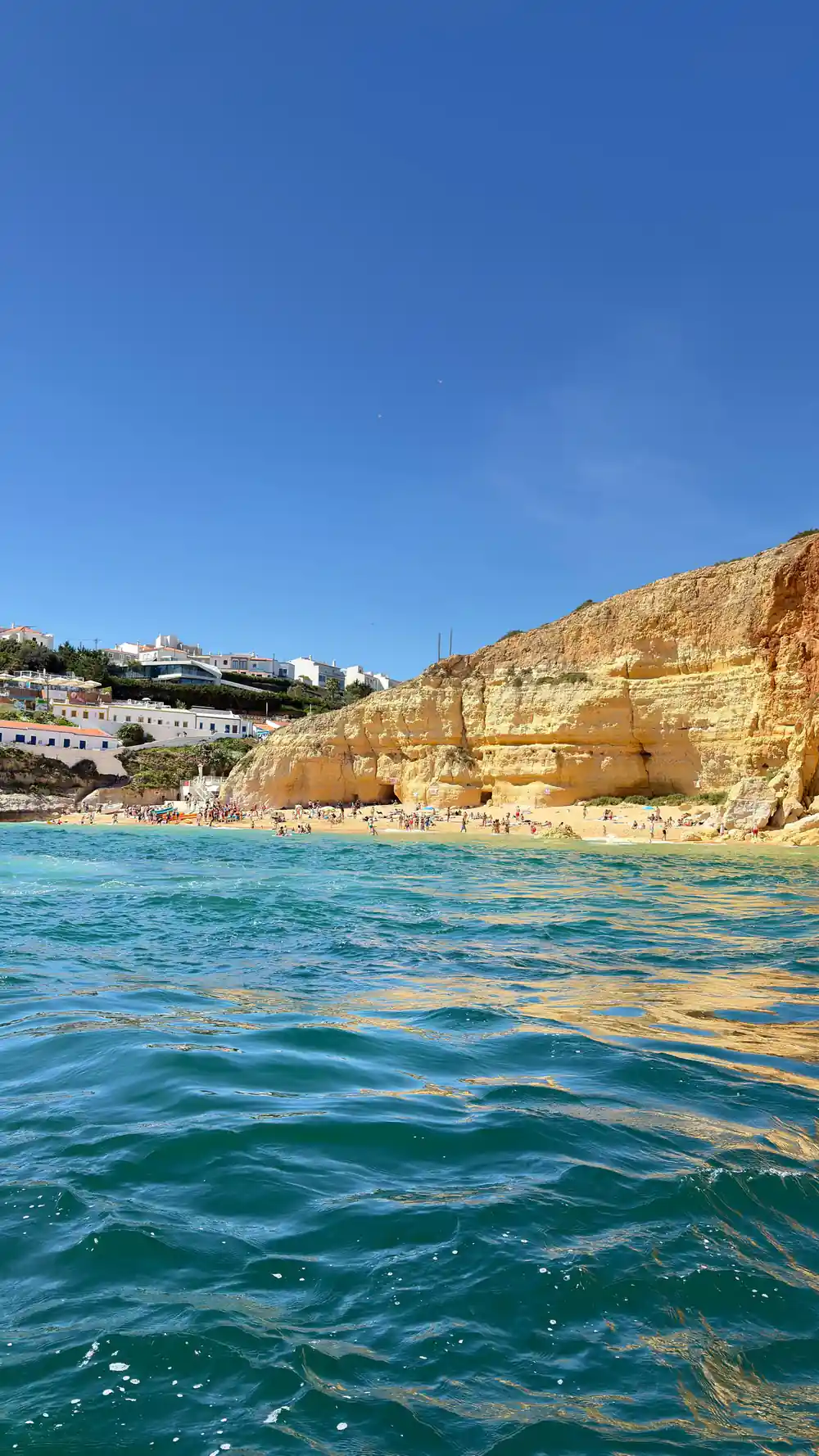
Your base is Benagil, a small fishing village in the Lagoa municipality, part of the Faro District in Portugal's Algarve region.[10] From Portimão, the Benagil Cave is 15 km by coastline.[3] The private yacht cruise takes a private group along that coast, with 2 starting location options and 2 drop-off locations.[2] The run from the marina to the cave passes cliffs, coves and headlands where a dolphin may cross your path, so the wildlife-watching starts before you reach the famous dome.
What a sighting is actually like
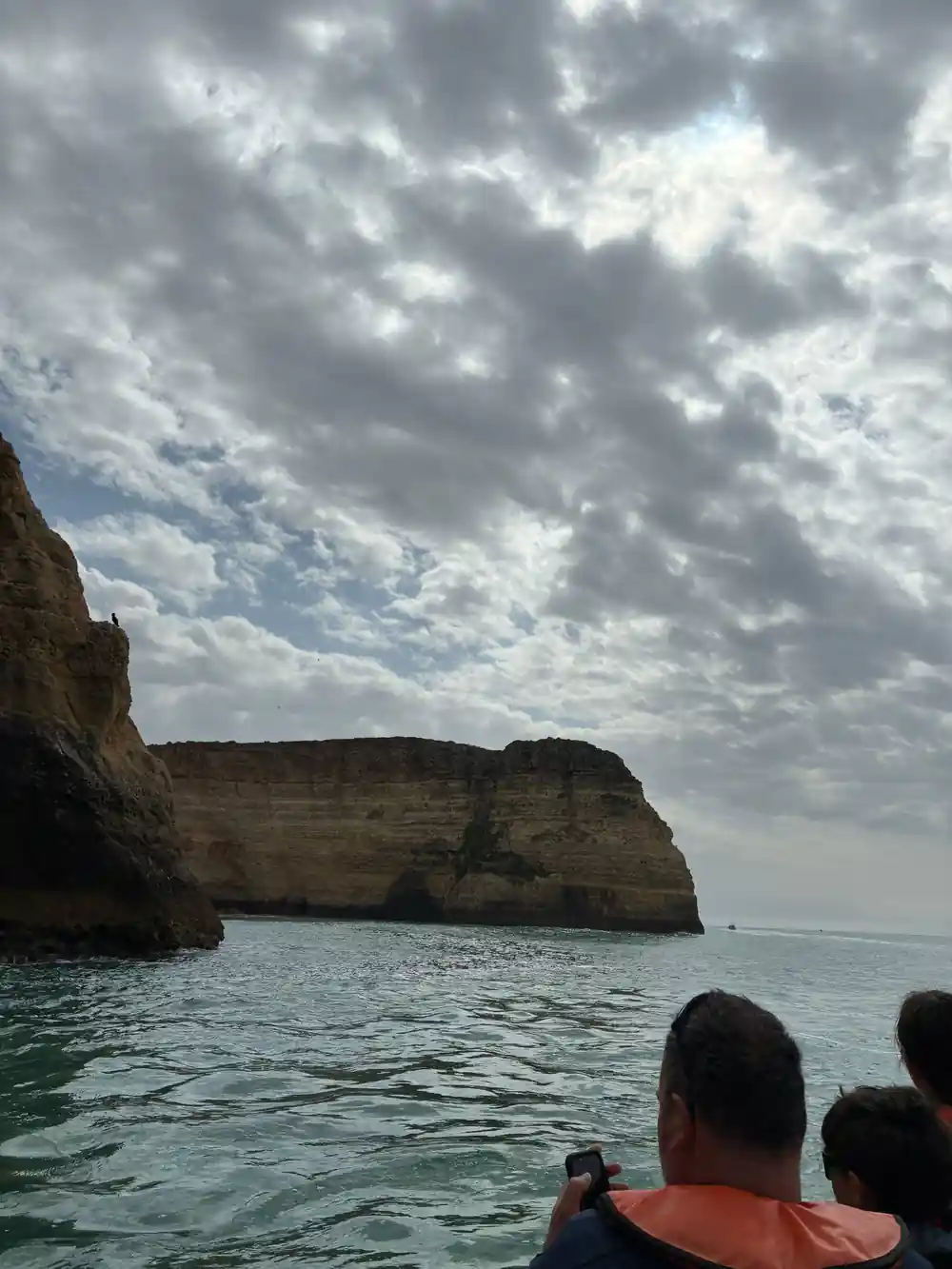
A dolphin sighting at sea rarely looks like a performance. What you usually notice first is a dark dorsal fin cutting the surface, then the smooth roll of a back, then the puff of a blow. The boat slows, and everyone moves to one side. On a private boat you are not sharing that rail with strangers, because this is a private group.[2] You can stand where you like, and the skipper can adjust the angle so everyone gets a view. There is no fixed script when a pod appears: sometimes the dolphins circle back, sometimes they are gone in a few breaths.
If the dolphins come closer, they may swim alongside the hull. If they stay at a distance, you still have plenty to watch: the limestone cliffs, shaped by coastal erosion over millions of years[11], and the small beaches that appear between the headlands. The driver speaks English, French, Portuguese and Spanish.[2] On a 2.5 to 6 hour cruise[2], you have time to let a wildlife moment play out instead of rushing to the next stop.
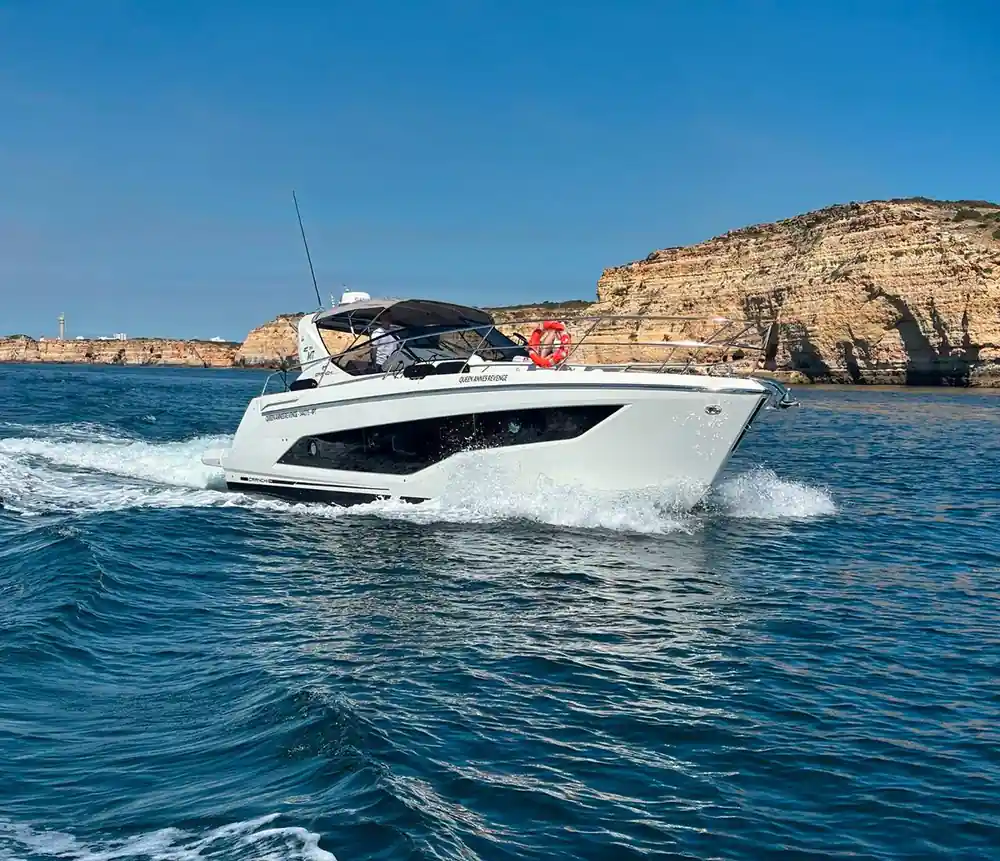
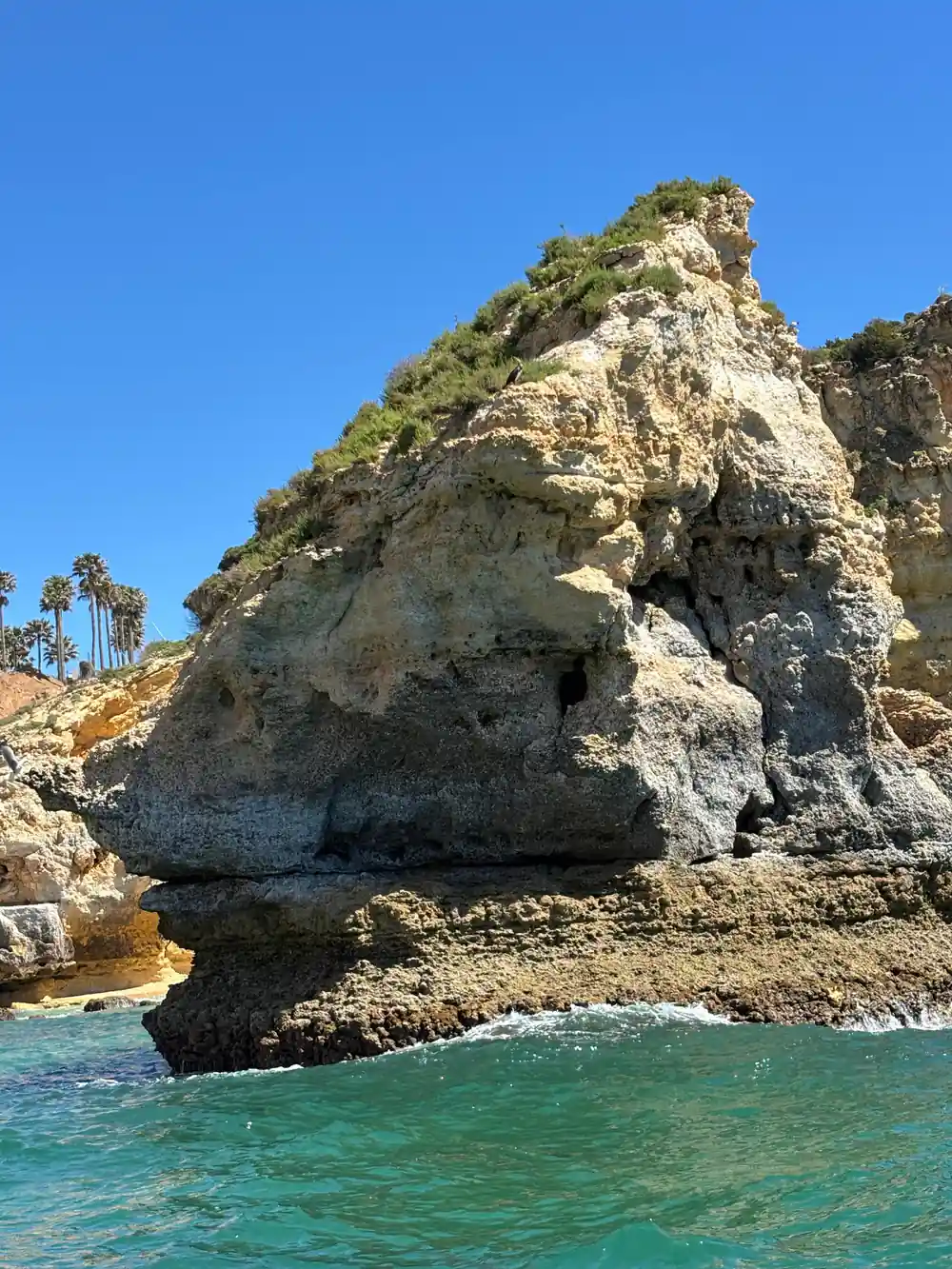
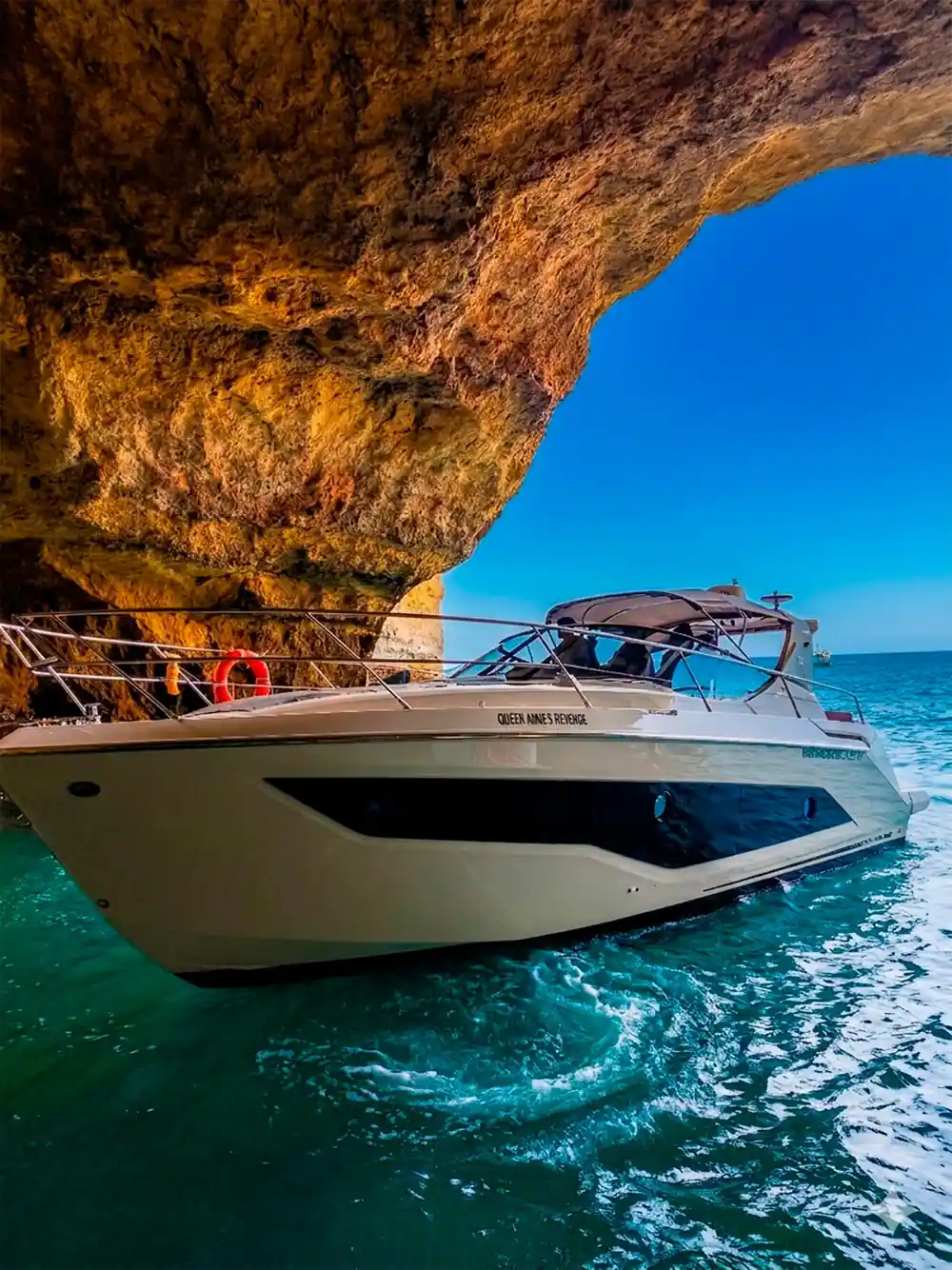
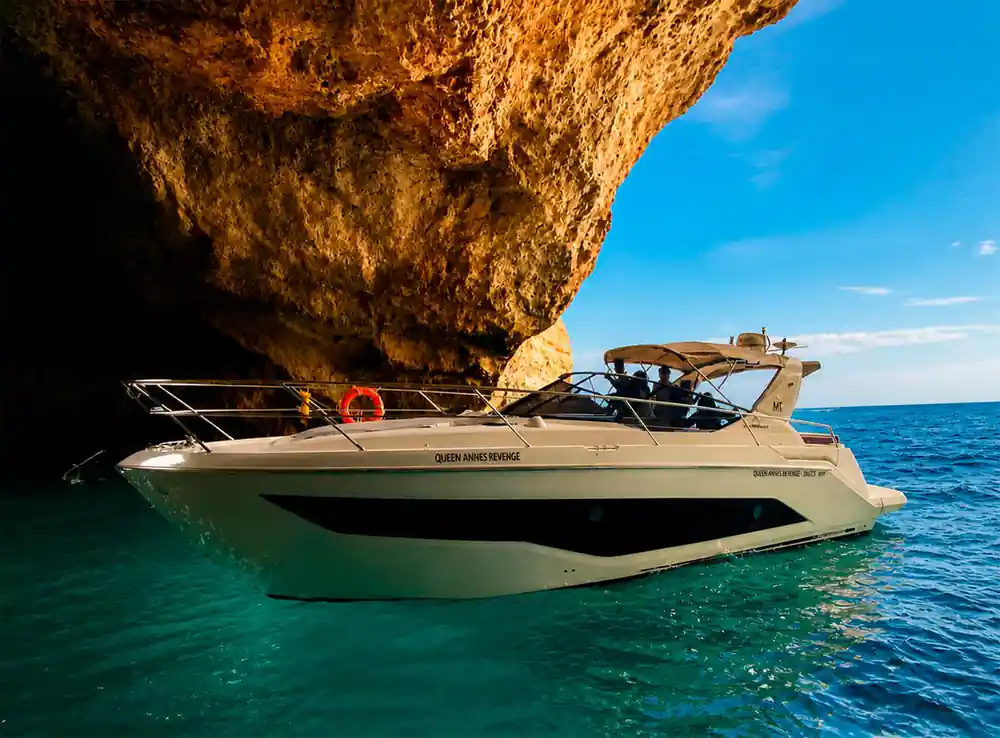
The yacht drifts below a tall Algarve cliff as the search for wildlife begins.
The odds, honestly
Let's be honest. This is a coastal cruise to the Benagil Caves and Marinha Beach, not a dolphin-watching tour, so no sighting is guaranteed. What the facts do tell you is that sightings of all three species peak from May through October, and bottlenose dolphins can be visible year-round on calm days.[1] The condition on calm days is worth taking seriously. Choose a settled forecast, give yourself time, and treat any dolphin encounter as a bonus.
If dolphins are your main goal, there are separate dolphin-and-cave boat tours from Portimão, such as a small-group trip limited to 15 participants, lasting 2.5 hours, from US$58.[12] The private yacht option is different: it costs more and gives you more space, privacy and time on the water. That trade-off matters more to some travellers than others, so it is useful to know, honestly, what you are booking.
Birds and the rest
The wildlife story is not all dolphins. Portugal has the only known white storks that nest at sea, and this behaviour has spread onto the southern coast of the Algarve.[4] That means your eye should not spend the whole trip at water level. Look up at the tops of the limestone cliffs and at the offshore stacks, especially in spring and early summer, when nests are active and adults are coming and going.
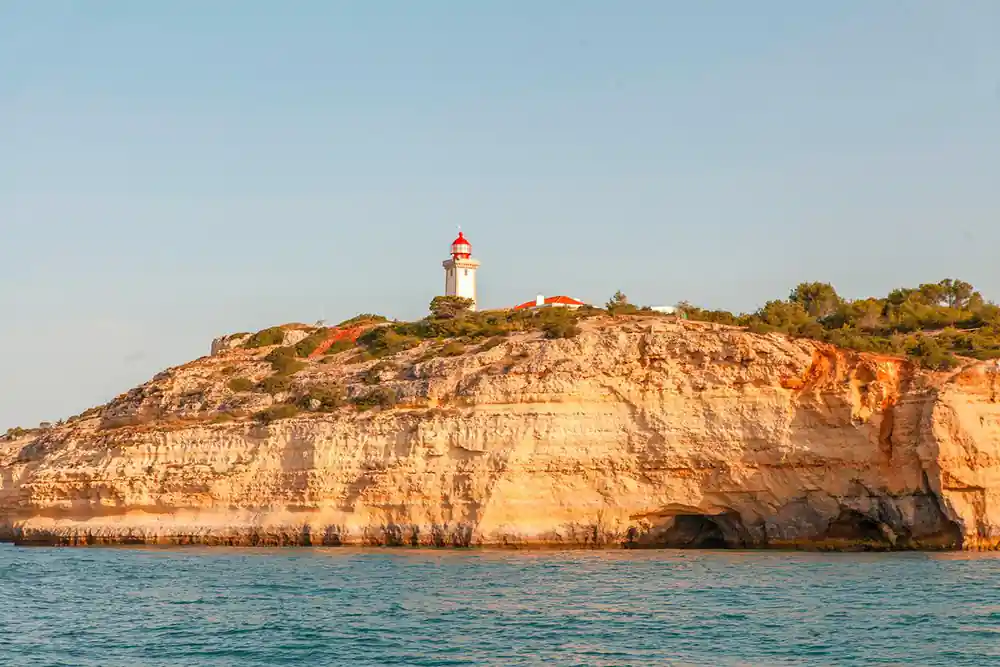
You will also pass the section of the Seven Hanging Valleys Trail that runs from Marinha Beach to Carvalho Beach and passes by Benagil Cave and Benagil Beach.[13] From the water, the same cliffs give you a different angle on the arches, coves and golden sand that make Praia da Marinha special.[14] If you want to plan a longer day, you can combine the cruise with a clifftop walk before or after, using Benagil Beach as the link between the two.
from US$545
Book the private yacht from Portimão and give yourself room to scan the sea for dolphins, storks and the limestone coast at your own pace.
Cave rules and the swim ban
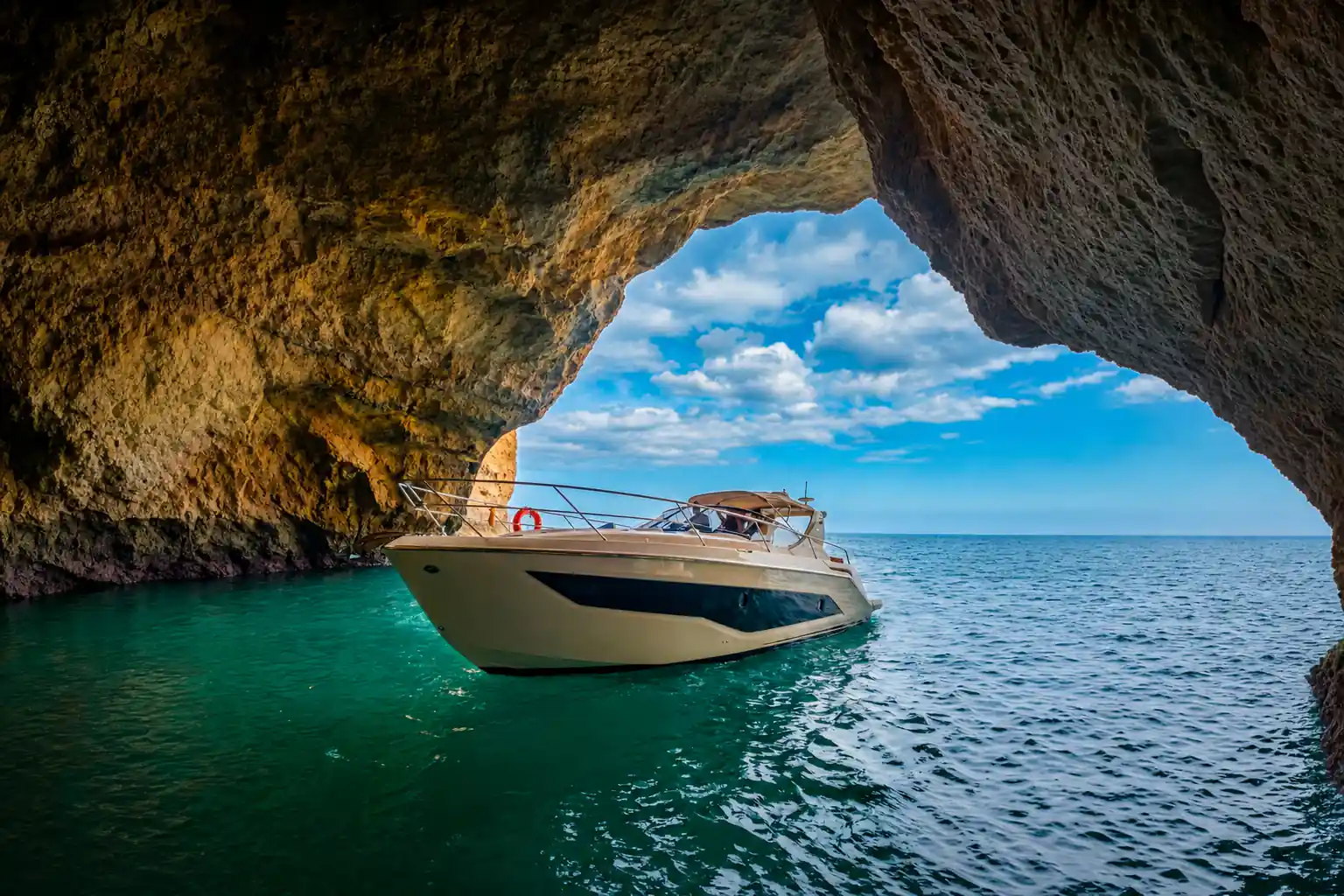
One rule matters more than any other in the cave. As of August 13, 2024, visitors are no longer allowed to disembark onto the beach inside the Benagil Cave or swim into it.[5] So the classic image of people standing on golden sand under the dome is a thing of the past. You enter the cave by boat, take your photos from the water, and continue. For wildlife, the practical effect is a quieter cave, with less disturbance to the beach and the water around it.
The interior is roughly circular, about 50 metres across, with walls rising 15 metres to a domed ceiling and an oval roof opening about 10 metres across.[15] On a quiet morning the light falls straight through that opening and turns the water turquoise. The visit stays afloat, and the cave has become a place to appreciate from the water rather than a beach stop. With the roof opening overhead, the sound of water echoes and the light changes as clouds pass.
The Seven Hanging Valleys view
If you want to see Benagil from above before or after your cruise, walk a stretch of the Seven Hanging Valleys Trail. The section that runs from Marinha Beach to Carvalho Beach passes by Benagil Cave and Benagil Beach.[13] From the clifftop you look down into the same turquoise water the yacht crosses, and you can watch the boats below threading through the arches.
The region is easy to visit in most seasons. The Algarve receives over 3,000 hours of sunshine per year.[16] Summer highs from June to September are around 25 to 29 C, while winter highs are near 16 to 17 C.[9] Sea temperatures range from about 15-16°C in winter to 19-23°C in summer.[8] In spring, the sea climbs through about 16-19°C, and in autumn it cools through about 18-20°C.[8] That means a spring or autumn trip can feel softer on the skin, with water somewhere between warm and brisk.
What this trip is not
Book the private yacht cruise with the right expectations. It is a private group, with a driver who speaks English, French, Portuguese and Spanish, and it lasts 2.5 to 6 hours.[2] It is not a dolphin safari and it does not include landing inside the cave.[5] If you would rather paddle, guided kayak tours from Benagil start from US$22.[17] If you prefer a shorter boat ride, a speedboat adventure from Portimão lasts 1.5 hours and costs from US$14.[6]
What the private yacht gives you is the luxury of time: a roomy deck, a driver who can adapt to the day, and the chance to watch the coast slowly. Keep your camera ready, keep an eye on the water and the sky, and let the sea set the pace. Dolphins, storks, caves and golden beaches may all make an appearance, but the quiet hour between sights is part of the point too. Dress for sun and wind, and the cruise will look after itself.
Traveller review counts for three boat trips
Review counts: Private Yacht Cruise to Benagil Caves & Marinha Beach[2]; Benagil Sea Caves Speedboat Adventure[6]; Sunset Cruise to Benagil Cave and Marinha Beach[7].
Choose your boat trip
From-prices in US dollars for the Private Yacht Cruise to Benagil Caves & Marinha Beach[2], the Benagil Sea Caves Speedboat Adventure[6] and the Sunset Cruise to Benagil Cave and Marinha Beach[7].
When to book
Plan your Algarve wildlife trip
Pick your season
Dolphin sightings of all three species peak from May through October.[1] Book then for the best chances.
Choose your boat time
The private yacht cruise runs 2.5 to 6 hours, so plan for a few hours on the water.[2]
Know the cave rule
Since August 13, 2024, you cannot land on the beach inside Benagil Cave or swim into it.[5]
Pack for sun and sea
Summer highs are around 25 to 29 C, with sea temperatures about 19-23°C.[8][9]
Add a clifftop view
The Seven Hanging Valleys Trail passes Benagil Cave and Benagil Beach.[13]
Reserve your private yacht and leave room for dolphins and the quiet coast.
from US$546Reserve now & pay later