The quick version
- About 50 metres across with walls rising 15 metres, the chamber is lit by an oval roof opening some 10 metres wide.[1]
- Since August 13, 2024, visitors cannot disembark onto the beach inside the cave or swim into it.[2]
- The Private Yacht Cruise lasts 2.5 to 6 hours, is priced from US$545 and skips the ticket line.[3]
- Portimão is 15 km by coastline from the cave, and Praia da Marinha is loved for arches, coves and golden sand.[4][5]
- Reserve now, pay later, and cancel up to 24 hours in advance for a full refund.[3]
- Top choice Private Yacht Cruise from US$545 Duration2.5 - 6 hours[3]GroupPrivate group[3]LanguageEnglish, French, Portuguese, Spanish[3]BookingReserve now, pay later[3] Check availability
- Speedboat Adventure from US$14 Duration1.5 hours[6]GroupLive tour guide[6]LanguageEnglish, Spanish, French, Portuguese[6]BookingReserve now, pay later[6] See this tour
- Sunset Cruise from US$13 Duration75 minutes[7]GroupDriver[7]LanguageSpanish, English, French, Portuguese[7]BookingReserve now, pay later[7] See this tour
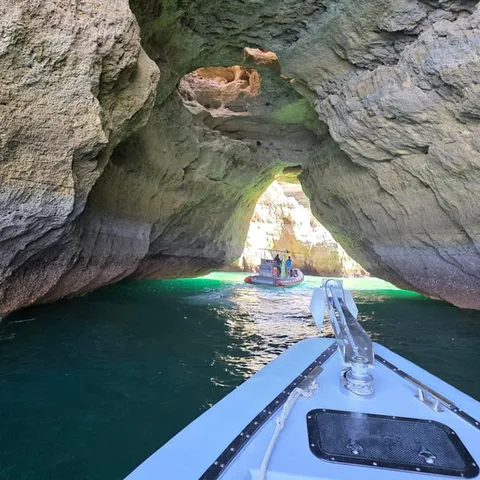
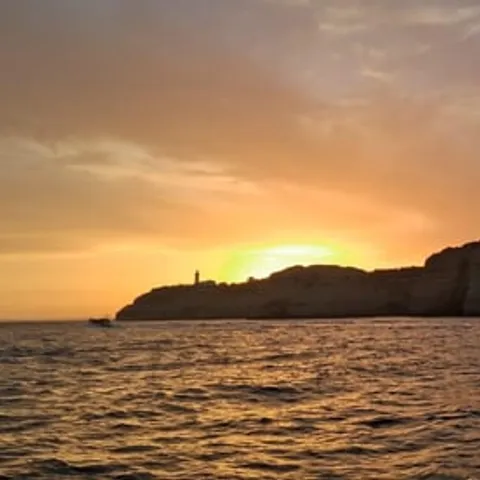
As of August 13, 2024, visitors will no longer be allowed to disembark onto the beach inside the Benagil Cave or swim into it.
Our verdict
Plan ahead
- Pack high SPF, a hat and sunglasses for the bright Algarve coast
- Bring a light layer; sea breezes can feel cool on the water
- Have your booking reference ready and use reserve now, pay later
- Check the cancellation window before you book
On the day
- Use skip-the-ticket-line access on the private yacht cruise
- Arrive early at the Portimão meeting point
- Allow time for transfers if you are staying outside Portimão
- Confirm the route and timing with your skipper
What is physically in there
Benagil Cave sits just off a small fishing village in the Algarve, and it is not a dark tunnel but a single open chamber. The cave was formed over millions of years by coastal erosion along a limestone-dominated coastline.[8] The village of Benagil lies in the Lagoa municipality, part of the Faro District in Portugal's Algarve region.[9]
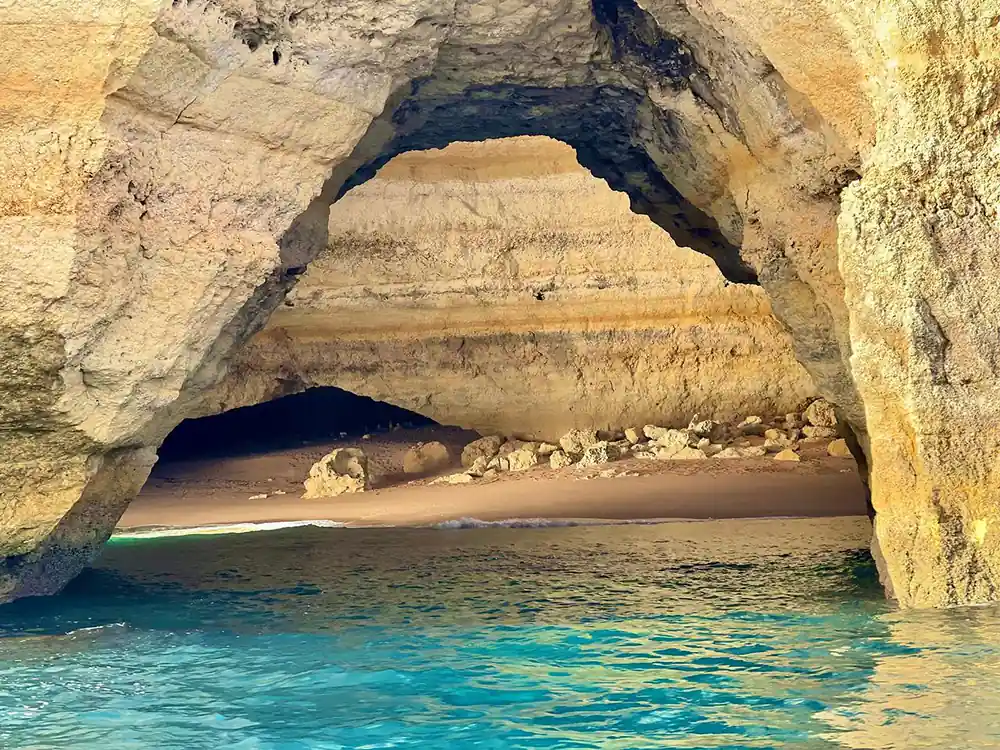
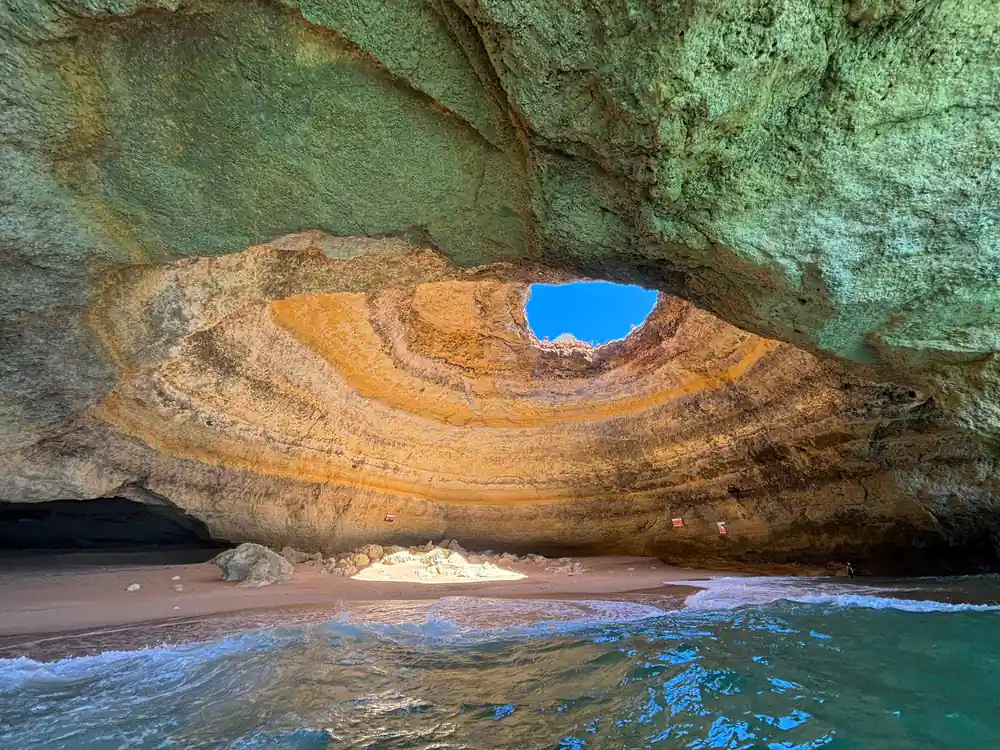
The interior is roughly circular, about 50 metres across, with walls rising 15 metres on all sides to a domed ceiling.[1] At the apex of that ceiling, an oval opening about 10 metres across lets in direct daylight.[1] From the sea, the cave reads as a huge arch, and from inside, as a rotunda open to the sky.
The floor of the cave is a mix of beach and water, and the seaward side opens wide enough for boats to pass. You can no longer step ashore; the view is best from the water, where the whole chamber comes into focus. Look up at the cliffs around it and you may see white storks, the birds that nest at sea and have spread onto the southern coast of the Algarve.[10]
How big it really is
The scale of Benagil is easy to underestimate from photographs. The chamber is roughly circular and about 50 metres across, with walls rising 15 metres to a domed ceiling.[1] The roof opening is an oval about 10 metres across.[1]
A boat large enough for a comfortable private cruise can pass into the seaward opening, and a kayak can slip through the same gap. The rule to know before you go: as of August 13, 2024, visitors are not allowed to disembark onto the beach inside the cave or swim into it.[2] That applies to everyone, whether you arrive by yacht, speedboat or kayak.
This means the classic photograph of someone standing on the beach inside the cave is no longer something you can recreate. Plan to stay in your boat or kayak and take the view from there. The prohibition is straightforward, but it is worth remembering when you compare tours and think about how close you will get. Bring a wide lens if you have one, and hold your camera steady as the swell moves the boat.
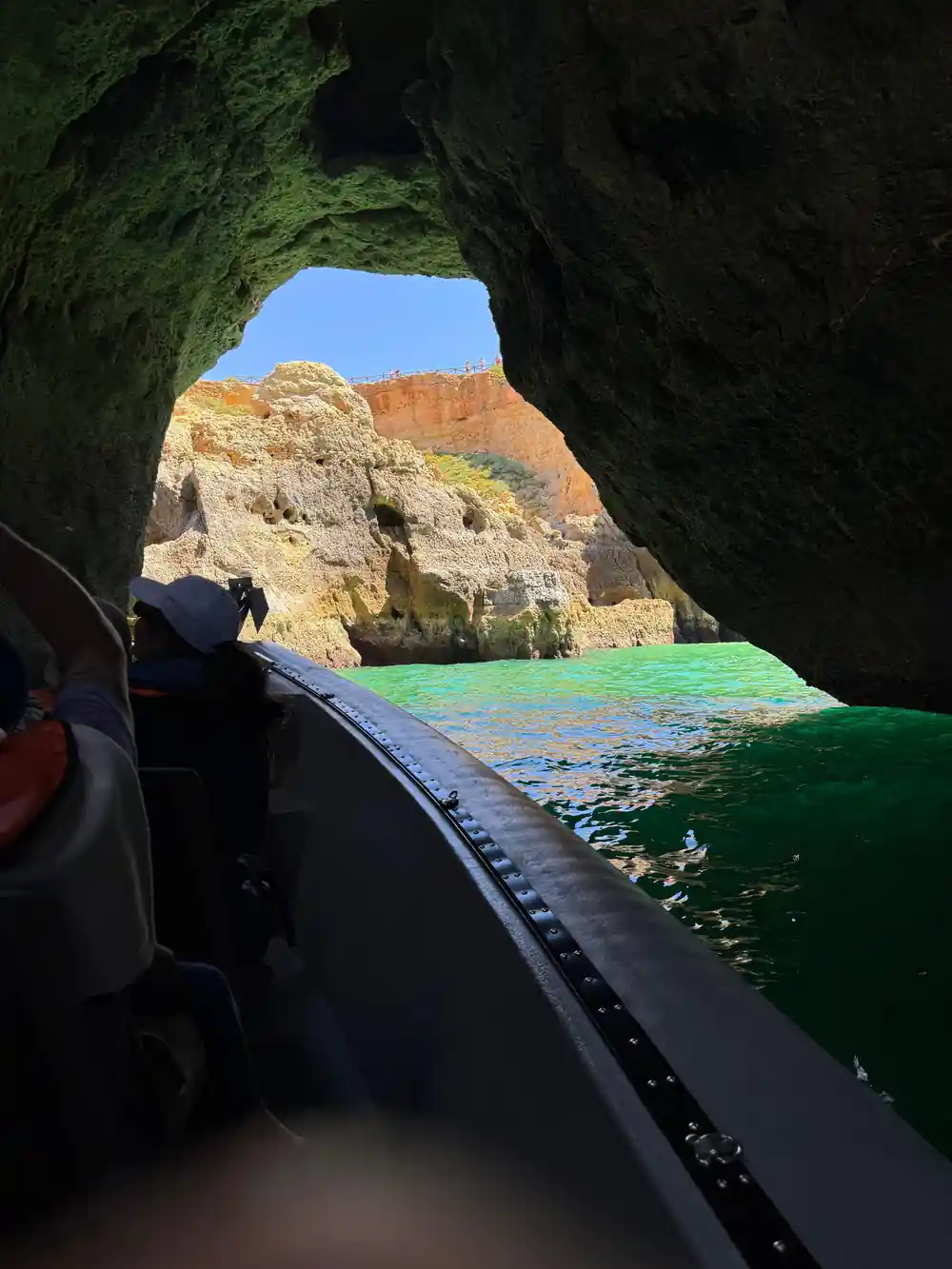
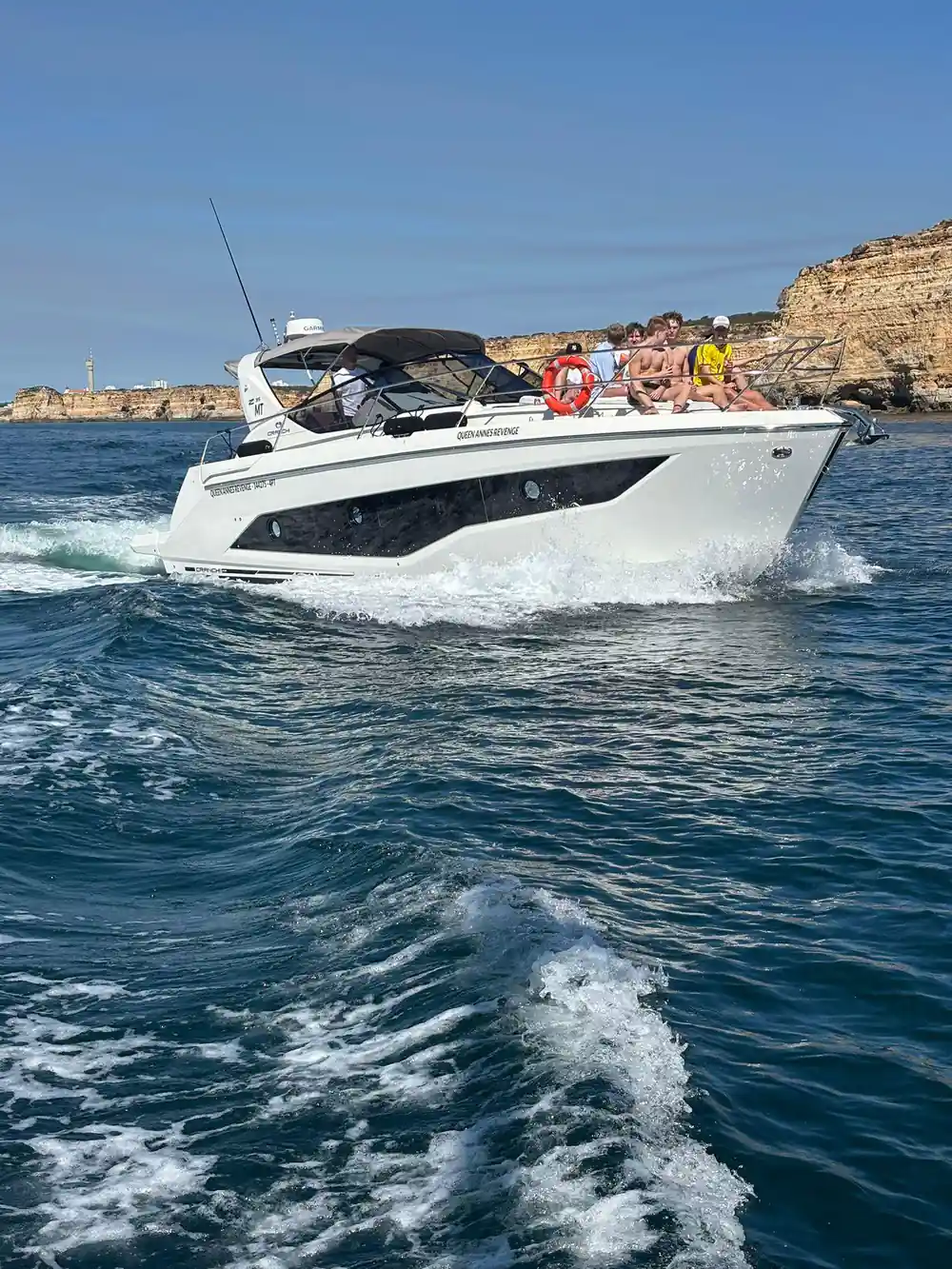
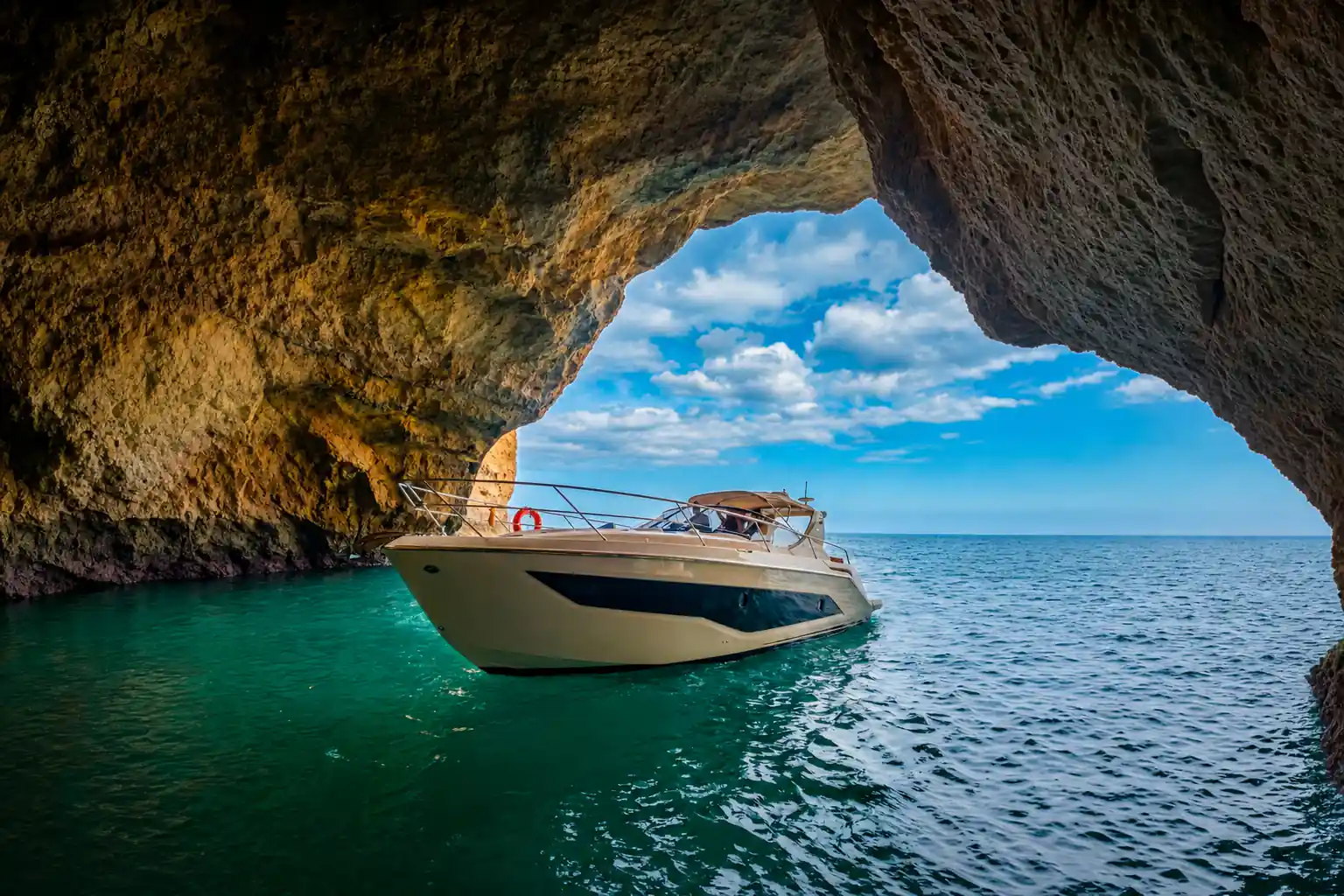
The private yacht glides into the sea arch beneath Benagil's limestone cliffs.
The light through the roof
The roof opening is what makes Benagil instantly recognisable. It is an oval about 10 metres across at the top of the domed ceiling, and it floods the interior with downwelling light.[1] In the middle of the day, sunlight catches the water and the sand, turning the cave a bright turquoise.
The Algarve gets over 3,000 hours of sunshine per year.[11] The look of the cave changes with the sun's angle, the time of day, and the tide. The tide here has two highs and two lows on most days, roughly twelve hours and twenty-five minutes apart.[12]
For photographers, the roof opening is the frame. When the sun is high, the beam drops straight onto the beach; later in the day, it rakes across the walls. Neither moment is better, but both are very different. A private cruise gives you the freedom to wait for the light you want. This is why many travellers try to time their visit for the middle of the day.
The name, and what it tells you
Benagil is the name of the small fishing village above the cave, in the Lagoa municipality, part of the Faro District in Portugal's Algarve region.[9] The cave takes its name from the village, and it is often listed as Benagil Sea Cave or Algar de Benagil. The name appears on signs, boat listings and trail maps across the region.
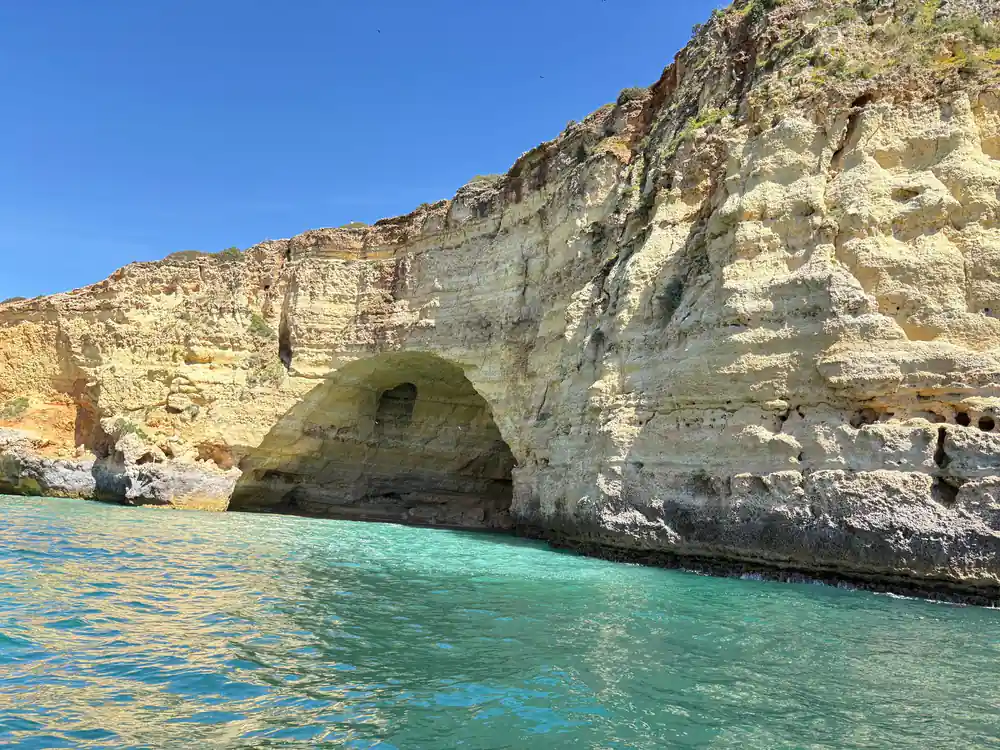
Along this coast, 'algar' is the local word for a sea cave or sinkhole, and the Algarve's limestone geology is full of them. The Benagil Sea Cave was formed over millions of years by coastal erosion along a limestone-dominated coastline.[8]
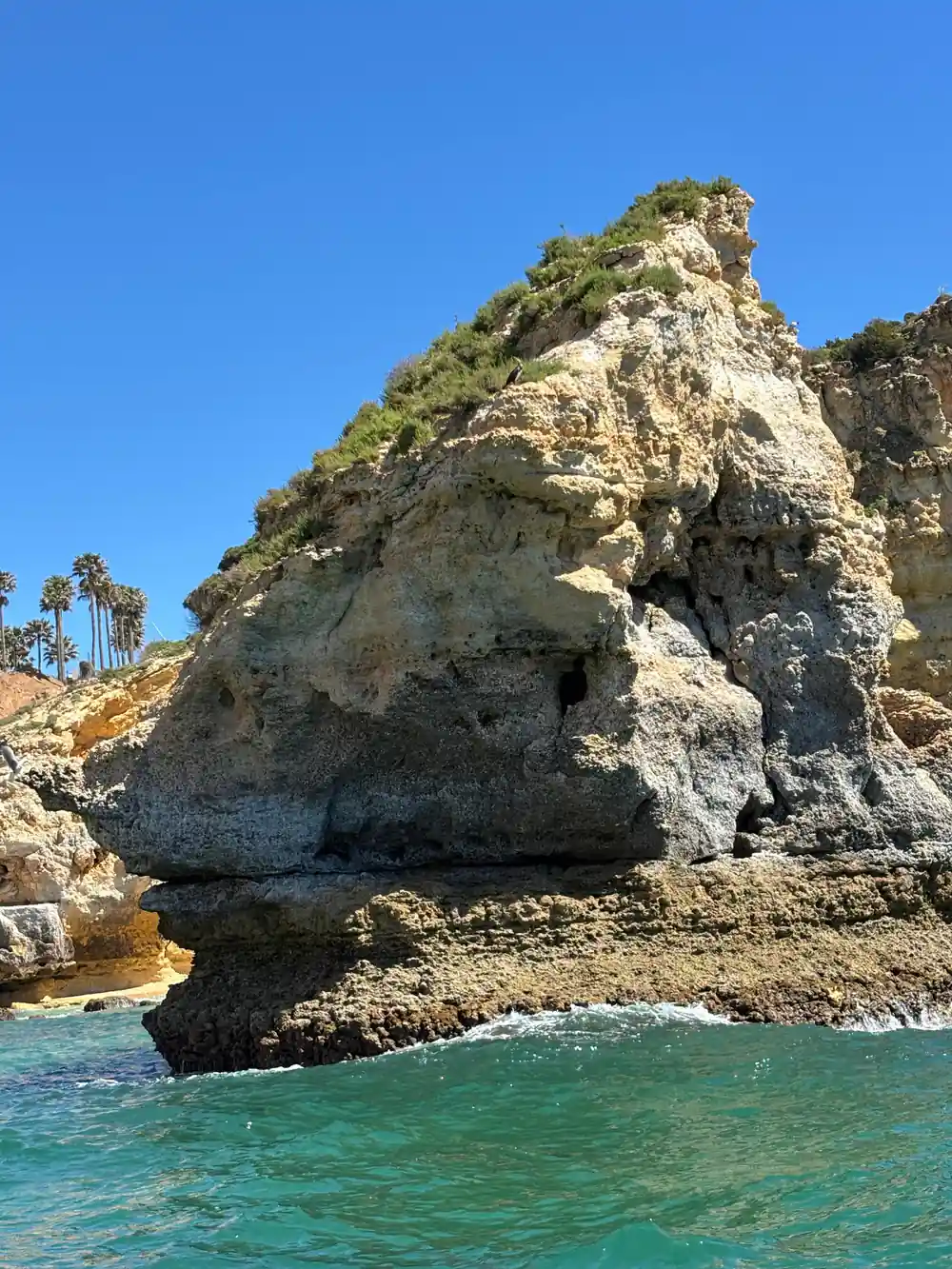
The cave is part of a coastline that is easy to explore. The Seven Hanging Valleys Trail passes by Benagil Cave and Benagil Beach on the section from Marinha Beach to Carvalho Beach.[13] And Praia da Marinha, the beach so often paired with Benagil in tour names, is loved for its natural arches, small coves, and golden sand.[5] You can combine a cruise with a walk on the trail if your legs need stretching.
from US$545
Private Yacht Cruise to the Benagil Caves & Marinha Beach, with private group, skip-the-ticket-line access and flexible cancellation.
Why this one and not the others
People ask why Benagil is the cave everyone photographs, and the answer is in the proportions. It is roughly circular, about 50 metres across, with walls rising 15 metres, and it has an oval roof opening about 10 metres across.[1] The hole in the roof lets in direct light, and the colour glows.
Other caves along the Algarve are tighter, darker or harder to reach. Benagil also sits near a beach and a popular cliff trail, and it is straightforward to see from above and from the water.[13] But the cave itself is not the only show: the coast around it is made of the same limestone, shaped into arches, coves and stacks.
The way to appreciate that coast is on the water. A cruise from Portimão covers the 15 km by coastline in the company of the cliffs, coves and sea stacks that make this stretch of the Algarve famous.[4] Keep your camera ready; the coast changes around every headland. The cliffs are tall, the water is clear, and the route from Portimão is short enough for a relaxed half-day.
How to plan your visit
Plan for warm, dry weather. Summer highs in the Algarve (June to September) are around 25 to 29 C, while winter highs are near 16 to 17 C.[14] Sea temperatures follow a similar rhythm: winter waters are typically 15 to 16 C, spring 16 to 19 C, summer 19 to 23 C, and autumn 18 to 20 C.[15]
Portimão is a natural starting point, with the cave 15 km away by coastline.[4] The journey itself is scenic, passing fishing villages, forts and beaches. If you are hoping to see dolphins, sightings of common, bottlenose and striped dolphins peak from May through October.[16]
The Algarve receives over 3,000 hours of sunshine per year.[11] Plan for strong sun even outside summer. Bring sun protection and a light layer; sea breezes can feel cool on the water. The region is also busy, and it recorded 5.34 million guests, a 1.8% increase compared to 2024.[17] Booking ahead is a sensible part of the plan.
Seeing it from the water
The most comfortable way to see Benagil is on a boat. The Private Yacht Cruise to the Benagil Caves & Marinha Beach lasts 2.5 to 6 hours, is a private group, and includes skip-the-ticket-line access.[3] It starts with a choice of departure points and follows the coast through Portimão, Ferragudo, Carvoeiro, Algar Seco, Alfanzina Lighthouse, Carvalho Beach, Benagil and the Benagil Sea Cave before returning.[3]
The price is from US$545, with free cancellation up to 24 hours in advance and reserve now, pay later.[3] The driver speaks English, French, Portuguese and Spanish.[3] The listing carries a rating of 4.74 from 1,768 reviews.[3]
The tour is named for Marinha Beach, a beach loved for its natural arches, small coves, and golden sand.[5] With a private group, you can set the pace, pause for photos, and spend more time where the water is calmest. For many people, the yacht is the memory that stays.
Traveller ratings for Benagil boat tours
Traveller ratings from GetYourGuide for the listings compared here:[3][6][7][18].
Benagil boat tour from-prices
From-prices in US dollars from GetYourGuide listings:[3][6][7][18].
When to book your Benagil cruise
Plan your Benagil Cave trip
Pick your launch point
Portimão is 15 km by coastline from Benagil, so it is a handy base.[4]
Choose a boat or kayak
For space and privacy, book the Private Yacht Cruise with 2.5 to 6 hours on the water.[3]
Book ahead
The yacht is from US$545 and offers free cancellation up to 24 hours in advance.[3]
Know the rule
Since August 13, 2024, you cannot disembark onto the beach inside the cave or swim into it.[2]
Pack for the sea
Bring sun protection, a light layer and a waterproof pouch for your phone.
Reserve your private Benagil Cave yacht cruise
from US$546Reserve now & pay later